Eby’s Primary-Care Victory Lap Leaves 323,000 People Still on the Registry
The government’s own milestone release contains the accountability line: one in five British Columbians still does not have a primary-care provider.
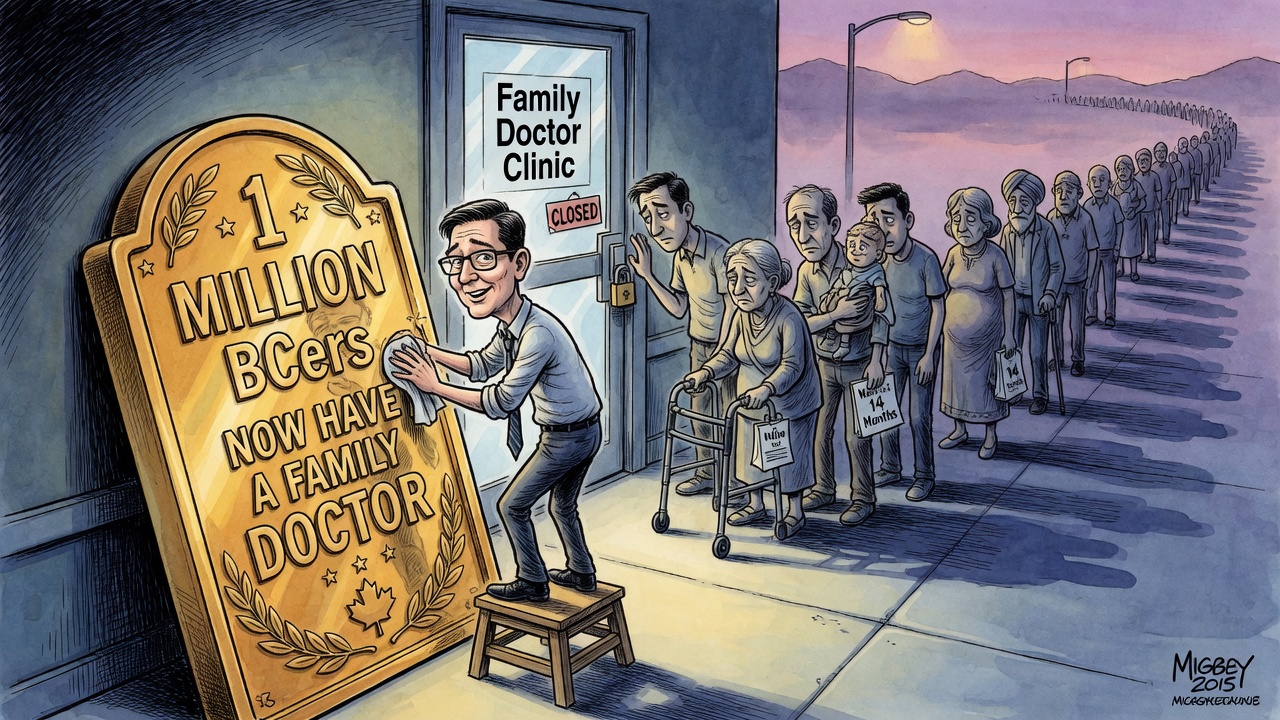
David Eby’s government wants British Columbians to see the headline number: one million people connected to primary care since 2018.
Fine. Count it. But count the other number in the same government release too: 323,000 people were still registered with the Health Connect Registry as of September 2026. That registry is for people seeking a family doctor or nurse practitioner. It is not the entire universe of unattached patients, and it should not be described that way. It is still a massive waiting-room ledger written by the government itself.
The Province says 4.47 million people, or about 80% of B.C.’s population, now have a primary-care provider. Turn that around and the government is acknowledging that roughly one in five British Columbians still does not. After years of primary-care announcements, payment-model reforms, recruitment drives and team-based-care promises, that is the test that matters at the kitchen table.
A family doctor is not a luxury line item. It is the front door to prevention, medication management, referrals, chronic-disease care and early diagnosis. When that front door is missing, people are pushed toward walk-in clinics, urgent-care centres and emergency rooms that were never designed to replace longitudinal care.
The NDP will argue that progress is happening. The release says more than 4,000 people are being matched each week. A follow-up Health Ministry release says more than 1,200 internationally trained doctors received B.C. licences in 2025 and more than 4,400 internationally educated nurses have received full or provisional licences since 2023. Those numbers are worth recording. They are not a pass.
The accountability question is simple: if the plan is working, why are hundreds of thousands of people still in the registry and about 20% of the province still without attachment?
B.C. residents do not experience health care as a press conference. They experience it when a child has recurring symptoms and no regular clinician knows the history; when a senior needs medication reviewed; when a worker puts off care because the only option is another lineup. For those families, “one million connected” is not the full story. It is the government’s chosen half of the story.
Here is the standard Eby and Health Minister Ravi Kahlon should meet: publish a monthly primary-care ledger by health authority and community, showing how many people are attached, how many are waiting in the registry, the median wait to attachment, and how many new providers are actually taking longitudinal patients. If Victoria can celebrate a milestone, it can show the backlog with the same confidence.
Until then, the victory lap is premature. The number that should haunt this government is not only one million connected. It is 323,000 still waiting in the official registry.