A Flower Shop Shouldn’t Be the Front Line of B.C.’s Street Disorder Crisis
A Vancouver florist says open drug use and disorder are driving customers away. Compassion without standards is failing everyone.
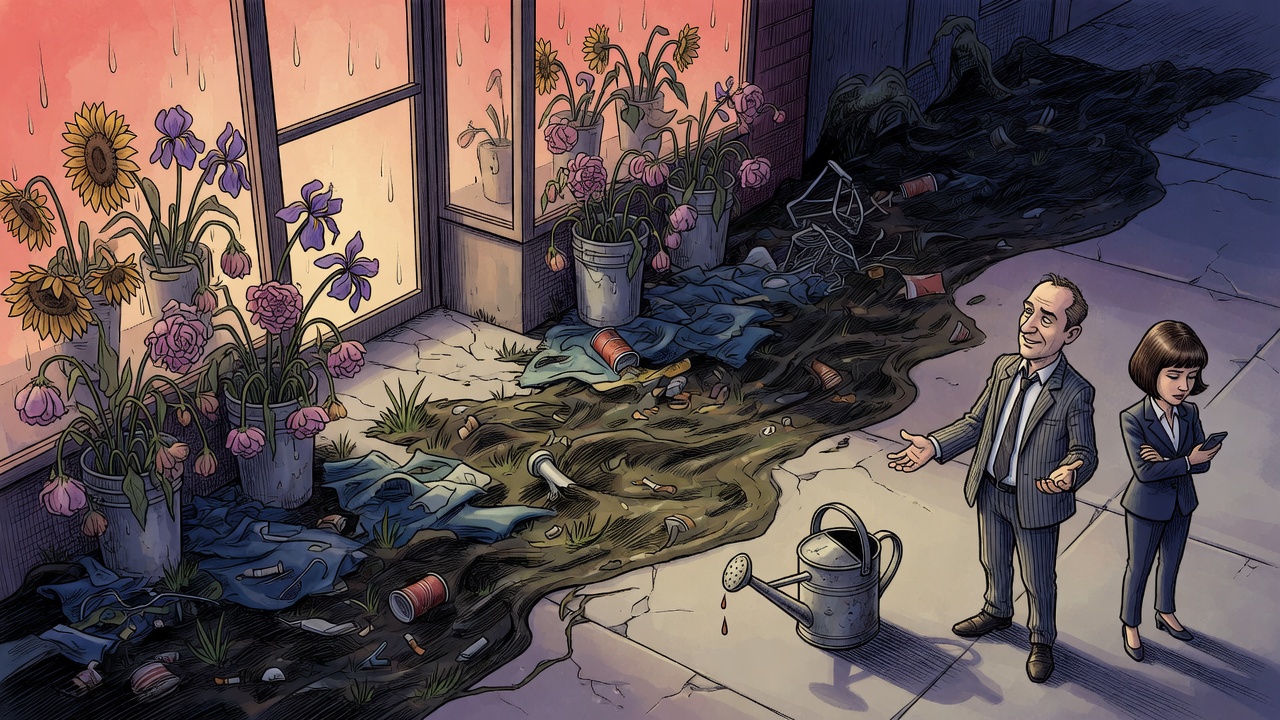
A flower shop should be one of the easiest businesses in the city to cheer for. It sells weddings, birthdays, apologies and grief made bearable. In downtown Vancouver, one florist says he is instead selling through a public-safety failure on the sidewalk.
Global BC reported September 17 that Kurtis Lemon, owner of D&D Flowers at 531 Richards Street, says open drug use and street disorder have affected the business since he bought it in April. The shop sits across from Hotel Canada, which PHS Community Services Society identifies as a 150-unit low-barrier supportive-housing site at 518 Richards Street with on-site supports.
Lemon’s account should be handled carefully. He told Global he has personal experience with addiction, and this is not a licence to dehumanize vulnerable people. Addiction, homelessness and mental illness require serious treatment, housing and outreach. But compassion cannot mean telling workers, customers and neighbouring residents to simply absorb unmanaged disorder as the price of downtown life.
The allegation from this business owner is specific: visible drug use, cleanliness problems and safety concerns are pushing customers and tourists away. Global tied the story to UBCM week, where municipal leaders from across B.C. said they are seeing similar problems in their own communities. That matters because the NDP government cannot keep treating each storefront crisis as an isolated neighbourhood complaint.
Save Our Streets says municipal and community leaders are backing a five-point “Contract with Communities” that calls for action on encampments, detox access, properly locating public-facing low-barrier services, addictions and mental-health services, and justice-system funding. People can debate the coalition’s politics. They cannot honestly pretend the demand for standards is fringe when city after city is raising the same alarm.
This is the test David Eby’s government keeps failing: building or funding a service is not the same as managing its impact. Low-barrier housing and shelters may be necessary, but necessary does not mean consequence-free. If the Province funds sites through BC Housing and relies on non-profit operators, it also owes surrounding blocks clear operating expectations, rapid response to chronic disorder, transparent incident reporting and measurable support for both residents inside and neighbours outside.
The current approach leaves everyone worse off. Vulnerable people are left in public crisis. Small businesses are left to become unpaid front desks for social disorder. Customers are left wondering whether downtown is safe. Municipal leaders are left pleading for tools after decisions have already landed in their communities.
A government that talks about compassion should be able to protect the person in addiction and the florist trying to keep the doors open. If it cannot do both, the policy is not compassionate. It is abandonment with better branding.
Sources and records
- Global BC: Downtown Vancouver business owner says rampant open drug use is everywhere
- PHS Community Services Society: supportive housing site list, including Hotel Canada
- Save Our Streets: Contract with Communities / five priority actions
- Global BC context: Vancouver pop-up overdose-prevention sites
- Global BC context: tourists noticing street disorder and open drug use