Eby’s Staffing Victory Lap Meets Merritt’s Locked ER Door
B.C. is counting recruited doctors and nurses. Merritt residents are counting the hours without local emergency care.
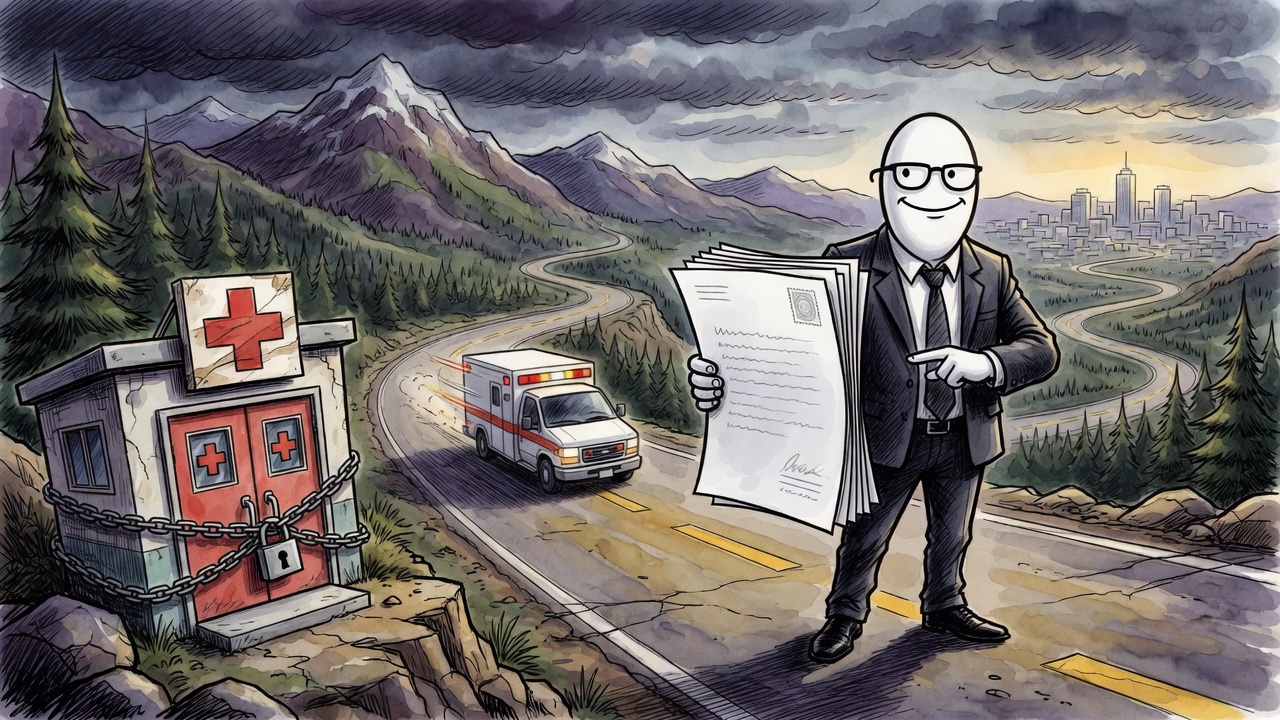
Merritt is being told, again, that a hospital is not the same thing as emergency access.
CFJC Today reported Friday morning that emergency services at Nicola Valley Hospital are temporarily unavailable from 7 a.m. to 6 p.m. on September 18. Castanet reported the same 11-hour interruption, citing Interior Health’s notice that other inpatient services would continue while patients needing emergency care are directed to Royal Inland Hospital in Kamloops. For life-threatening emergencies, residents are told to call 911 for transport to the nearest appropriate available facility.
That is the practical reality behind the government’s health-care messaging: when the ER is down, Merritt residents do not need another slogan. They need the door open.
The timing is brutal for David Eby’s NDP. One day before the Merritt closure, the Province issued a health-workforce release saying more than 1,200 internationally trained doctors received B.C. licences in 2025, more than 6,000 internationally trained doctors were licensed in B.C. as of July 2026, and more than 4,400 internationally educated nurses had received full or provisional licences since 2023. Those numbers may be real. They are not the same thing as reliable local service.
This is the gap Victoria keeps trying to manage with announcement math. A rural family judges the system by whether the nearest emergency department is staffed when a child is injured, a senior falls, or chest pain starts at the wrong hour. A recruitment total on a provincial webpage does not shorten the drive from Merritt to Kamloops.
There is no need to blame individual doctors, nurses or hospital staff. They are the people holding the system together. The accountability belongs with the government and health authority that keep asking communities to accept temporary closures as if temporary has not become a pattern. Castanet described this as the latest in a series of closures, with the Merritt ER most recently shut on August 30. Q101 reported it as the tenth closure of 2026, while CFJC described another September 18 interruption. Because local counts differ, the safest conclusion is also the most damning: Merritt is facing another emergency-room closure this year.
If the Province wants credit for licensing more health workers, it also owes Merritt a staffing ledger: how many positions are funded, how many are vacant, how many shifts are uncovered, and what date residents can expect dependable emergency access. Without that, the numbers are a shield, not a solution.
B.C. cannot keep calling rural emergency care a priority while communities wake up to closure notices. Announcements are not access. A press release is not a paramedic, not a doctor, and not an open ER.
Sources and records
- CFJC Today: Merritt emergency department to close for most of Friday
- Castanet Kamloops: Daytime emergency room closure coming up in Merritt
- Q101: Nicola Valley Hospital ER to close Friday
- Government of B.C.: internationally trained doctors licensed in B.C.
- Government of B.C.: internationally educated nurses practising in B.C.