Mayors Hand Eby a Public-Safety Contract. B.C. Needs More Than Talk.
Municipal leaders put five concrete asks on the table at UBCM. The province should answer with measurable action, not another round of slogans.
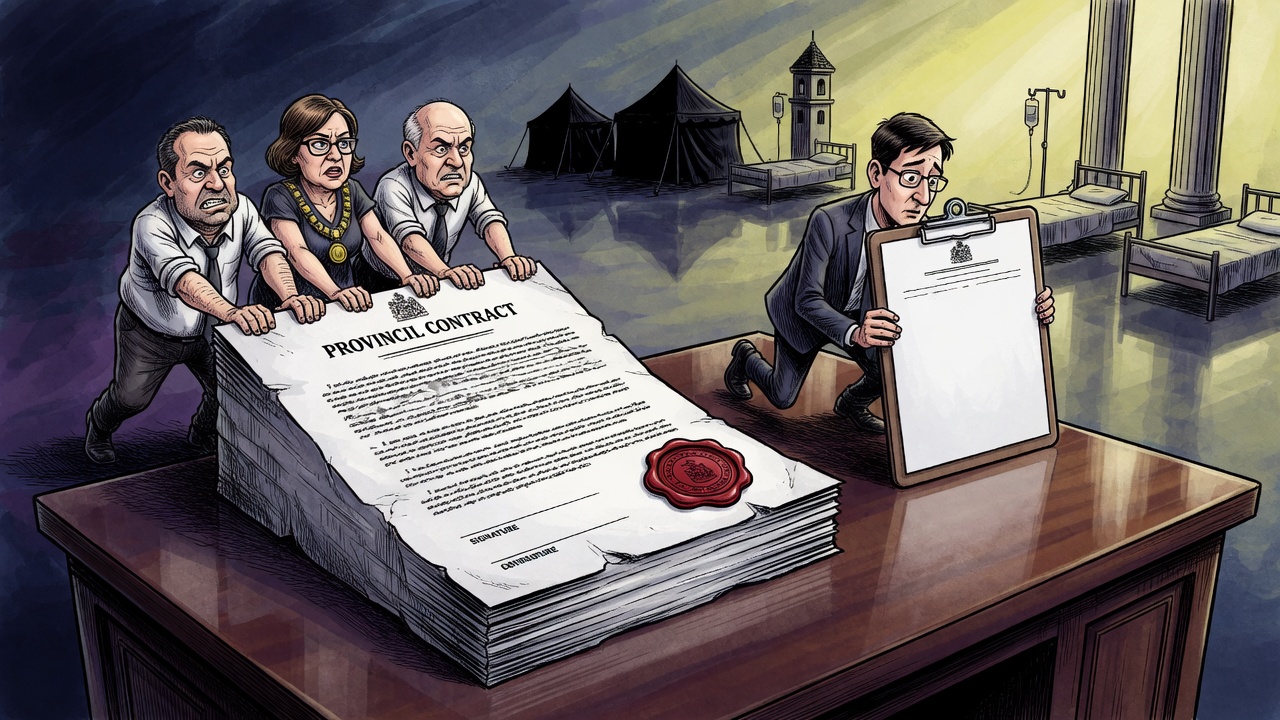
B.C. cities are done hinting. At the Union of B.C. Municipalities convention in Vancouver, municipal leaders put a five-point public-safety demand directly in front of the provincial government.
HighOnCity reported that Vancouver Mayor Ken Sim, Port Coquitlam Mayor Brad West, Victoria Mayor Marianne Alto, Prince George Mayor Simon Yu and Squamish Councillor Jenna Stoner joined Save Our Streets co-founders Jess Ketchum and Clint Mahlman on Thursday to present a “contract with our communities.” The reported asks were specific: a provincial encampment policy where adequate shelter exists, detox beds in Health Ministry facilities across B.C., better siting of public-facing low-barrier harm-reduction services, regional government-operated addiction and mental-illness treatment and recovery, and full justice-system funding for judges, sheriffs, Crown prosecutors and corrections staff.
Those are not minor housekeeping items. They go to the core of what the Province controls: health care, mental-health and addictions treatment, corrections and the courts. Municipalities can clean sidewalks, pass bylaws and pay police bills. They cannot, on their own, build a provincewide detox network or fix Crown counsel bottlenecks.
That is why Victoria Mayor Marianne Alto’s reported warning matters. HighOnCity said Alto argued local governments have spent millions trying to fill service gaps left open by the province, and called that level of municipal backfilling unsustainable. The point is not that cities have no role. The point is that the NDP cannot download disorder, addiction care and justice delays to councils, then call the result “shared responsibility.”
The pressure is not new. UBCM’s own resolutions database shows a 2025 endorsed resolution from Castlegar, Trail and Nelson saying current B.C. resources were insufficient for detoxification, rehabilitation, supportive housing and policing demands. That resolution urged the Province to expand detox and rehabilitation services, develop a homelessness strategy, and provide dedicated public-safety funding streams for local governments facing increased street-population challenges.
The government’s own language also undercuts any claim that the file is under control. In April, Health Minister Josie Osborne and Provincial Health Officer Dr. Bonnie Henry marked ten years of the toxic-drug public-health emergency. Osborne said the Province’s work was “nowhere near done,” while Henry said the crisis continued to affect every community and remained a public-health emergency requiring a continued response.
Good. Then measure it. How many detox beds exist today? Where will regional treatment capacity be added, and by what date? How many Crown prosecutors, sheriffs, judges and corrections staff are required to clear the justice backlog? What standard governs encampments where shelter is available? Which low-barrier sites are being reviewed for neighbourhood impact?
Municipal leaders have handed David Eby’s government a practical exam. The NDP can answer with dates, budgets and staffing numbers, or it can keep asking cities to manage provincial failures with municipal tax dollars. B.C. needs the first option.
Sources and records
- HighOnCity: B.C. mayors demand five concrete steps from province on public safety
- Save Our Streets: coalition, public-safety message and priority actions
- UBCM resolutions database: Strategy for Rehabilitation, Homelessness and Public Safety
- B.C. government: statements on the 10th anniversary of the toxic-drug crisis