Record Funding, Record Violence: Victoria Classrooms Expose the NDP Outcomes Problem
Greater Victoria teachers are putting hard numbers behind a blunt warning: school safety is not improving just because Victoria announces bigger budgets.
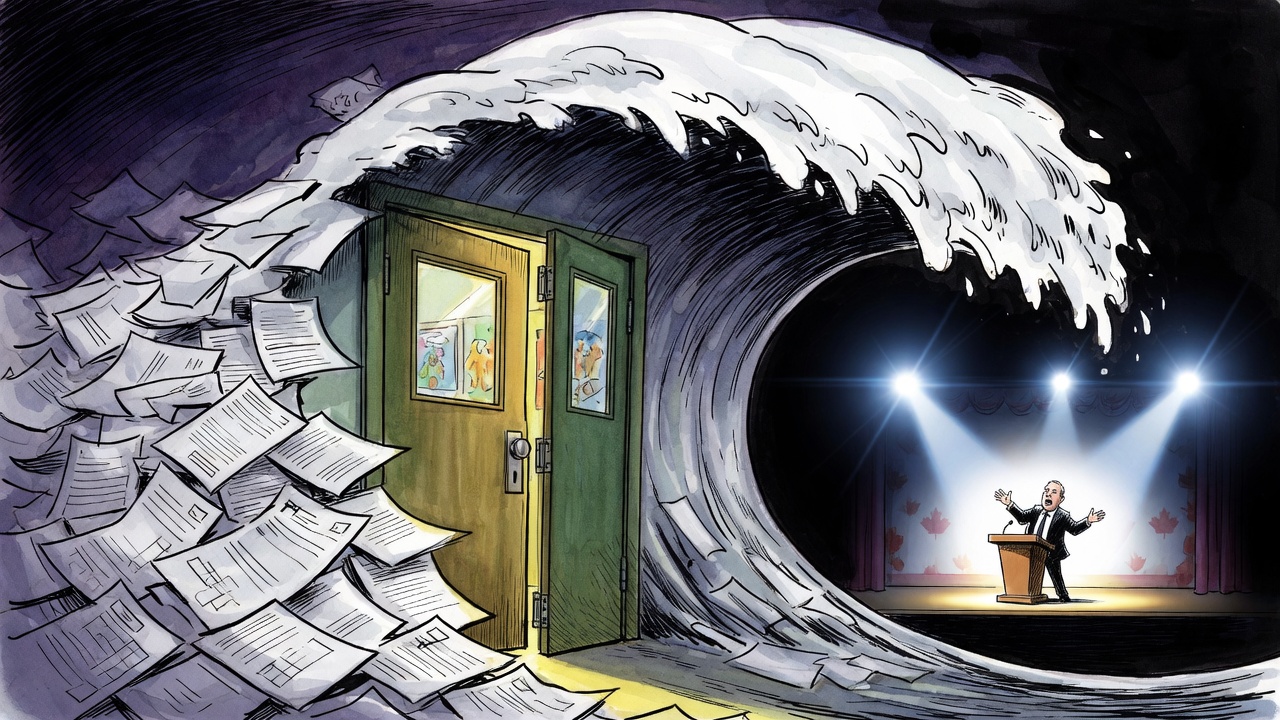
The Eby government cannot answer this story with another funding line and call the job done. Greater Victoria teachers are describing a classroom safety breakdown, and the numbers are too large to wave away as isolated incidents.
The Greater Victoria Teachers’ Association’s September 2026 report says it examined violent-incident reports filed from September 3, 2024 to March 2, 2026. Staff from every one of the district’s 46 schools filed at least one report. The total was 6,187 reports over 292 school days, or 21 violent incidents per day across the district.
That figure is not even the whole safety picture. The GVTA says the incident reports it reviewed covered student or parent violence against staff, not student-to-student violence. It also says the district told the union through freedom-of-information records that it does not track or collect student-to-student violence records, and does not track every unsafe-work declaration made to supervisors.
That is a governance problem. If Victoria wants the public to believe the system is being managed, the system first has to measure what is happening. Parents, teachers and education assistants should not have to rely on a union report to find out whether classrooms are becoming safer or more dangerous.
The report’s survey is limited — 165 respondents, or 8.3 per cent of GVTA membership — and that caveat matters. But the responses are still an alarm bell. Ninety-five per cent of respondents said they experienced violence at school in the previous 12 months. Nearly half said they personally experienced violence at least weekly. More than 85 per cent said violence had a significant or extreme impact on the classroom learning environment, and more than 88 per cent said it had a significant or extreme impact on working conditions.
Current reporting from the Canadian Press, carried by iNFOnews, said the Education Ministry pointed to increased operating funding for Greater Victoria, including $15.3 million more for the current school year. The province’s own operating-grant table lists a 2025-26 estimated operating grant of $236.6 million for School District 61.
Those funding numbers may be real. They are not a safety outcome. If spending is rising while reported violence is also rising, the obvious question for Premier David Eby and Education Minister Lisa Beare is not whether a bigger cheque was announced. It is whether the money, staffing model, facilities plan and reporting system are actually reducing harm.
The GVTA recommendations are concrete: consistent violent-incident reporting, measurable reduction targets, tracking of classroom evacuations and learning exclusions, violence-prevention audits, better alternative learning spaces, improved student-educator ratios, and proper post-incident support for staff and students. The province does not have to accept every union prescription to accept the central point: “trust us, funding is up” is not enough.
Every child has a right to learn in a safe classroom. Every worker has a right to a safe workplace. If the NDP wants credit for record education spending, it should also accept responsibility for record-level safety warnings and publish the outcome ledger: incidents, injuries, evacuations, staffing gaps, timelines and targets for reduction.
B.C. families do not need a communications strategy. They need classrooms where learning is not interrupted by fear.
Sources and records
- Greater Victoria Teachers’ Association: This should not be the norm — report landing page and download
- Greater Victoria Teachers’ Association: full September 2026 report PDF
- Canadian Press via iNFOnews: Victoria teachers call for urgent action as classroom violence climbs
- B.C. Ministry of Education and Child Care: 2026/27 operating grants summary