B.C. Court Puts the Doctor Pipeline Bottleneck in Writing
The province says it needs doctors. A new court ruling shows one recruitment pathway was also a paperwork fight.
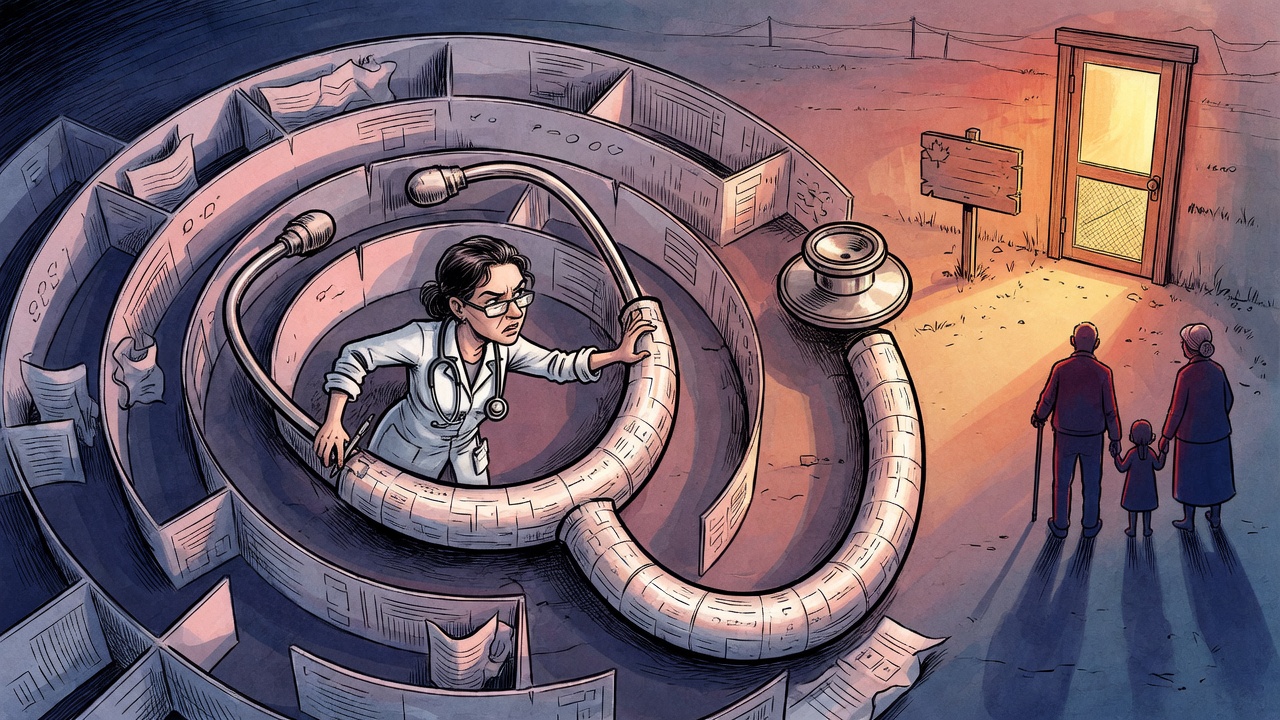
B.C. does not have the luxury of wasting qualified medical talent. Families are still searching for primary care, rural communities are still fighting service gaps, and emergency rooms across the province have spent years under strain. Against that backdrop, a B.C. Supreme Court ruling on international medical graduates should land hard in Victoria.
The case was brought by the Society for Canadians Studying Medicine Abroad and two B.C. residents who studied medicine outside Canada. The court described a system where Canadian medical graduates and international medical graduates are placed in separate residency streams. It also found that international medical graduates face far fewer B.C. residency opportunities: at the time discussed in the ruling, 58 positions were designated for IMGs, compared with 294 for Canadian medical graduates.
The court did not accept every claim advanced by the petitioners. That matters. Justice David Kirchner rejected several Charter arguments and did not order the two-stream residency system dismantled. But he did find a major problem with the province’s return-of-service requirement — the rule that requires IMGs who win residency spots to practise for two or three years in an underserviced area chosen by the Minister of Health, with heavy financial penalties for breach.
In the judge’s words, the Minister’s return-of-service obligations constituted an exercise of regulatory power requiring statutory authorization, and the court found there was none. He also found the requirement engages an IMG’s liberty interest to choose where to reside, and referred the issue back to the Minister to assess fundamental-justice questions and reconcile that liberty interest with the stated goal of serving underserviced communities.
That is not a minor administrative footnote. It is a court telling the government that a doctor-recruitment tool was being used in a way that needs legal authority and a Charter-conscious explanation. The objective — getting physicians into rural and underserviced regions — is compelling. The ruling says so. The accountability question is why that burden was placed on one class of doctors without the province laying out the legal and evidentiary foundation clearly enough.
The reported claim from the petitioners is that foreign-trained or internationally trained doctors were short-changed by the B.C. system. The court’s actual finding is narrower but still damaging: the return-of-service obligation, as imposed, cannot simply rest on bureaucratic habit. It must be authorized and justified.
For David Eby’s NDP, this is another example of the health system colliding with its own bottlenecks. The government announces recruitment, seats, pathways and incentives. But patients judge the system by whether a doctor is available, whether clinics can hire, and whether rural service promises survive contact with reality.
Victoria should answer this ruling with specifics: how many IMG residency applicants are affected, what statutory fix or policy change is being considered, whether existing agreements are being reviewed, and how the province will protect physician supply in underserviced communities without leaning on legally shaky shortcuts.
B.C. needs doctors. It also needs a government competent enough to build lawful, fair pathways that get them to patients.