B.C. Took In More Revenue. The Deficit Still Got Worse.
The first-quarter update undercuts the simplest excuse for B.C.’s red ink: revenue was higher than budgeted, yet the deficit still grew.
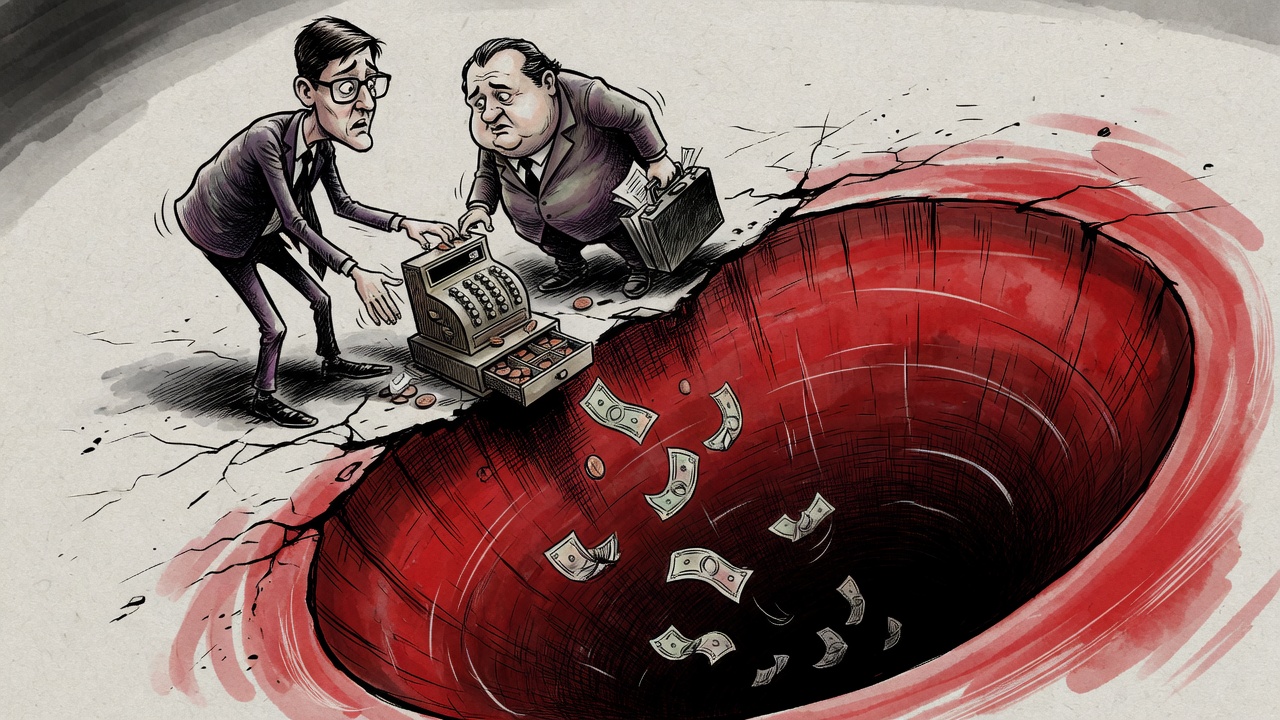
The NDP cannot explain this fiscal update as a simple revenue problem. The province’s own first quarterly report says revenue is now forecast at $86.3 billion, up $789 million from Budget 2026, helped by stronger income-tax and sales-tax revenue.
That should have made the deficit smaller. Instead, the updated deficit is $13.8 billion for 2026-27 — $450 million worse than the February budget forecast. CityNews, citing Canadian Press, also reported the government’s three-year track now shows deficits of $12.7 billion in 2027-28 and $12.0 billion in 2028-29.
There are real pressures in the ledger. Wildfire management costs are forecast $614 million above budget. Refundable tax-credit spending is up $458 million. The Ministry of Finance also points to global trade uncertainty, tariffs, weaker housing-market revenue and lower natural-resource revenue. Those factors matter, and no serious critic should pretend firefighting is optional.
But the hard accountability question remains: why did a government that found almost $800 million more revenue still produce a bigger deficit? The Business Council of British Columbia’s reading is blunt: projected operating expenses are up $1.2 billion from budget, provincial operating expenses are crossing $100 billion in 2026-27, and spending growth continues to outrun the economy that pays the bills.
The growth forecast is weaker too. The province now expects real GDP growth of 0.9 per cent in 2026. CityNews reported that is down from the 1.3 per cent forecast in Budget 2026. That means B.C. is not just borrowing more; it is borrowing more while the economic base looks softer than the government told taxpayers seven months ago.
The debt numbers sharpen the warning. BCBC says total provincial debt has doubled from $90 billion in 2021-22 to $180 billion in 2026-27, while debt-servicing costs have tripled from $2.7 billion to $6.3 billion. Interest payments are not an abstract accounting line. They are dollars that cannot be used for emergency rooms, schools, roads, addiction treatment or tax relief.
Finance Minister Josie Osborne is right that British Columbians expect wildfire protection and core services. But fiscal credibility requires more than saying the economy is resilient while the red ink deepens. It requires a public path showing which spending is temporary, which is structural, how program growth will be controlled, and when the promised return toward balance becomes more than a slogan.
The first-quarter report gives voters the essential fact pattern: more revenue came in, expenses rose faster, growth was downgraded, and the deficit got worse. That is not prudence. It is a warning light on the NDP dashboard, and British Columbians deserve the full repair plan before the next bill comes due.