The China Ferry Bill Is Bigger Than the Sticker Price
A new report puts hard numbers beside B.C.’s offshore ferry choice: jobs, tax revenue and industrial capacity left off the sticker-price ledger.
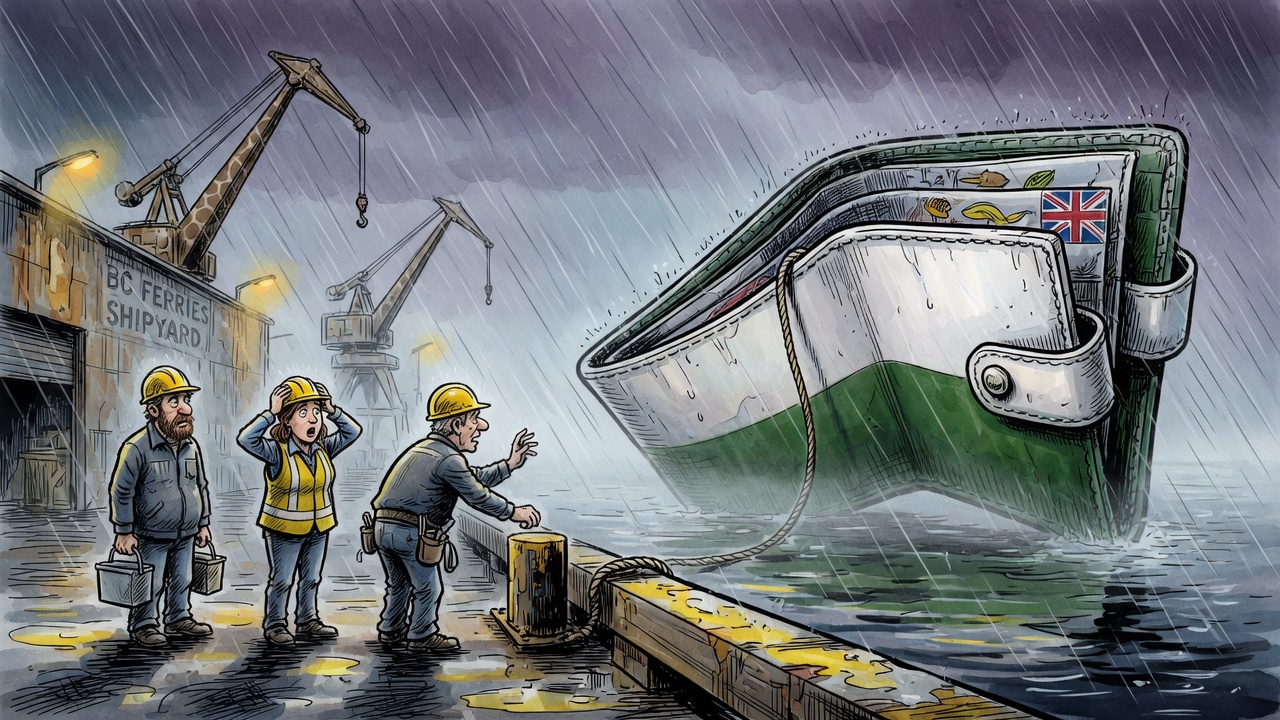
B.C.’s China ferry decision now has a price tag beyond the contract — and it is exactly the kind of ledger David Eby’s government should have been forced to show before the work left the coast.
Postmedia reported Sept. 13 that a new report says the four Summit-class vessels being built for BC Ferries in China could have generated $1.5 billion in additional Canadian economic activity if built domestically, with most of the benefit staying in B.C. The report, prepared by QEDinc and cited by Postmedia, also estimates more than 10,000 job-years and $413 million in additional government revenue from associated taxes.
Those are estimates, not audited results. They also come from a report commissioned by the Build Them Here Shipbuilding Coalition, which includes unions and industry voices that want more domestic ferry work. That context matters. But it does not make the numbers irrelevant. If the province can count economic spin-offs when selling a public project, it should also count the economic losses when a publicly funded ferry system sends major vessel construction offshore.
The hard facts are not in dispute. BC Ferries awarded the four-vessel contract in May 2025 to China Merchants Industry’s Weihai Shipyards, with the vessels hoped to be operational by 2029. CityNews, carrying Canadian Press reporting, said the total cost has not been disclosed and that BC Ferries said the winning Chinese bid was at least $1 billion cheaper than the others.
BC Ferries has a defence, and it should be stated fairly. Postmedia reported the corporation said two Canadian shipyards pre-qualified but neither submitted a final bid. BC Ferries also said it could not defer replacement while waiting for domestic capacity to develop. CityNews reported the ferry operator said no Canadian company submitted a proposal.
That explanation answers a procurement question. It does not answer the public-policy question. Why was B.C. still at the point, in 2025, where a province surrounded by ocean and dependent on ferries could not produce a competitive Canadian build path for vessels central to coastal life?
The report itself reportedly acknowledges B.C. could not have built the new ferries at existing shipyards on the same schedule. That is not an excuse; it is the indictment. Years of offshore ferry procurement create a cycle: fewer local contracts, weaker incentive to invest in yards and training, then another claim that local yards are not ready.
At a federal transport committee hearing, ferry workers warned that offshore builds can carry hidden costs: lost apprenticeships, weaker tax circulation, foreign supply chains and harder-to-source parts. Those are claims from labour witnesses, not a final accounting. But they are precisely why British Columbians deserve a public procurement ledger that goes beyond “cheaper up front.”
Eby’s government cannot campaign on buying local, invoke workers during tariff fights, and then treat shipbuilding capacity as someone else’s spreadsheet problem. If the next ferry order is supposed to be different, publish the plan now: capacity gaps, training seats, yard investments, timelines, federal coordination and the price premium government is — or is not — willing to defend.
The question is no longer whether China’s bid looked cheaper on day one. The question is whether B.C. taxpayers were ever shown the full bill.
Sources and records
- Vancouver Sun/Postmedia: B.C. ferry contract to China and new missed-opportunity report
- CityNews/Canadian Press: building ferries in B.C. and tariff context
- House of Commons transport committee evidence: BC Ferries vessel procurement testimony
- BC Ferries quarterly report naming the four-vessel contract