Fort St. John Needed an Anti-Gang Cleanup After Shootings Near Schools
A northern B.C. community should not have to wait for a travelling anti-gang surge after violence spills near schools. Victoria needs to show the prevention ledger.
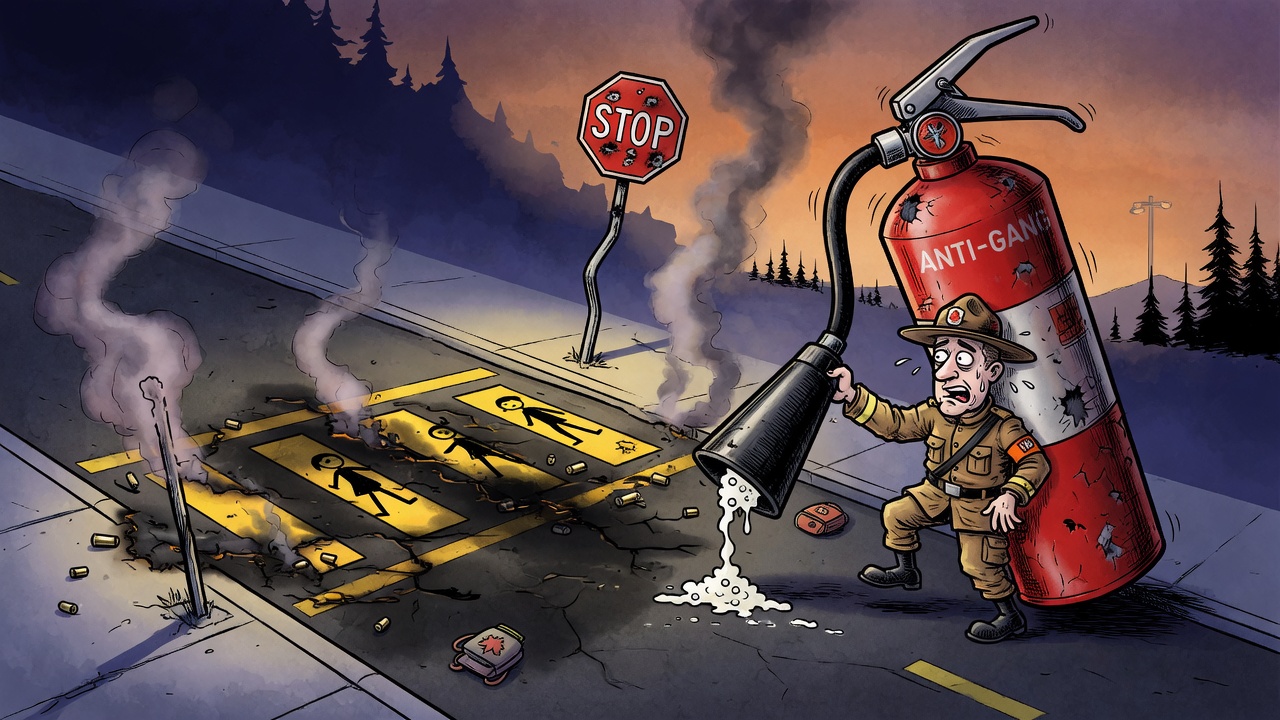
Fort St. John has just been given a public-safety statistic that should make Victoria uncomfortable: British Columbia’s anti-gang unit says a two-week deployment to the city seized seven firearms, suspected cocaine, methamphetamine and fentanyl, about $16,000 in Canadian currency, ammunition and other weapons.
The Combined Forces Special Enforcement Unit of B.C. says its Uniform Gang Enforcement Team was sent to Fort St. John from August 21 to September 5, 2026, at the request of Fort St. John RCMP. The stated purpose was direct: officers were targeting people believed to be involved in increased violence, gang activity and the illicit drug trade. CFSEU-BC says officers opened multiple investigations, arrested multiple people and generated intelligence for ongoing and future enforcement.
CBC reporting, republished by Yahoo News, puts the deployment in sharper local context. It reported that the gang unit was sent after four people were injured in three separate targeted shootings during July and August, and that all of those incidents happened near local schools. The same report said Sgt. Sarbjit Sangha described the violence as connected to groups tied to the local drug trade, and said 26 people were arrested during the deployment while charges were pending.
That is not a routine press-release win. It is a warning flare from the Peace region. When a community needs an outside anti-gang deployment after shootings near schools, the government cannot sell public safety as a spreadsheet of announcements. Families judge safety by whether violence is prevented before it reaches their streets, not by whether a specialized team can be sent in after the alarm is already ringing.
To be fair to frontline police, the seizure list matters. Seven firearms removed from a violent drug-trade environment is significant. Suspected fentanyl, cocaine and methamphetamine taken off the street is significant. Intelligence that helps future investigations is significant. The issue is not whether officers did useful work. The issue is whether the Eby government has built a durable public-safety plan for smaller and northern communities, or whether they get episodic surges when gang conflict becomes impossible to ignore.
The accountability questions are concrete. How many dedicated northern anti-gang officers are in place today? What prosecutor capacity is attached to these files? How many cases are moving from arrest to charge approval to sentence? What bail-monitoring and firearms-prohibition enforcement resources exist outside Metro Vancouver? And when CFSEU says a new northern uniformed gang enforcement team is expected in Prince George later this year, what date, staffing level and performance measures will the province report publicly?
Fort St. John does not need Victoria to declare victory over a mess local residents had to endure. It needs proof that the next response will not wait for another cluster of shootings near schools.