B.C. Ferries’ 2028 Fare Cliff Is Back — and PT7 Is Due This Month
Ottawa’s ferry gap is real. So is Victoria’s responsibility for service levels, provincial contributions and the fare assumptions now being put before the commissioner.
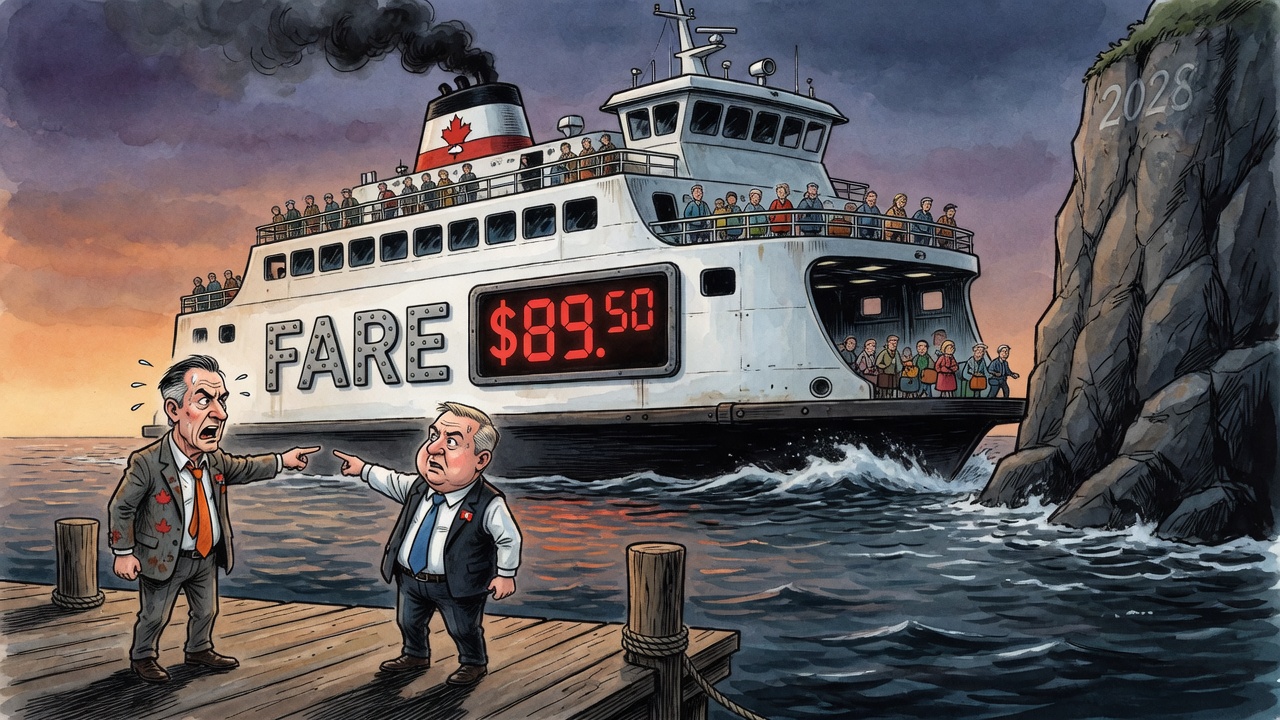
The ferry affordability fight is back on Vancouver Island, and this time the calendar matters. Times Colonist reporting carried by Castanet says Courtenay–Alberni MP Gord Johns is organizing rallies across the Island over looming B.C. Ferries fare increases, with stops including Port Alberni, Duncan, the B.C. legislature lawn, Esquimalt and Nanaimo.
Johns’ federal funding argument is serious. The report says he points to federal support covering 43% of ferry costs on the East Coast and 3% in B.C., and cites a Library of Parliament analysis estimating roughly $1.63 per B.C. Ferries passenger in federal operational support in 2024-25, compared with about $291 for federally supported East Coast ferry systems.
But David Eby’s government cannot treat Ottawa as the whole answer. The provincial file is moving now. In the Legislature on May 7, Transportation and Transit Minister Mike Farnworth said Performance Term 7 “needs to be submitted to the commissioner in September” and that PT7 starts in 2028. He also said the report will be crucial in determining what happens when PT7 begins.
That makes September 2026 the public accountability window, not some distant technical process. BC Ferries’ own financial filing says the corporation carried 10.0 million vehicles and 23.3 million passengers in fiscal 2026, the highest vehicle and passenger traffic levels on record. It also says average tariff increases of 3.2% are set for each year of Performance Term 6, which runs to March 31, 2028.
The current cap did not fall from the sky. BC Ferries’ 2023 statement said the Province’s $500 million contribution was integral to capping fare increases at 3.2% each year through 2028. The same statement explains that the commissioner considers service fees and service levels set by the Province, and that the provincial government sets both the level of ferry service and the amount it will contribute to service costs.
So yes, Ottawa should answer for why coastal B.C. is treated so differently than Atlantic ferry routes. But Victoria must answer for its own ledger: what fare path is being assumed for PT7, how much provincial operating support is on the table, what service levels are being protected, and what happens if federal operational funding does not change before the next federal budget.
The public should not discover the 2028 fare cliff after the paperwork is already filed and the blame game is already scripted. Before PT7 goes in, Eby’s government should release the fare scenarios, subsidy assumptions, capital-pressure summary and service-level tradeoffs in plain language. Coastal families, workers and businesses use these vessels like highways. They deserve more than two governments pointing at each other while the fare meter keeps running.
Sources and records
- Times Colonist via Castanet: Island rallies to call for fairer federal funding for B.C. Ferries
- B.C. Legislature Hansard, May 7, 2026: PT7 and 2028 ferry fare questions
- BC Ferries: Management’s Discussion & Analysis for the fiscal year ended March 31, 2026
- BC Ferries: President’s statement on BC Ferry Commission price-cap decision, October 2023