Eby Should Not Stamp a Gas-Royalty Deal Before the Auditor General Looks
Eleven organizations are now asking for an Auditor General investigation into the gas-royalty process before cabinet locks in a long-term framework built around numbers the government has already had to walk back.
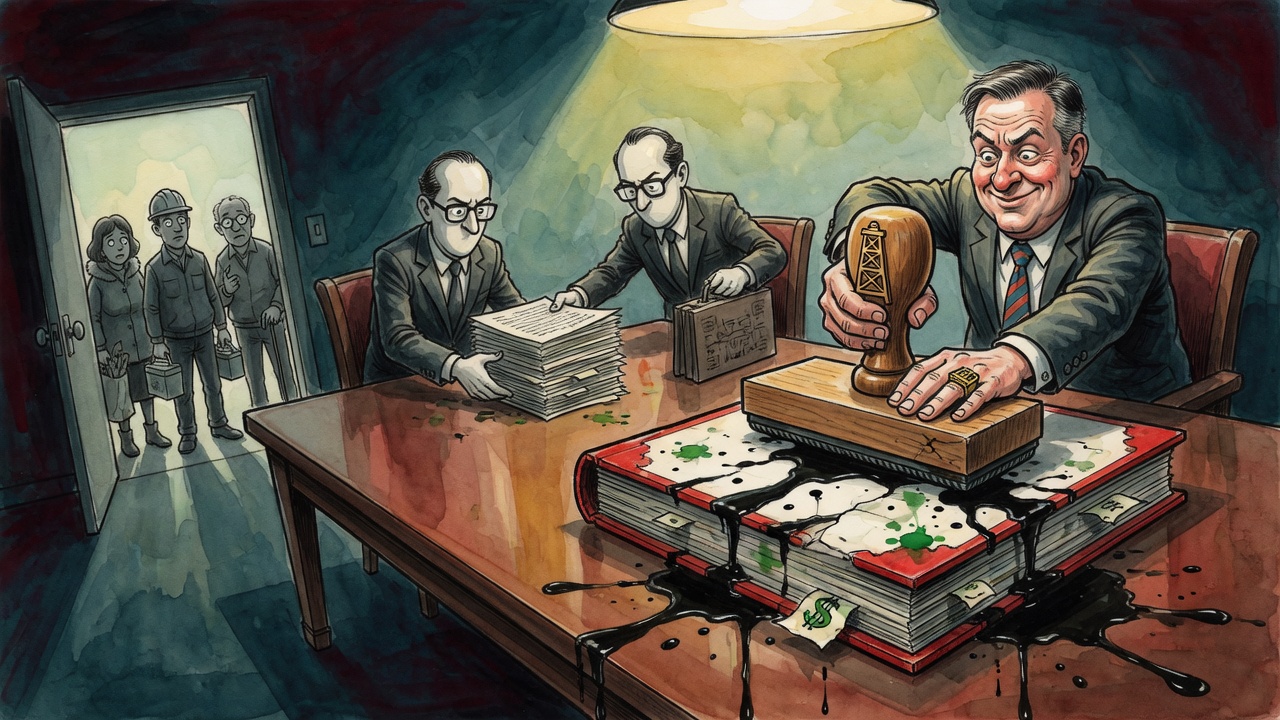
David Eby’s government has tried to contain B.C.’s gas-royalty blowout as a forecasting problem. The new demand from eleven organizations makes the issue larger: before cabinet finalizes the next long-term royalty regime, the Auditor General should examine not only the overstated budget calculations, but the criteria and process used to choose the replacement framework.
Environmental Defence says the groups are urging an immediate probe because cabinet is close to ratifying the “Adapted plus Bridging System,” with implementation set for January 1, 2027 unless the Premier halts the selection process. That is the point. If the numbers used to defend the framework were inflated, the responsible response is not to rush the framework through. It is to pause, disclose the work, and let an independent officer test the process.
The fiscal stakes are not abstract. Budget 2026 listed natural-gas royalties at $942 million for the updated 2025/26 forecast, then $1.297 billion, $1.305 billion and $1.572 billion across the next three fiscal years. The BC Greens say government has acknowledged an average royalty-revenue reduction of $292 million a year over five years — roughly $1.5 billion. That is not a rounding error for taxpayers waiting on health care, housing, roads, wildfire protection and basic services.
The proposed framework also raises a fairness question. Environmental Defence says the selected option would allow producers to deduct carbon costs from royalty payments and recover 150% of drilling costs before moving into a higher royalty bracket. If accurate, those are major policy choices. British Columbians deserve to know why they are in the public interest, who advocated for them, and what evidence cabinet relied on.
Access matters too. The same release says the B.C. Lobbyist Registry shows gas-industry representatives visited Victoria 192 times in 2026 to discuss royalties. Heavy lobbying is not, by itself, proof of wrongdoing. But it is exactly why the public needs a clean paper trail: who met whom, what options were presented, what Indigenous and community consultation occurred, and why this particular system was selected.
The NDP cannot ask the public to trust a long-term gas-royalty deal while key assumptions are being corrected after the fact. The burden is on Eby’s cabinet to prove the framework protects the public return from a public resource. Until that proof is available, the cabinet stamp should stay off the page.