Keremeos Was Promised Three ER Days. This Week, One Vanished.
South Similkameen Health Centre was already operating emergency services only Monday, Wednesday and Friday. Then Interior Health told residents Wednesday would be unavailable too.
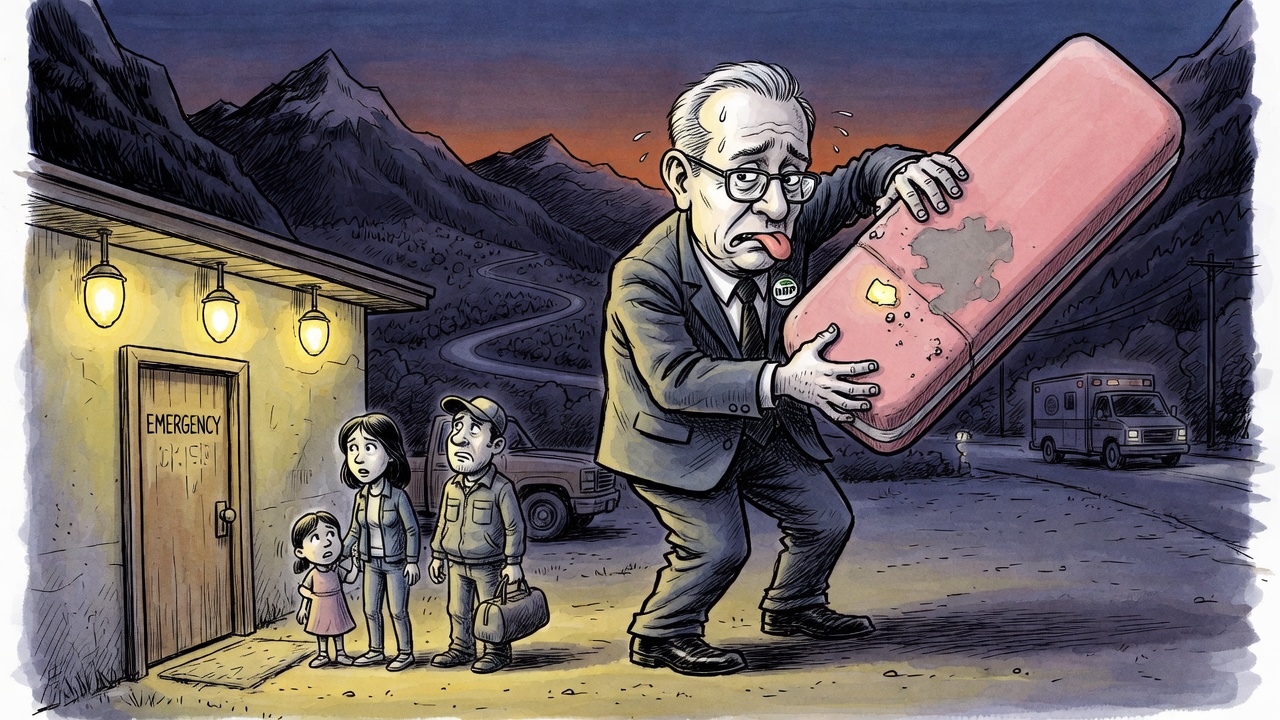
Keremeos residents were already living with a reduced emergency department. On November 17, 2025, Interior Health said South Similkameen Health Centre would move to emergency services on Monday, Wednesday and Friday from 8 a.m. to 5:30 p.m., instead of its regular Monday-to-Saturday schedule.
This week, one of those limited days was removed too. Interior Health advised Keremeos and area residents that emergency services at South Similkameen Health Centre would be unavailable from 8 a.m. to 5:30 p.m. on Wednesday, September 9, 2026. That was not an overnight gap at a fully staffed 24-hour hospital. It was the loss of one of only three scheduled weekly emergency-service windows.
The official direction was blunt. Patients could access emergency care at Penticton Regional Hospital or Princeton General Hospital during the interruption. People facing life-threatening emergencies such as chest pains, difficulty breathing or severe bleeding were told to call 911 for transport to the nearest available and appropriate facility.
That may be the necessary instruction during a staffing interruption. It is not a rural health-care plan. A resident who checks the schedule and sees Wednesday listed as an emergency-service day should not then discover that Wednesday has also vanished. Predictability was the stated point of the 2025 reduction; Interior Health said the change followed discussions with physicians to provide predictable services on set days while supporting primary care and recruitment efforts.
The accountability question for David Eby’s NDP government is simple: how long can “temporary” be allowed to mean less and less? Three days a week was already a major retreat for a community that had regular Monday-to-Saturday emergency services. A further interruption turns a reduced model into an unreliable one.
HealthLink BC’s own emergency-services directory warns that hours may vary or change in rural communities and encourages people to call ahead to confirm services. That warning is practical, but it also underlines the problem. Rural families are being asked to pre-check whether urgent care exists before they need it.
British Columbians need more than repeated alerts. They need a public stabilization ledger: every rural emergency-service interruption, the stated staffing reason, the communities affected, travel alternatives, recruitment vacancies, and a dated plan to restore dependable hours. Until that exists, Keremeos is not an isolated notice. It is another proof point that the NDP’s rural health system is running on cancellations, detours and hope.