Forestry’s Breaking Point Is Now on Eby’s Desk
When contractors, manufacturers, unions, First Nations forestry voices and truck loggers all tell the Premier the sector is at a breaking point, the answer cannot be another slow process.
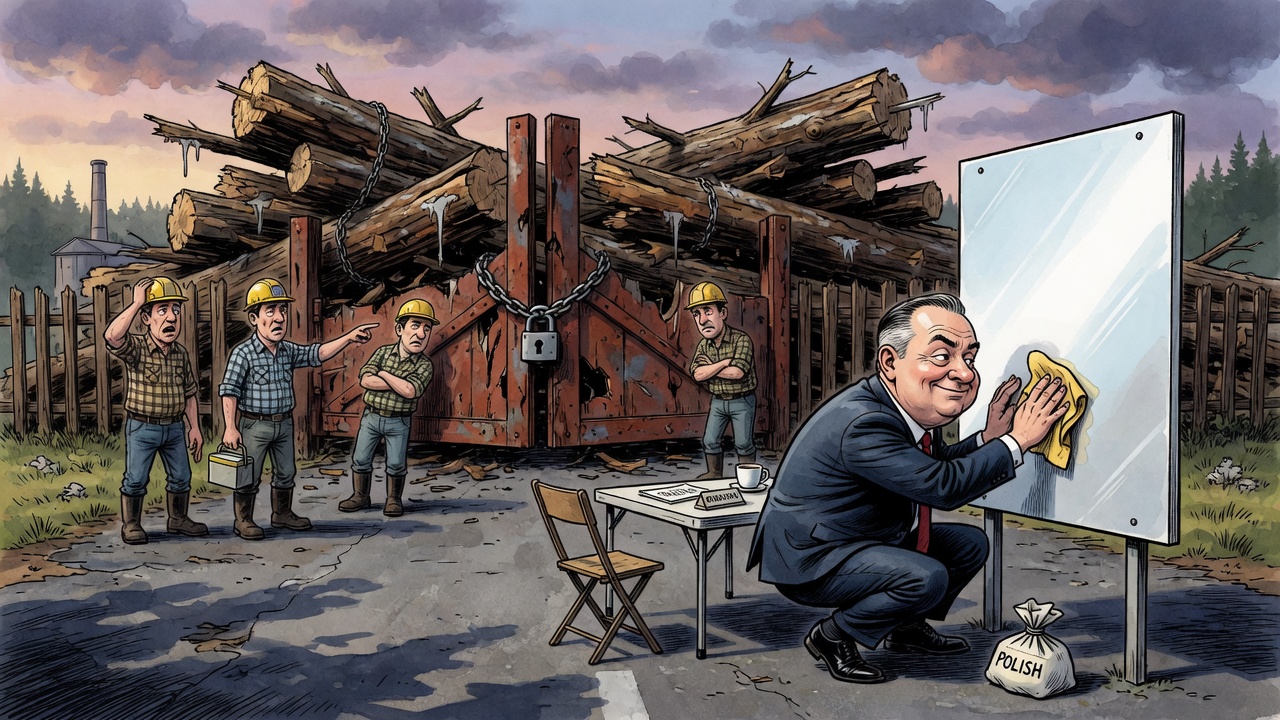
B.C.’s forest sector has put a hard accountability file on Premier David Eby’s desk. On September 9, forestry groups wrote to the Premier saying the industry is at a “breaking point” and calling for urgent provincial action on pressures ranging from permitting delays to U.S. tariffs.
This was not one company asking for a favour. The Canadian Press, carried by CityNews and Global News, reported that the letter was co-authored by groups representing contractors, manufacturers, unions and others dependent on forestry, including the BC Council of Forest Industries, the BC First Nations Forestry Council and the Truck Loggers Association. CFJC Today reported that the list spans loggers, truckers, First Nations, unions and specialty groups.
That breadth matters. When employers, workers, contractors and First Nations forestry representatives are pointing in the same direction, the issue is no longer a narrow industry complaint. It is a jobs, community and revenue problem for rural British Columbia — and it is landing after years of mill closures and curtailments.
The coalition’s demand is specific: create a Forestry Crisis Action Group led by the Premier’s Office, with senior government decision-makers and sector representatives at the table. Its mandate, as reported, would be to cut costs, remove regulatory barriers and get economically viable wood moving. CFJC Today’s evening report said forestry stakeholders had secured an emergency meeting with the province.
The letter also draws an important line. The groups acknowledge that international trade pressures are beyond the Premier’s direct control. But they say many of the conditions determining whether B.C. companies can keep operating are not. In other words: tariffs are real, but they are not a permission slip for Victoria to dodge homegrown delays, costs, fibre-access decisions and permitting bottlenecks.
The numbers make the test concrete. The coalition asks B.C. to lift economically viable harvest toward 45 million cubic metres annually from a current projection of 29 million. The province’s own August 27 release says government is exploring a Working Forest Landscape Model intended, over time, to stabilize an economic land base contributing to an annual harvest of 45 million cubic metres and improve predictability for industry, workers, First Nations and communities.
That is the gap Eby now has to close: not between slogans, but between a government model still being explored and a sector saying it is at the breaking point today.
If the Premier can personally carry high-profile political messages, he can personally chair a crisis table for forestry workers. British Columbians deserve deadlines: when the emergency meeting happens, who attends, what decisions are made, which barriers are removed first, how fibre access changes, and when communities will see measurable results.
A working forest policy that arrives after more mills go dark is not a rescue plan. It is an autopsy. The NDP government should publish the crisis-action ledger now — actions, dates, responsible ministers and outcomes — so forestry communities can judge results instead of waiting for another announcement.
Sources and records
- CFJC Today: forestry stakeholders sound the alarm and secure emergency meeting with province
- CityNews / Canadian Press: B.C. forestry sector says industry at “breaking point” in letter to Premier David Eby
- Global News / Canadian Press: B.C. forestry industry says it is at “breaking point” in letter to Eby
- B.C. government: Working Forest Landscape Model update, August 27, 2026