If Wildfire Prevention Is the Plan, Publish the Scale Ledger
B.C. can announce prevention programs. The accountability test is whether the province can show the work is happening at the scale communities and contractors say the risk now demands.
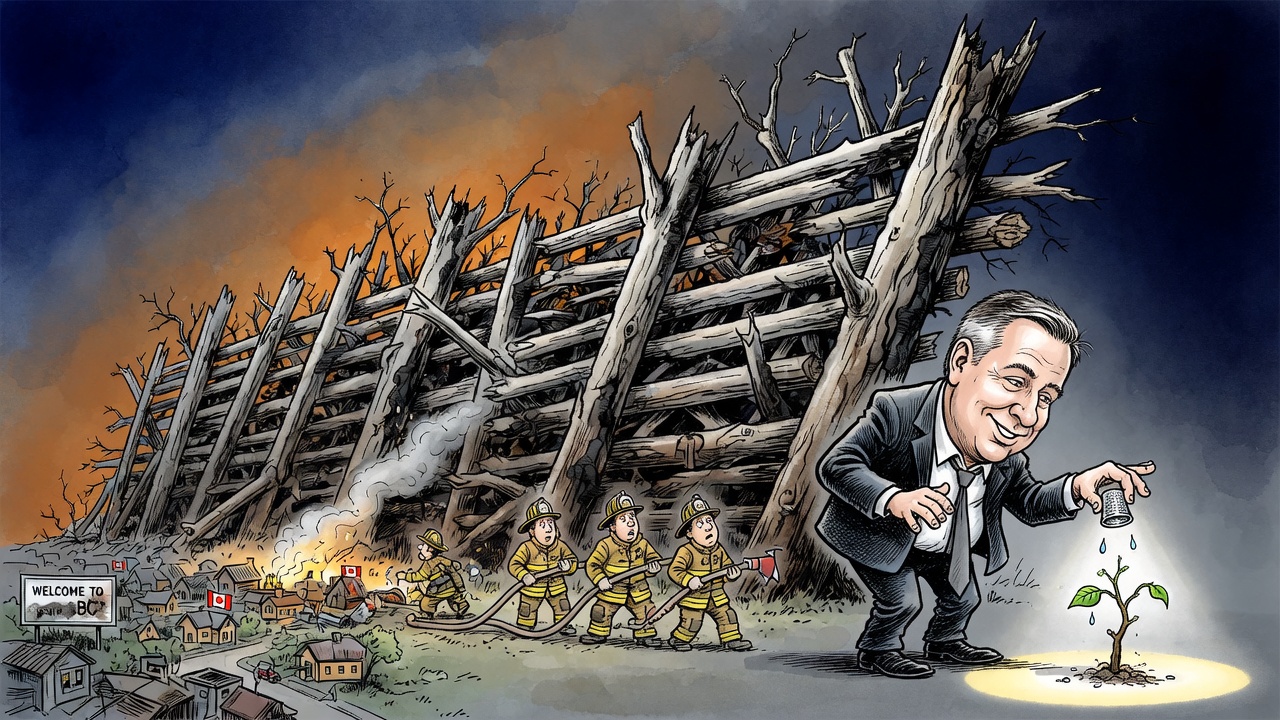
B.C. does not need another wildfire season to learn that fuel, drought, access and evacuation planning matter. The question is whether David Eby’s government is moving from announcements to measurable prevention at the scale communities can see.
Tree Frog Creative republished Castanet reporting on September 2 that John Betts, executive director of the Western Forestry Contractors’ Association, says B.C. must “take the heat out of the woods” as wildfire risk grows. The report says Betts represents independent forestry contractors and consultants, and that his prescription is not fire everywhere at once, but a practical mix of controlled burning, thinning, and removing dead and smaller trees.
That is not an abstract policy seminar. Castanet reported on August 26 that Peachland Mayor Patrick Van Minsel planned to raise wildfire mitigation and future funding with Forests Minister Ravi Parmar. Councillor David Collins put the public-money question plainly: he hoped officials would discuss spending more on wildfire prevention rather than the hundreds of millions spent fighting wildfires.
The province can point to programs. In April, the Ministry of Forests said an expanded BC Timber Sales mandate would create new contract opportunities, including commercial thinning and wildfire-risk reduction. In the same release, its “early results” included 78 hectares of prescribed fire completed in 2024-25 to improve forest resilience and reduce wildfire risk.
In June, the ministry announced $20 million per year over three years through the Forest Enhancement Society of BC, with 60 projects in 2026-27. The listed work includes fuel breaks, residual-fuel removal, prescribed burns and egress-route improvements. Those are real categories of prevention, and local projects can matter.
But a grant list is not the same thing as a provincewide prevention ledger. If contractors are saying the woods need thinning and prescribed fire at scale, and municipalities are asking for more protection before the next evacuation order, British Columbians deserve the numbers in one place.
How many hectares have actually been treated this year? How many were prescribed but delayed? How many contractors were available but unused? Which communities have completed fuel breaks, which are waiting, and why? How much did B.C. spend on suppression compared with prevention, and what target ratio is the ministry trying to hit?
Prevention is cheaper to praise than to execute. The NDP should stop treating wildfire mitigation as a ribbon-cutting category and publish a monthly ledger: hectares treated, burns completed, thinning contracts issued, projects delayed by permitting or capacity, evacuation routes improved, and communities still exposed. If Victoria’s plan is strong, the ledger will prove it. If it is not, the public should know before the smoke column appears.
Sources and records
- Tree Frog Creative / Castanet: Forestry contractors urge B.C. to expand thinning, controlled burns
- Castanet Kamloops: Peachland to urge province to do more to mitigate wildfires
- B.C. Ministry of Forests: BCTS mandate changes and early results
- B.C. Ministry of Forests: Strengthening wildfire prevention, creating local jobs