Fort Nelson’s ER Closed Twice in Three Days. That Is Not a Rural Health Plan.
Two emergency-room closure windows over one long weekend are not a weather event. They are a staffing failure with a highway attached.
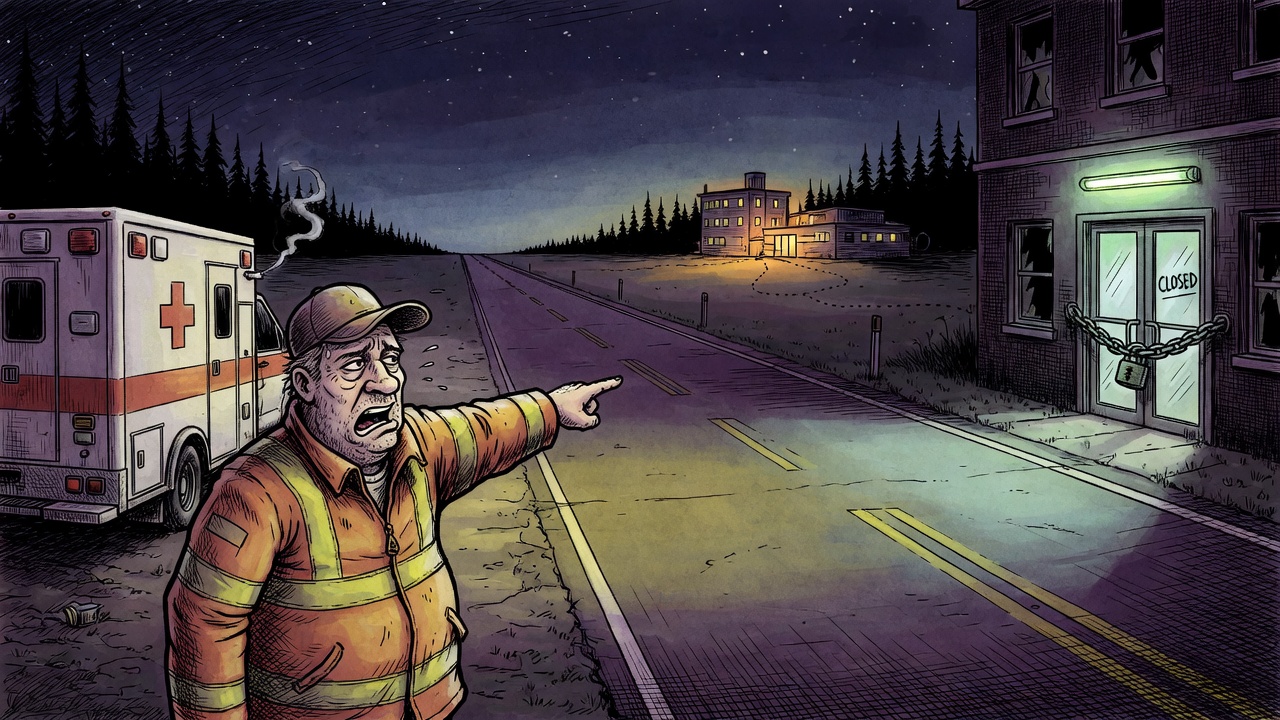
Fort Nelson did not lose emergency-room service once over the long weekend. It was told to absorb two separate shutdown windows in four days.
Energeticcity reported on September 4 that Fort Nelson General Hospital’s emergency department would be closed from 6:00 a.m. Friday, September 4 until 8:00 a.m. Saturday, September 5 because of staffing challenges. The same outlet reported on September 6 that the ER was shuttered again from 6:00 a.m. Sunday, September 6 until 8:00 a.m. Monday, September 7, citing a Northern Health Facebook post and describing it as the second closure in a matter of days.
Put plainly, those two scheduled interruption windows add up to 52 hours without the local ER. For a remote northern community, that is not an inconvenience measured in city blocks. It is an emergency-care gap measured in highways, winter-risk planning and ambulance availability.
During the September 4 closure, Energeticcity reported that people needing emergency care were directed to call 9-1-1 or travel to Fort St. John. That instruction may be the safest available option once a closure is unavoidable. But it should alarm every British Columbian who has heard years of provincial assurances about strengthening rural health care.
Northern Health’s emergency-department status page makes clear that emergency-service interruptions can happen with little notice, including after hours, and that its facility list refreshes every 10 minutes. That is useful public information. It is not a staffing plan, a capacity plan or a guarantee that the next interruption will not land on another rural community with nowhere close to go.
No one should blame the nurses, physicians, paramedics or local staff who are trying to keep care functioning under pressure. The accountability belongs higher up: with Northern Health leadership, Health Minister Josie Osborne and David Eby’s government. Repeated “temporary” closures are how permanent service erosion begins to look normal.
The province should release the Fort Nelson ledger now: every 2026 ER closure window, the uncovered shifts behind each one, the number of patients redirected, ambulance-service impacts, locum coverage efforts, recruitment targets and the date by which the community can expect reliable 24-hour emergency coverage again.
Rural residents pay taxes, raise families, run businesses and drive dangerous roads like everyone else. They should not have to learn from another notice that the front door of emergency care is closed again. If the Eby government cannot keep a rural ER open, it owes the community more than a polite interruption notice. It owes a public recovery plan with names, dates and numbers.