Eby’s Safety Tax: Businesses Pay for Disorder, Then Pay PST on Security
A new business survey says crime and street disorder are hurting workers, customers and commercial districts. On October 1, Victoria adds PST to many security services businesses use to protect themselves.
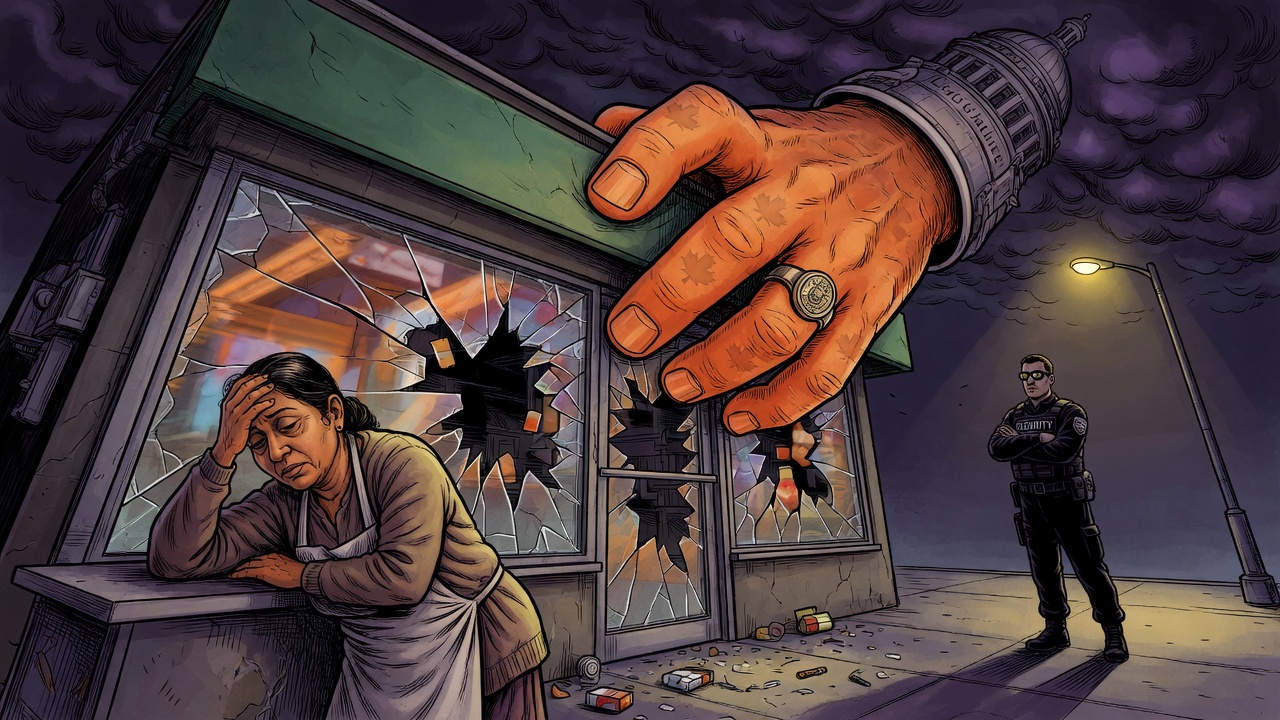
B.C. businesses are not talking about public safety as an abstract debate. They are talking about employees starting or ending shifts around aggressive behaviour, open drug use, vandalism, shoplifting, break-ins, graffiti and discarded drug paraphernalia.
CityNews reported Sunday that a new Business Improvement Areas of B.C. survey found widespread concern about crime affecting employees, customers and commercial districts. BIABC represents most of the province’s 80 business improvement districts and more than 55,000 small businesses. Its survey of 100 businesses found 65% called public safety and street disorder significant concerns, 63% said operating conditions had worsened over the past year, and 68% were worried about crime’s impact on employees.
The workforce impact is direct. According to the CityNews report, half of respondents said safety concerns are making it harder to recruit and retain staff. Eighty-nine per cent said governments are not doing enough on repeat offending, retail crime and public safety.
Now comes the extra invoice. The province’s own PST guidance says that, effective October 1, 2026, PST applies at 7% to the purchase price of taxable security services. The page covers services tied to B.C. security business licensing, including security guard service, alarm service, private investigation, security consulting and armoured car guard service. It also says stand-alone security alarm monitoring sold on or after October 1 must generally be charged PST unless an exemption applies.
That is why BIABC’s survey result matters: 90% of surveyed businesses supported the call to pause the PST expansion to professional services such as private security. These are businesses that say they are already paying because public order has broken down around them. They pay for repairs. They pay for guards, cameras and alarm monitoring. Then the province asks them to pay tax on the safety bill.
Premier David Eby has already been asked about this in the Legislature. In May estimates, an opposition MLA raised the example of a small White Rock business that hired private security because of shoplifting and asked why the province would charge additional tax on that cost. Eby answered by pointing to spending on chronic property offending, repeat violent offending, targeted enforcement and community safety programs. He also said private security can be helpful but is not the long-term solution.
Fair enough: private guards should not be the long-term solution. That is exactly the point. If businesses are buying security because the public system is not protecting staff, customers and storefronts, taxing that purchase is a punishment layered on top of failure. The government should pause the October 1 security-service PST expansion, publish the expected revenue from taxing security, and show businesses a measurable plan for repeat offending, retail crime and street disorder. Until then, Victoria is not just asking businesses to be resilient. It is charging them for the privilege.