Lillooet Loses Its ER Again. A Two-Hour Detour Is Not Rural Health Care.
When the nearest backup emergency department is across a mountain highway in Kamloops, a 13-hour closure is not a scheduling inconvenience. It is a public-safety failure.
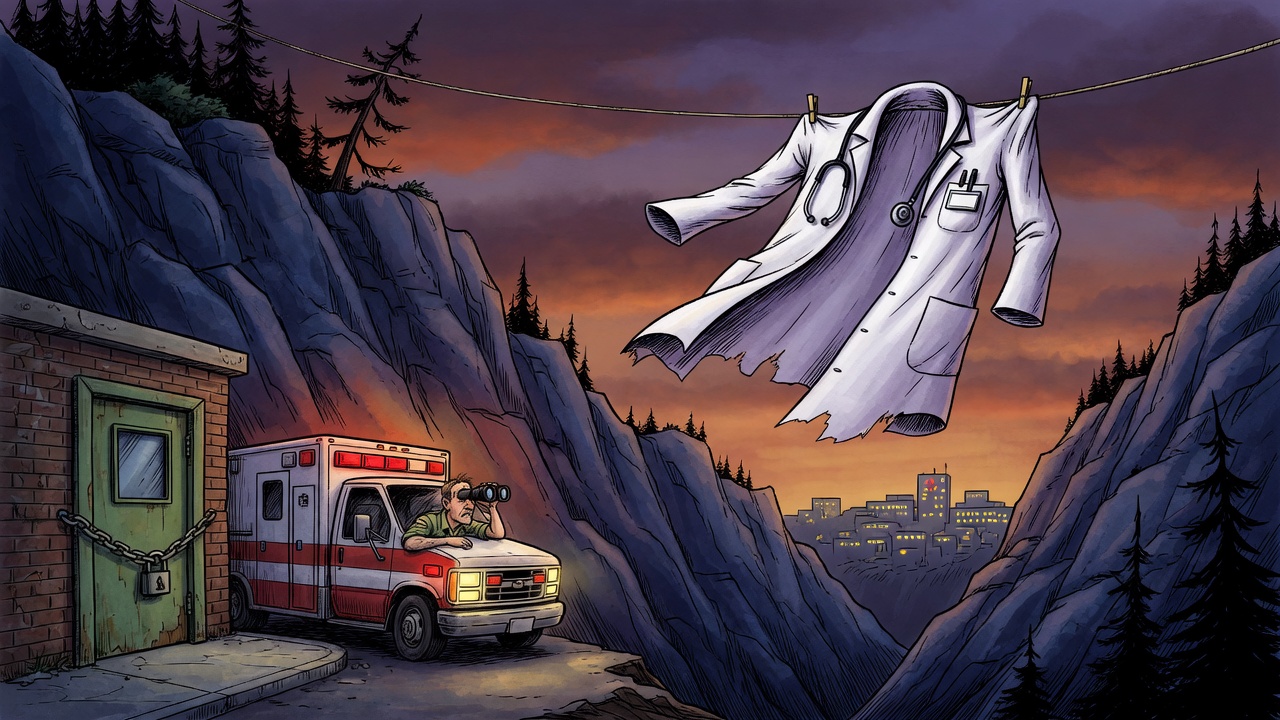
Lillooet is losing its emergency room again. CFJC Today reported Friday that Interior Health said emergency services at Lillooet Hospital would be unavailable for 13 hours on Saturday, September 5, from 7:00 a.m. to 8:00 p.m. The same report says this is the fourth Lillooet emergency-department closure in 2026.
Interior Health’s own location page describes Lillooet Hospital & Health Centre as a Level 1 community hospital in the Fraser Canyon and says emergency services normally operate 24 hours a day, seven days a week. That is the public promise rural residents see. The Saturday reality is different: for emergency care, patients are directed to Royal Inland Hospital in Kamloops, which CFJC describes as a two-hour drive away.
Interior Health says other inpatient services remain available during the closure. It also says people facing life-threatening emergencies — including chest pains, difficulty breathing or severe bleeding — should call 9-1-1 for transport to the nearest available and appropriate facility. Those are necessary instructions. They are not a health-care plan.
A two-hour emergency detour changes the meaning of “access.” It changes the calculation for seniors, parents, workers, tourists, Indigenous communities, first responders and anyone who has to decide whether symptoms are serious enough to call an ambulance. In a rural region, time is not an abstraction. Time is the system.
The Eby government cannot keep treating rural ER closures as isolated operational notices while telling British Columbians that health care is being fixed. Staffing failures that repeatedly close emergency rooms are not just Interior Health communications problems. They are provincial capacity problems: recruitment, retention, scheduling resilience, relief coverage, ambulance coordination, and transparent reporting.
The missing piece is a public rural-ER ledger. How many hours has Lillooet lost this year? How many patients were diverted? How long did ambulances wait? What staffing roles were missing? How many shifts are still uncovered for September and October? What is the funded recruitment target for doctors, nurses and allied staff at Lillooet — and by what date?
If Victoria has answers, it should publish them. If it does not, that is the story.
Small communities are not asking for slogans. They are asking for the core service that Interior Health itself advertises: emergency care available all day, every day. When that service disappears for 13 hours and the backup is two hours away, the province owes more than a notice. It owes a plan with names, numbers, dates and accountability.