B.C. Cut TFL 30. Now Show Northern Communities the Impact Ledger.
Another northern harvest reduction may be defensible on forestry grounds. It is not defensible as public accountability unless Victoria also shows the economic cost.
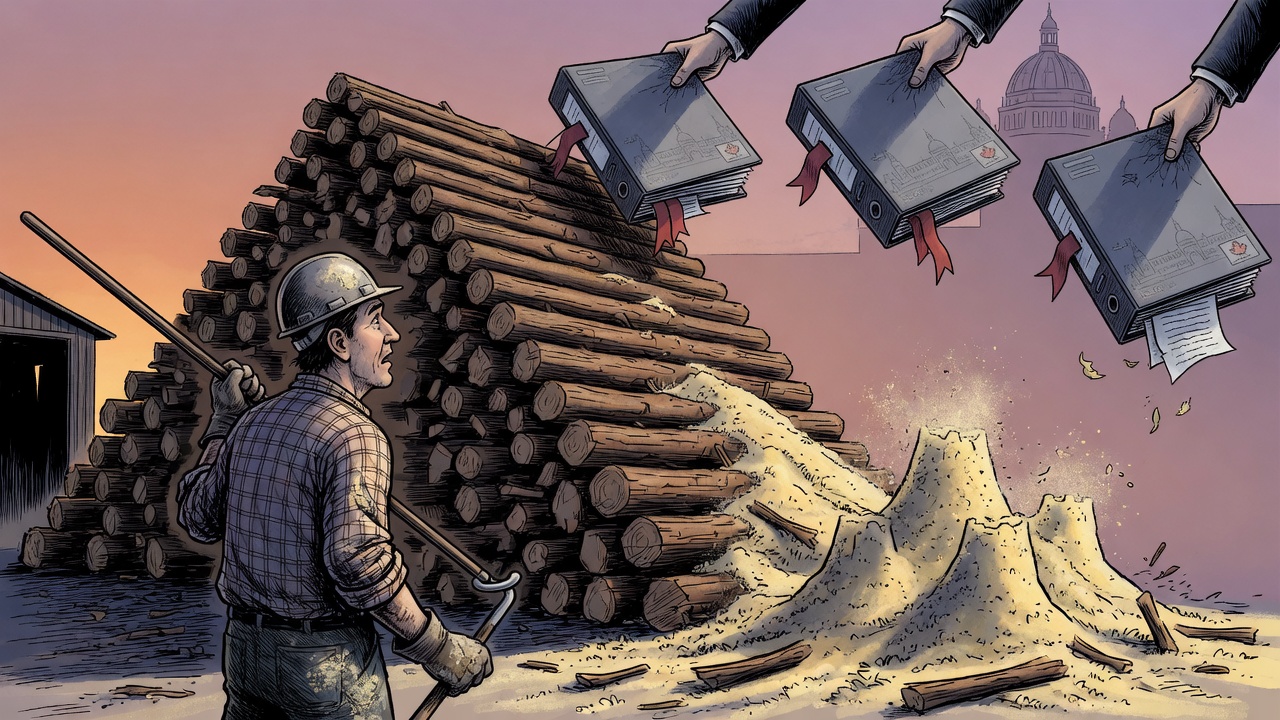
The Ministry of Forests released another northern forestry decision on Friday: Tree Farm Licence 30, northeast of Prince George, now has an allowable annual cut of 340,000 cubic metres. The province says that is 17.6% below the previous level of 412,500 cubic metres.
The technical rationale matters. Government says the reduction reflects new information about what timber is economically available, additional retention for wildlife habitat, riparian protection, rare ecosystem conservation, cultural and archeological sites, unsuitable or uneconomic areas, and climate-change considerations. The licence area overlaps the territories of Lheidli T’enneh Nation, McLeod Lake Indian Band, West Moberly First Nations and Tsay Keh Dene Nation, and the province says First Nations issues included moose habitat and stream, riparian and fish-habitat protection.
Nobody serious should pretend those factors are irrelevant. Sustainable harvest is not optional. First Nations consultation is not optional. Protecting streams, fish habitat, moose habitat and cultural sites is not a footnote.
But northern communities are entitled to more than a technical notice that says, in effect, the working forest is smaller now. The public-facing announcement gives the new cut, the percentage reduction and the environmental and cultural reasons. What it does not give is the economic ledger: expected job impacts, contractor impacts, trucking impacts, BC Timber Sales impacts, mill-supply impacts, local tax and community revenue impacts, or a plan to replace lost working-forest opportunity with comparable private-sector work.
That omission is the accountability failure.
The province’s own rationale says the deputy chief forester must consider government’s economic and social objectives. It also notes public engagement: draft materials were available in 2023 and 2024, and the final management-plan review received comments from BC Timber Sales but no additional public comments. That may satisfy process. It does not answer the kitchen-table question in Prince George, Mackenzie, Bear Lake, Summit Lake or any other community tied to fibre supply: what does this mean for paycheques?
The rationale also flags operational uncertainties that deserve plain-language explanation. It says quantifiable factors suggested the base case overestimated timber supply by 18.75%. It identifies BCTS unharvested and unused volume, grade 4 credit and Canfor unused and unharvested volume as issues requiring further reporting. It acknowledges that future riparian buffers, moose habitat, cultural heritage protection, climate impacts and isolated patches may restrict timber supply in ways that cannot yet be fully quantified.
That is exactly why the government should publish an impact ledger beside every major harvest reduction. Not a slogan. Not a photo-op. A table.
How much fibre is removed from the operating supply this year? Which mills were relying on it? How much BCTS volume is affected? How many logging, hauling, road-building, silviculture and maintenance jobs are exposed? What mitigation is funded, by whom, and on what timeline? Which assumptions will trigger an earlier review before the 10-year mark?
Victoria keeps asking forestry towns to accept less certainty and fewer working-forest acres while trusting that policy is under control. Trust is not a forest plan. If the Eby government can publish 62 pages explaining why the cut is necessary, it can publish one clear ledger showing what the cut will cost and how northern families are supposed to absorb it.