Another Weekend, Another Ferry Breakdown: BC Ferries’ Aging-Fleet Bill Comes Due Again
The Sunshine Coast does not need another explanation after the fact. It needs a ferry system that does not treat breakdowns as routine weekend risk.
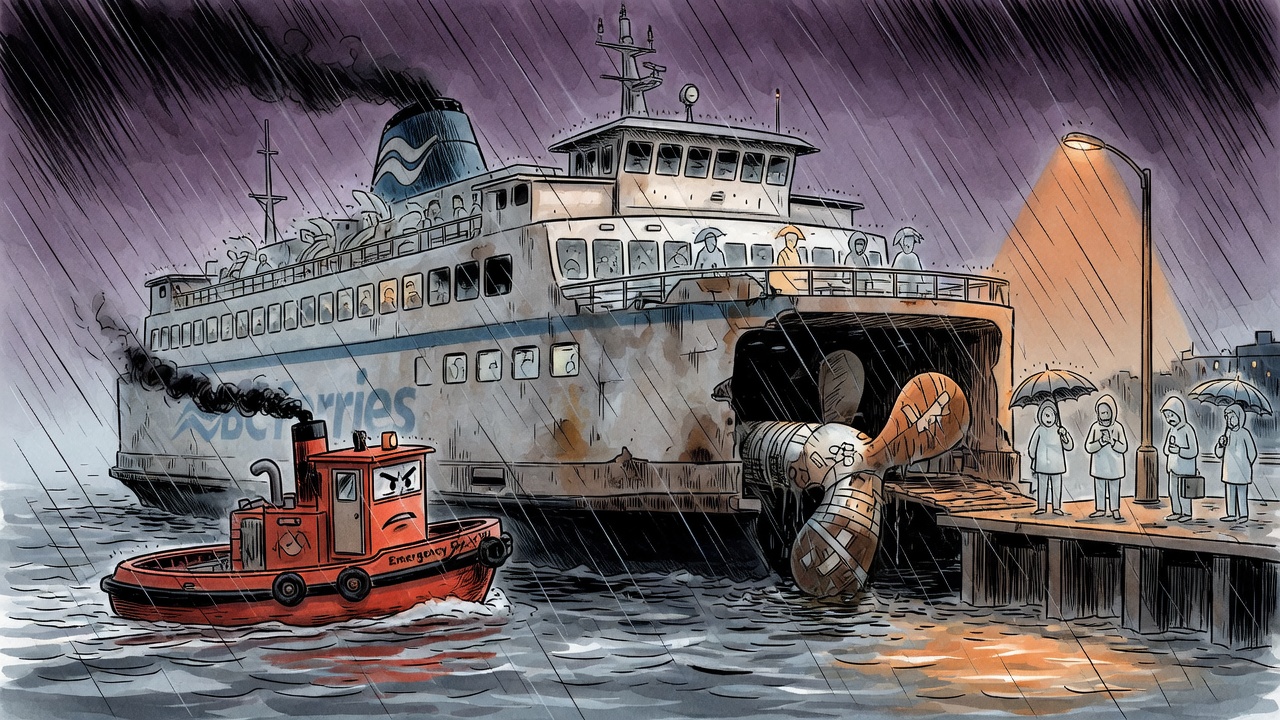
Another weekend, another ferry breakdown — and this time the image said more than any briefing note. CBC, carried by Yahoo News, reported that BC Ferries restored normal service between Metro Vancouver and the Sunshine Coast after mechanical issues disrupted the Horseshoe Bay–Langdale route on Saturday. Most of the trouble was tied to a propeller-shaft problem on the Queen of Surrey, which appeared Friday evening and required the vessel to be assisted back to dock by a tugboat.
For Sunshine Coast travellers, that translated into cancelled Saturday-morning sailings and another round of uncertainty on a route that functions less like a luxury trip and more like a highway connection. The same report noted a separate clutch-related delay on the Queen of Coquitlam’s 8:40 a.m. sailing, which left that vessel held in dock before departing after a long wait.
The Queen of Surrey is not a mystery ship. It was launched in 1980 and entered service in 1981. The CBC report described the propeller-shaft incident as the latest in a series of mechanical problems, including April cancellations connected to generator and steering-panel issues and a September 2025 turbocharger problem. That is a pattern ferry users can feel in missed appointments, stranded workers, delayed freight and weekend plans built around contingency rather than confidence.
BC Ferries has already put the bigger warning in writing. In a March 2025 release about the Queen of New Westminster’s return after almost 200 days out of service, the company said the Queen of New Westminster, Queen of Oak Bay and Queen of Surrey were built in the 1960s and 1980s, making maintenance slower and more complicated. It also warned that aging ships have more frequent, unpredictable breakdowns that take longer to fix.
BC Ferries’ New Major Vessels material says the replacement ships are meant to improve reliability, reduce mechanical and maintenance-related disruptions, and strengthen system resilience. That is exactly the point: the public agency responsible for running the service is telling British Columbians the system needs renewal because old ships break down and because thin backup capacity turns mechanical trouble into public disruption.
The NDP government should not pretend this is just an operational footnote. Coastal communities pay the price when the fleet is stretched, aging and short on relief capacity. If Victoria wants credit for ferry investments, it should also accept accountability for the years in which people are still waiting at terminals while old vessels limp through another peak season.
David Eby’s government owes ferry users a clear public scorecard: which major vessels are at highest mechanical risk, how many sailings are being lost to breakdowns, how much relief capacity is available on each route, and what milestones will be met before the first new major vessel arrives. “Complex refit season” is not a plan. A tugboat pushing a ferry back to dock is not resilience. It is the bill for delay arriving at the terminal.