B.C.’s Emergency Inclusion Promise Hit a Wall at the Evacuation Desk
Mandatory inclusion on paper is not enough when evacuees cannot get alerts, interpreters or accessible registration.
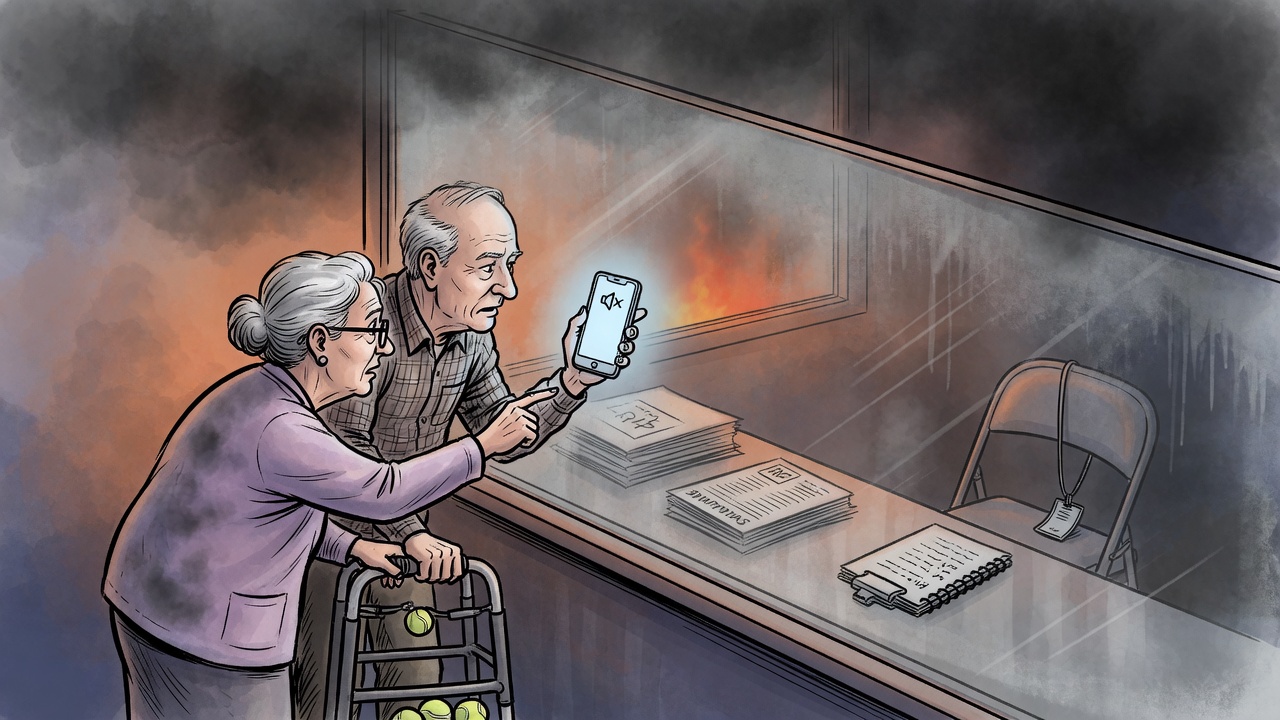
Under B.C.’s emergency regime, disability inclusion is not supposed to be a courtesy added after the crisis. It is supposed to be built into the plan before the sirens, alerts and evacuation desks decide who gets clear instructions and who is left guessing.
Canadian Press reported Saturday that Janice Lyons, a 74-year-old Deaf Summerland resident, did not see a phone alert or television notice before a neighbour warned her about the Bald Range wildfire. Her husband is also Deaf and uses a walker. That is the first failure line in any emergency system: if the warning does not reach people in a form they can use, the rest of the plan starts late.
The account gets worse at the point where government support should become easiest to navigate. Lyons told CP the Penticton evacuation registration centre had no interpreter, written communication was difficult, and her husband was told evacuation-aid registration had to be done in person. Wildfire briefings that week were also broadcast without ASL interpretation, according to the report.
Those are not abstract accessibility debates. They are practical barriers during a fast-moving wildfire emergency. A person who cannot hear a briefing should not be forced to decode government instructions after the fact. A person who uses a walker should not be pushed toward in-person bureaucracy if safer alternatives exist. A couple escaping a wildfire should not need a neighbour to become the missing link in the alert chain.
The province cannot say it was unaware that accessibility belongs in emergency planning. The Emergency Management and Climate Readiness ministry told CP that B.C.’s emergency management legislation requires planning to consider disability and equity, and that the law moves the province away from a patchwork approach. WorkSafeBC made the same operational point in an Aug. 11 wildfire evacuation advisory, urging employers to plan for everyone, including people with disabilities and people who do not speak English.
Premier David Eby’s Aug. 8 statement said the Bald Range wildfire grew rapidly, forced a large-scale evacuation overnight and triggered a provincial state of emergency. EmergencyInfoBC’s state-of-emergency page remained active this week. In other words, this was exactly the kind of event where the province’s modern emergency framework was supposed to prove itself.
Firefighters, local officials and emergency volunteers deserve support for dangerous work. But support for front-line responders does not require silence about system design. The question for Victoria is concrete: who checked whether alerts, briefings, registration, hotel referrals and emergency payments were accessible to Deaf evacuees, people with mobility limits and families who could not communicate easily in English?
B.C. should release a plain accessibility audit of the Bald Range response: which briefings had ASL, which did not, how many evacuees needed disability-related accommodation, how many received it, and what changed after problems were identified. Mandatory inclusion that disappears at the evacuation desk is not inclusion. It is paperwork.
Sources and records
- CityNews Vancouver / Canadian Press: Wildfires expose evacuation gaps for Canadians with disabilities
- Global News / Canadian Press: Wildfires expose accessibility failures, advocates say
- WorkSafeBC: Review wildfire evacuation plans
- Government of B.C.: Premier’s statement on state of provincial emergency
- EmergencyInfoBC: State of Provincial Emergency