Vancouver Housing Starts Plunge 42% After Years Of Eby Promises
Announcements are not housing starts. Concrete in the ground is the test.
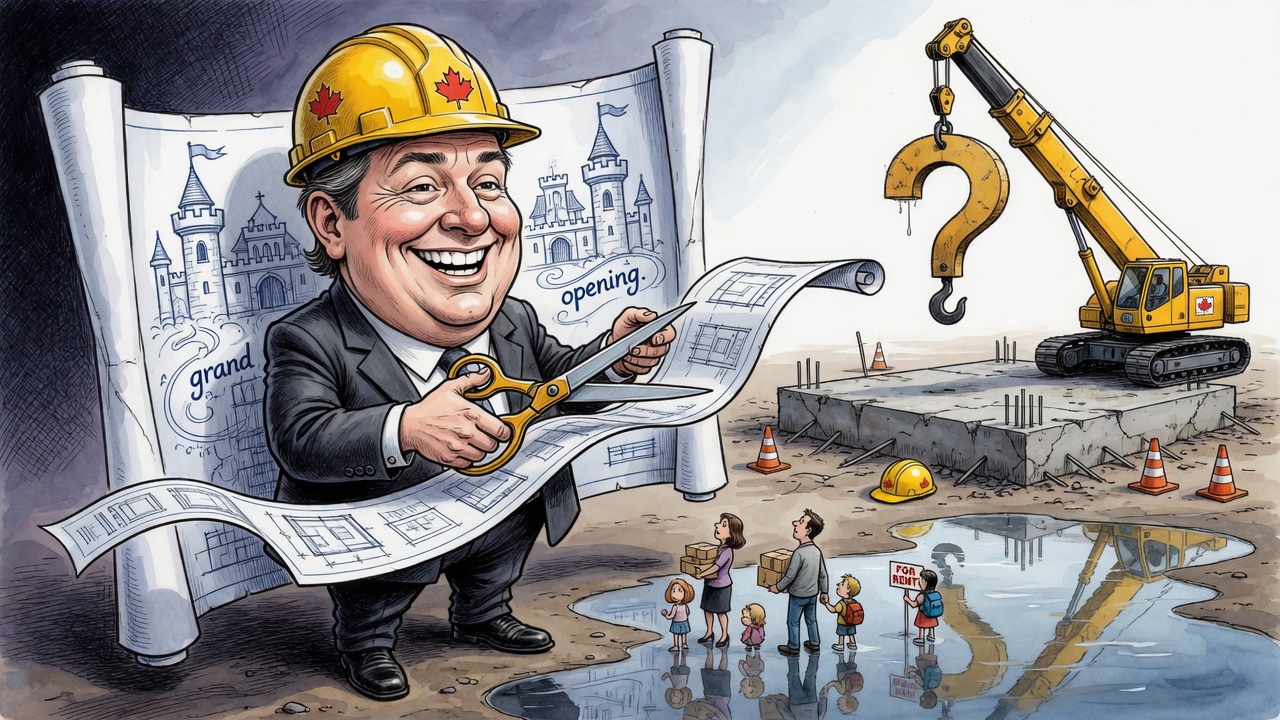
David Eby has built his political brand around moving faster on housing. Today’s test is not another announcement, another target or another podium sign. It is whether homes are actually breaking ground.
On that measure, the latest CBC report is brutal. CBC News reported August 21 that Vancouver housing starts are down 42 per cent compared with last July, citing Canada Mortgage and Housing Corporation data. A housing start is not a ribbon-cutting phrase. CMHC counts it when construction begins on a residence — when concrete is poured into a foundation.
That is why this number matters. The NDP has centralized housing power, overridden local governments, promised speed and sold supply as the answer to the affordability crisis. Yet in the country’s most expensive housing market, the current signal from the ground is a 42 per cent drop.
The Vancouver decline is not just part of a uniform national slump. CBC reported that Toronto starts were down 10 per cent, while Montreal saw a three per cent increase. Vancouver’s downturn was sharper, and the warnings from people inside the market were not subtle.
Mike Drummond, CEO of the Urban Development Institute, told CBC’s On The Coast that it is the “worst housing market and housing downturn in the last 30 years.” He argued construction costs must fall, saying a building that cost one amount in 2015 can cost roughly double today, and called for lower taxes and fees on housing.
CMHC’s deputy chief economist Tania Bourassa-Ochoa also warned that fewer new projects are being started in many markets, notably Vancouver, Calgary and Toronto. CBC reported her view that starts are likely to remain subdued over coming months because of continuing challenges getting projects to market.
The affordability problem cuts both ways. SFU City Program director Andy Yan told CBC the findings raise questions about whether the homes being built match local incomes. By his calculation, about 70 per cent of built-but-unsold Vancouver condo units cost more than $1 million. In plain English: the market can be short of homes and still full of units ordinary workers cannot buy.
None of this means Victoria alone controls interest rates, construction materials, labour costs, municipal fees, presales or global capital. But it does mean the NDP cannot keep claiming housing victory while the foundation count collapses in Vancouver. If government policy is supposed to unlock supply, the public deserves to see supply moving, not stalled spreadsheets and expensive unsold condos.
Eby’s government should answer the practical questions. Which provincial rules are still adding cost? Which approval promises have actually changed timelines? Which projects are no longer viable? How many homes will be completed at prices B.C. incomes can sustain?
Because for renters, young families and workers trying to stay near their jobs, a housing plan is not measured by slogans. It is measured by keys, homes and concrete. Right now, Vancouver’s concrete count is flashing red.