B.C. Gave Performance Raises While Running Record Red Ink
If this is performance pay, British Columbians deserve to know what performance is being rewarded.
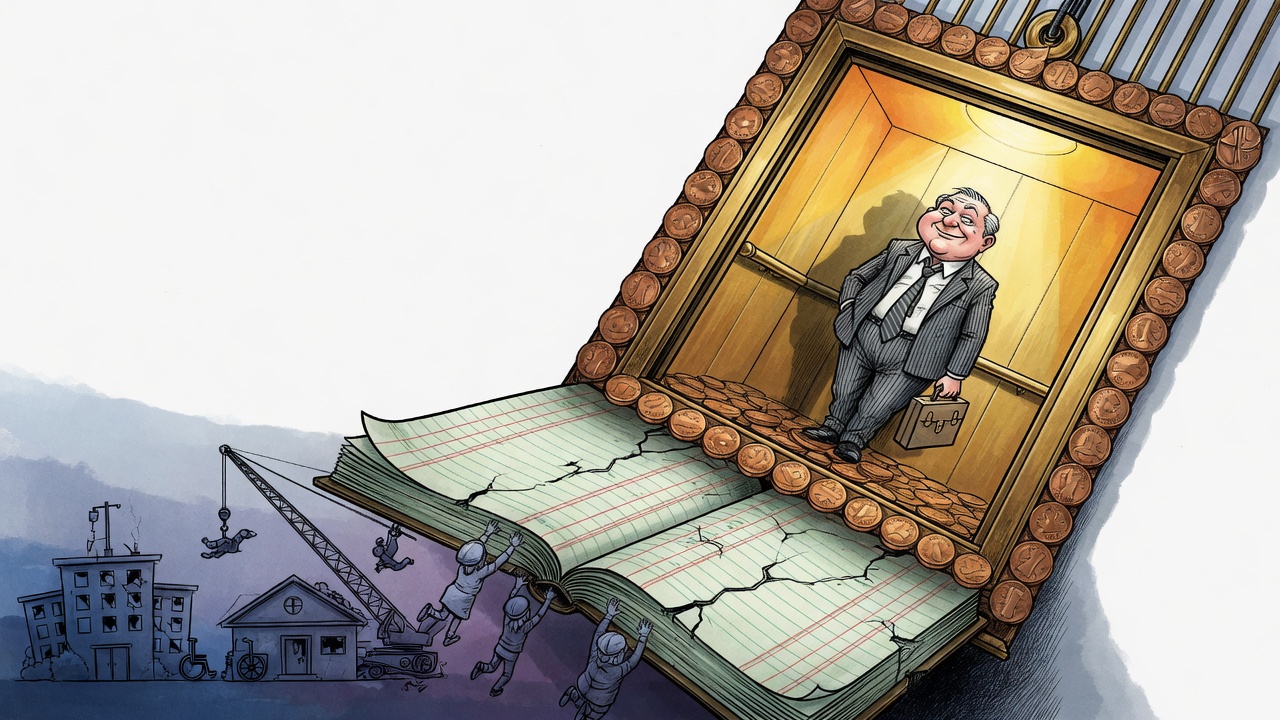
British Columbians are being told the province has to tighten up. Programs are being trimmed. Jobs are being reduced. The deficit is historic. Yet at the top of government, Rob Shaw reports, senior B.C. executives and political staffers received “performance-based” raises during the same fiscal year.
The raises were not huge in percentage terms. That is not the point. Shaw reported the increases ranged from two to 2.5 per cent, were authorized by the NDP government in February, and were made retroactive to July 1, 2025. The question is whether a government presiding over record red ink should be rewarding its own upper ranks while telling everyone else that restraint is unavoidable.
The government’s own executive-compensation disclosure says performance-based in-range increases are not an annual entitlement. It says they are earned by demonstrating good and superior performance during the performance period and in the absence of government expenditure restrictions. The same disclosure says executives received performance-based compensation adjustments between 2 and 2.5 per cent in 2025.
That wording matters because the fiscal context is not normal. Shaw reported B.C. recorded a $7.7-billion deficit in 2025-26, the largest in provincial history. He also reported the Finance Ministry put the cost of the pay increases at $23 million, while the province was cutting positions and searching for savings.
The disclosure also shows how high the ceiling has climbed. April 2025 executive salary ranges set deputy ministers as high as $356,100, and the deputy minister to the premier as high as $415,900. The table lists Shannon Salter, Deputy Minister to the Premier and Cabinet Secretary, at $434,073 in total compensation for 2025-26, up from $414,668 the year before and $401,460 in 2023-24.
None of that makes the increases unlawful. It does make them politically revealing. The public is entitled to ask what “good and superior performance” means when emergency rooms are under strain, long-term-care capacity remains a pressure point, housing affordability is still crushing households, and the government is trying to claw savings out of the broader public sector.
There is also a fairness problem. Shaw noted unionized workers fought for their increases through bargaining, including a long BCGEU strike. Executives did not walk a picket line to win these performance adjustments. They received them through a system the government controls.
Premier David Eby’s government cannot have it both ways. It cannot present the deficit as a crisis when programs face cuts, then treat top-level compensation as routine administration when insiders benefit. If performance pay is justified, publish the performance case clearly. If spending restrictions exist for everyone else, explain why they did not stop these increases.
Because this is about more than $23 million. It is about the message sent from Victoria: sacrifice is for the public to absorb, while the people managing the system still move up.