Eby’s Forest-Zoning Plan Starts Behind A Closed Door
A government that says it respects consultation should not let a major forest-land plan surface first through an internal email.
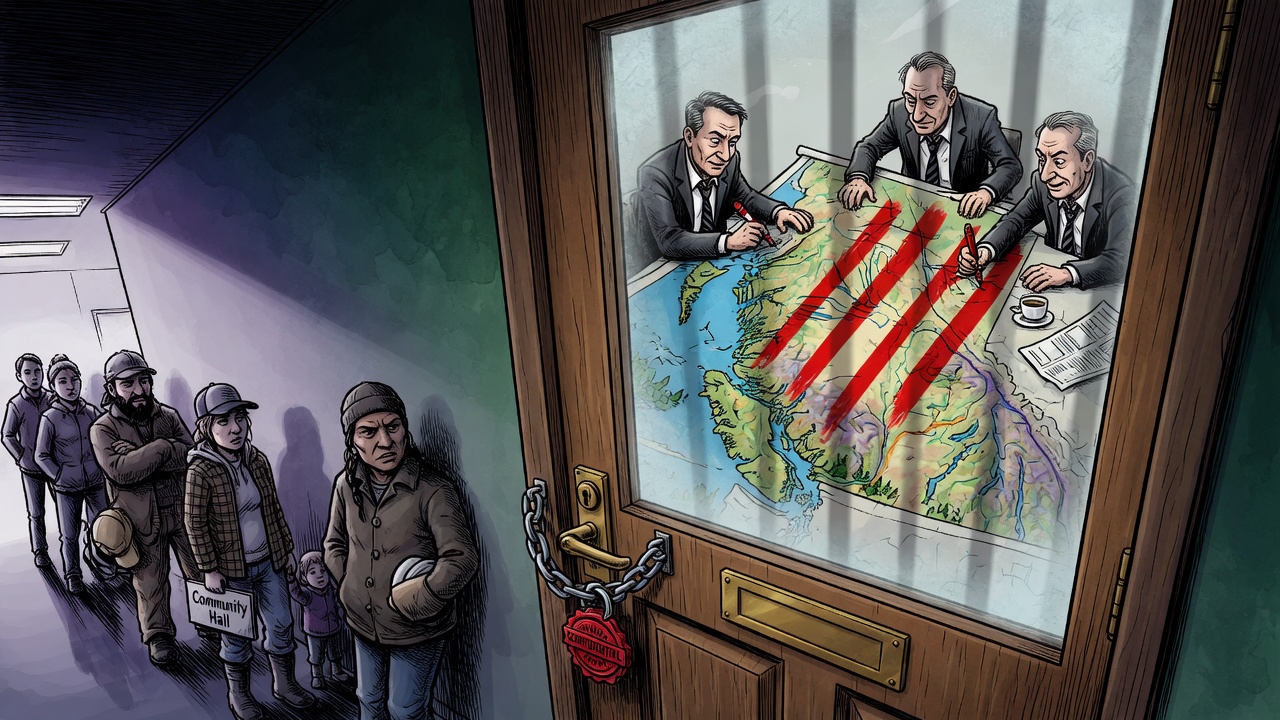
B.C.’s forests may be heading for a new zoning fight, and the first warning sign is process.
The Tyee reports the province is considering dividing forest lands into three categories: commercial forestry, multiple-use, and conservation/protection. That is not a minor housekeeping exercise. It is a potential rewrite of where logging, conservation, restoration and other industrial activity are expected to fit across the public land base.
Yet the plan did not begin with a clear public launch. The Tyee says it was revealed through an early-July email circulated to staff in the Ministry of Forests and the Ministry of Water, Land and Resource Stewardship. The reporting says the email offered no detail on how much forest could be assigned to each zone and did not say whether affected parties had advance notice.
That matters because the NDP has spent years presenting DRIPA as a core governing commitment. The Tyee reports Grand Chief Stewart Phillip of the Union of BC Indian Chiefs said UBCIC’s 140-plus member First Nations received no notice of the government’s intentions. He called the approach a breach of B.C.’s DRIPA responsibilities to consult First Nations.
The ministries’ response, as reported by The Tyee, was that consultation and engagement will begin shortly. They also said a fall test phase will include First Nations, industry, local governments, environmental organizations and public updates. That is better than no engagement at all, but it does not erase the obvious question: why were officials already examining how the model could be applied before title holders, communities and local governments had a full public process in front of them?
The industry context is also clear. The Tyee reported the Council of Forest Industries welcomed the initiative and tied it to the province’s goal of achieving a minimum annual harvest of 45 million cubic metres. Premier David Eby’s mandate letter to Forests Minister Ravi Parmar sets out a priority to work with partners, including Indigenous governments, toward a sustainable land base that enables that 45-million-cubic-metre harvest.
No one should pretend B.C.’s forest sector is healthy. Mills, workers and rural communities need certainty. Watersheds, old-growth ecosystems and wildlife also need credible safeguards. First Nations need more than a promise that consultation will catch up after internal lines are already being sketched.
This is the accountability standard: if the government wants to redraw the forest map, it should show British Columbians the map, the science, the tradeoffs, the timelines and the decision points. Consultation later is not the same as consent, partnership or trust from the start.