Sixty-One Percent Say Pause Title Talks. Why Won’t Eby?
Voters are not asking Victoria to abandon reconciliation. They are asking for clarity before legal and land-title changes keep moving.
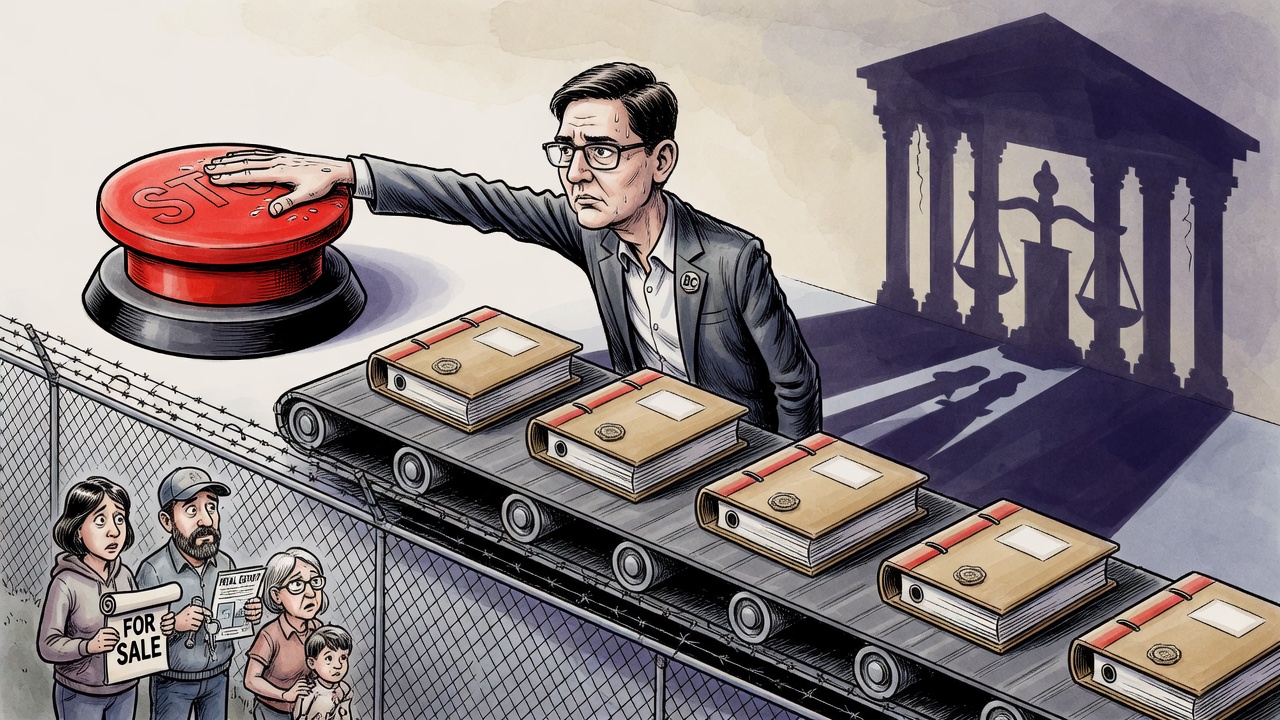
A new Research Co. poll has turned B.C.’s Cowichan and UNDRIP debate into a direct accountability test for David Eby’s government.
The headline number is not subtle: Research Co. reports that 61% of British Columbians think all negotiations related to Aboriginal title agreements in B.C. should be paused until the Cowichan Tribes case is settled. That is up nine points from a similar poll in November 2025. The same survey says 69% believe property owners should be concerned about the consequences of the court decision, including 76% of people aged 55 and over and 75% of primary-residence owners.
Those numbers do not give any government permission to inflame fears or abandon reconciliation. They do demand a grown-up answer about pace, notice and democratic consent. The public is not being asked about a slogan. It is being asked to absorb the practical consequences of court findings, title negotiations, municipal planning, private property assumptions and provincial DRIPA policy at the same time.
Research Co. also reports that 47% of British Columbians have heard about UNDRIP, up 12 points since November, while support for the federal UNDRIP Act as a positive development has fallen to 59%, down 14 points. Negative views rose to 25%. That shift should worry any government that claims to be building durable public support for reconciliation. Public confidence does not survive if people feel decisions are racing ahead faster than explanations.
The Cowichan decision itself is not a rumour. In Cowichan Tribes v. Canada (Attorney General), indexed as 2025 BCSC 1490, the B.C. Supreme Court found Aboriginal title in relation to lands in Richmond. Research Co. summarizes the ruling as covering more than 5.7 square kilometres and stating that Aboriginal title is a prior and senior right to other property interests.
That is why the pause question matters. If Victoria believes continuing negotiations during appeals and uncertainty is the right course, Eby should say exactly why. Which negotiations are continuing? Which communities, municipalities and property owners receive notice? What happens if a court later changes the legal foundation underneath agreements already advanced? What is the province’s position on fee simple title where Aboriginal title is found?
None of those questions attacks Indigenous rights. They are basic rule-of-law questions in a province where people need to know how land decisions are made and who is accountable for them.
The NDP’s political habit is to frame criticism of process as hostility to the goal. That will not work here. A majority pause finding is not a fringe signal. It is a warning that the government’s public mandate is fraying precisely because the public feels under-informed.
Eby should stop pretending reassurance is a substitute for disclosure. If the government is confident in its title-negotiation process, it should publish the guardrails, explain the legal risks, and tell British Columbians why it refuses to press pause while the Cowichan case is still unsettled.