Smithers Cell Death Shows B.C.’s Safeguards Failed Where They Mattered Most
A B.C. police oversight finding should alarm anyone who believes written policies protect people in custody. In Smithers, CBC reports, the required safeguards existed — and were not followed.
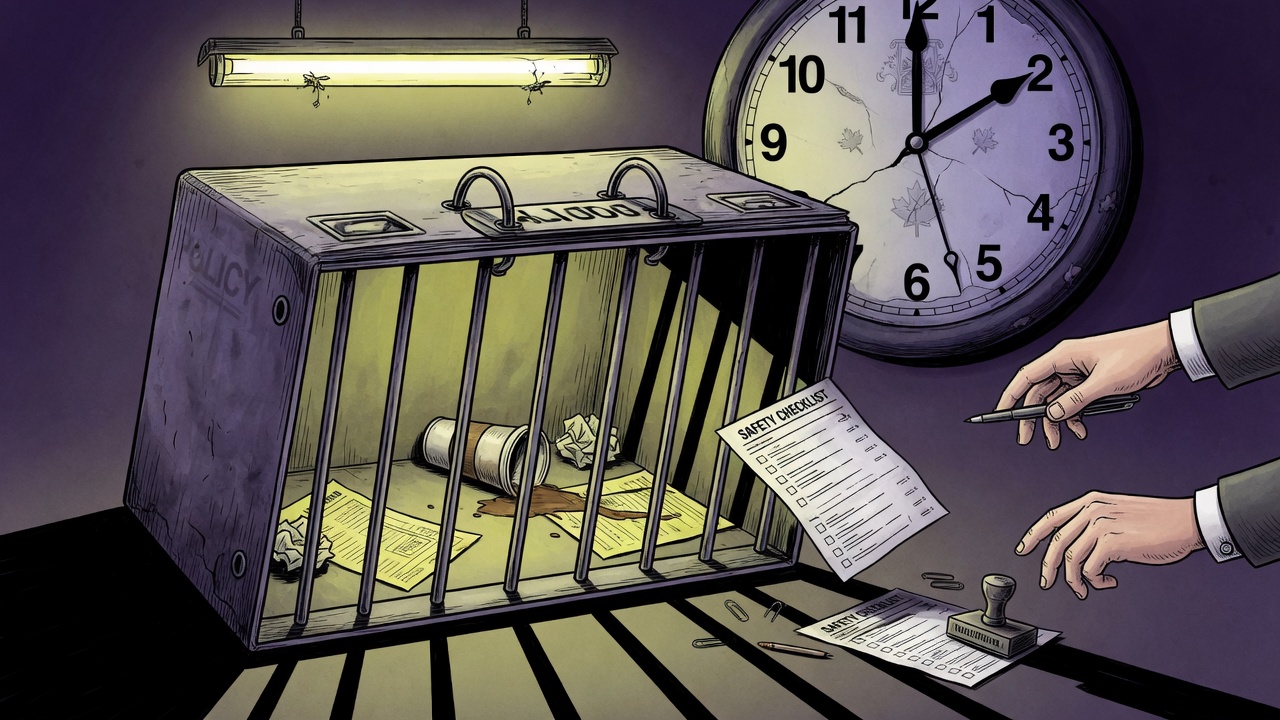
CBC News reported Aug. 17 that B.C.’s Independent Investigations Office found “a series of failures in prisoner care” before an Indigenous man died in Smithers RCMP custody in September 2022. The man had been arrested Sept. 1, charged with aggravated assault, remanded, and lodged in Smithers RCMP cells. The IIO’s original 2022 bulletin said he was found in distress at about 8:55 p.m. on Sept. 4, medical assistance was provided, and he was later pronounced deceased.
The most disturbing number in CBC’s report is 13 hours. According to CBC’s account of the IIO findings, the last physical officer check occurred at 7:57 a.m. on Sept. 4. No other police officer physically checked on him in the cell until he was found unresponsive about 13 hours later. CBC also reported that mandatory safety checks were not regularly carried out at the detachment, despite policy requiring them.
This is the gap the public should not accept: a safeguard that exists in a manual but disappears in daily practice. CBC reported that one guard told investigators physical checks had not been regularly carried out at the Smithers detachment for 26 years, despite several reviews of the cells. The regular detachment commander, who was away when the man was in custody, reportedly acknowledged that required six-month refresher training had not been done and that no system ensured physical cell checks were being conducted.
The IIO’s legal conclusion matters. Chief Civilian Director Jessica Berglund found no reasonable grounds to believe officers committed an offence. CBC reported her explanation that simple negligence is not a criminal offence unless it reaches the standard of criminal negligence causing death. That is a criminal-law threshold, not a public-confidence threshold. British Columbians are entitled to ask how a required prisoner-care system can fail for years and still leave accountability arriving only after a death.
The Indigenous context makes the question sharper. CBC reported that from 2019 to 2023, 15 people died after being held in custody or after being taken to hospital from cells, and seven were Indigenous. In a province that speaks constantly about reconciliation, the minimum standard must be more than solemn language after the fact. It must be enforceable custody practice: trained staff, verified checks, audited logs and consequences when a detachment treats required safeguards as optional.
The Smithers case should not be filed away as an isolated tragedy. It is a test of whether B.C.’s policing oversight system can identify a failure before someone dies, not merely document it afterward. The NDP government should say what province-wide steps now follow: which detachments are being audited, how often cell-check compliance is verified, whether refresher training is current, and what public reporting will prove that the Smithers failure is not being repeated elsewhere.
If you or someone you know is in crisis, call or text Canada’s Suicide Crisis Helpline at 988.