British Columbians Still Don’t Believe Eby’s Housing Fix Is Working
After years of announcements, photo ops and emergency rhetoric, the government’s housing credibility is still stuck below half.
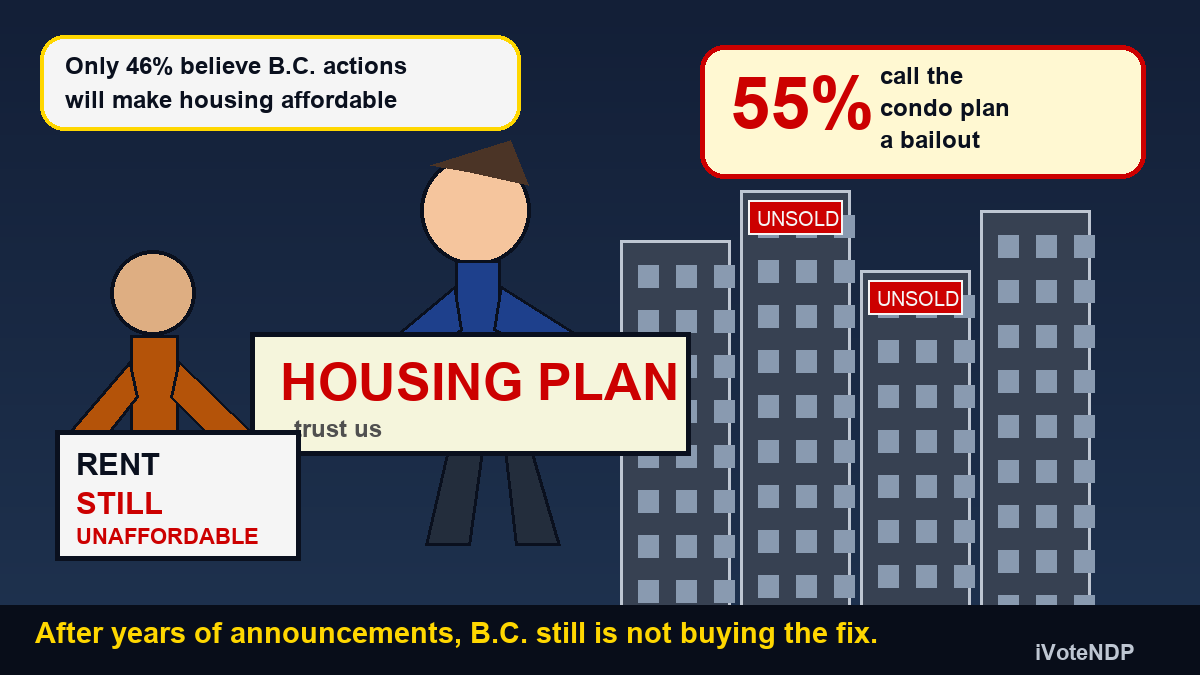
David Eby has made housing the centrepiece of his premiership. The latest Research Co. numbers show a harder reality: fewer than half of British Columbians believe the provincial government’s actions will make housing more affordable.
The poll, conducted July 13 to 15 among 801 B.C. adults, found that 46% think provincial actions will be effective on affordability, down eight points. The margin of error is plus or minus 3.5 percentage points, 19 times out of 20.
That number matters because it does not simply measure whether voters like one program. Research Co. also found majority support for several individual measures associated with Eby’s tenure, including the 2026 rent-increase cap, modular supportive housing, higher fines for short-term-rental rule breakers, a three-business-day homebuying protection period, changes to strata age restrictions, short-term-rental limits and removal of strata rental restrictions.
In other words, the public can support some tools while still doubting the overall result. That is the accountability gap: the NDP has accumulated policies, but British Columbians are not convinced the package is producing affordability.
The condo-conversion plan sharpens the problem. Research Co. says half of British Columbians had followed news about the federal plan to convert 2,200 unsold condos into affordable “rent-to-buy” housing as part of a larger $5-billion housing plan over the next decade. Respondents were then asked about statements on the plan without being told which politician had made each statement.
The results cut both ways, and they should be reported honestly. Sixty-three per cent agreed with the pro-Eby framing that the plan gives people a chance to get into housing who otherwise would not. Fifty-nine per cent agreed with the pro-Carney framing that the plan supports Canadians, not distressed developers.
But the skepticism was just as real. Fifty-five per cent agreed with the criticism that the plan bails out developers and banks instead of letting condo prices fall to an affordable level. Fifty-one per cent agreed that it wastes taxpayer dollars by artificially propping up developers.
That is a flashing warning light for Eby. If a majority can see the plan as help for buyers and as a bailout risk at the same time, the government has not earned the public’s trust on value for money. It owes taxpayers the purchase prices, unit locations, affordability terms, carrying costs, eligible buyers, resale rules and long-term public exposure before more money moves.
Housing, poverty and homelessness remain the top issue in Research Co.’s B.C. political tracking, with the economy and jobs close behind. On the file Eby chose as his signature test, the verdict is plain: announcements are not enough. British Columbians want affordability they can measure, not another banner in front of unsold towers.