Julian Jones Inquest Shows Public Answers Should Not Take Five Years
A mandatory inquest into a 2021 police-involved death is only now reaching a courtroom. B.C. needs faster accountability timelines.
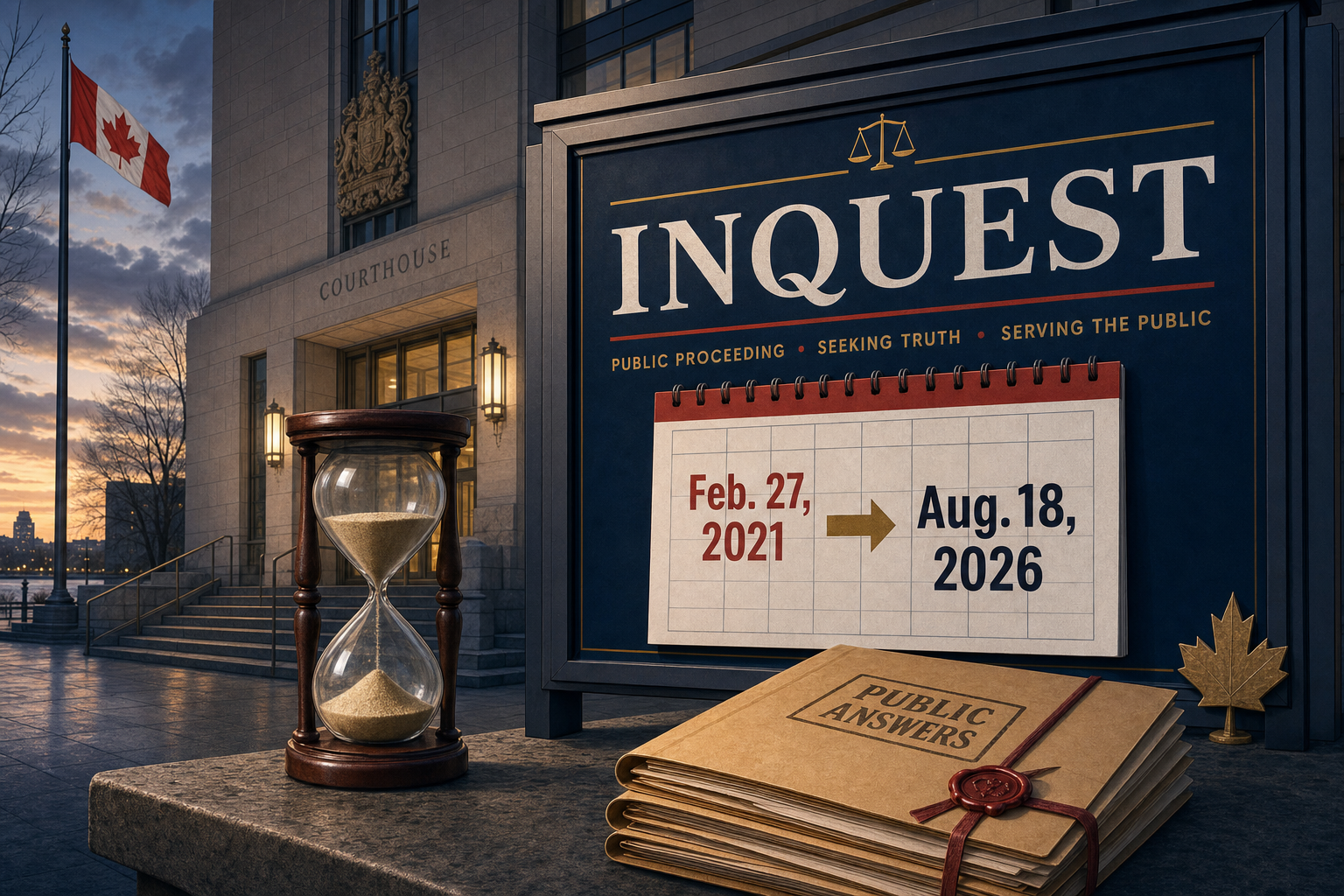
The B.C. Coroners Service has scheduled an inquest into the death of Julian Jones for 9:30 a.m. on Tuesday, August 18, 2026, at the Port Alberni Law Courts. Jones was 28. His death was reported to the Coroners Service on February 27, 2021, following events involving the Tofino RCMP detachment.
That date gap is the story B.C. cannot brush aside. More than five years after a police-involved death connected to a First Nations community, the mandatory public process is only now reaching the stage where witnesses will give evidence under oath before a presiding coroner and jury.
The facts announced by government are narrow, and they should stay narrow. The Coroners Service says inquests are mandatory under Section 18(2) of the Coroners Act for deaths that occur while a person was detained by, or in the custody of, a peace officer. It also says an inquest is non-fault-finding: it determines facts about the death, may make prevention recommendations, and is meant to ensure public confidence that circumstances are not overlooked, concealed or ignored.
That last phrase should trouble the Eby government. Public confidence is not strengthened by telling families and communities to wait half a decade for a mandatory fact-finding process. The public does not need politicians to prejudge the evidence. It needs the justice and public-safety system to move with urgency when a person dies in circumstances serious enough to trigger a mandatory inquest.
The Independent Investigations Office of B.C. bulletin from 2021 provides the incident context. It said Tofino RCMP responded at approximately 9:30 p.m. on February 27, 2021, to a report of a woman being held against her will at a residence on Meares Island in the Opitsaht community of the Tla-o-qui-aht First Nation. The IIO said the incident resulted in one man being shot and killed by officers, the woman being taken to hospital for medical assessment, and another man being taken into custody.
Those are grave facts. They involve police use of force, an Indigenous community, a death, and a statutory process designed to protect public confidence. None of that is served by a system where the courtroom calendar arrives years after the funeral.
The NDP government should be pressed on the timeline. How many mandatory inquests are waiting? What is the median delay? What staffing, legal, court-capacity or investigative bottlenecks are slowing them down? And what public target will B.C. set so families do not wait years for a process the law already says must happen?
Julian Jones’s inquest must be allowed to do its work carefully and independently. But careful does not have to mean slow enough to erode trust. A government that talks about reconciliation, public safety and accountability should be able to show that mandatory answers arrive while communities can still believe the system is listening.