The NDP’s $7.7B Deficit Shrunk on a One-Time Tobacco Windfall, Not Spending Discipline
Public Accounts are not a victory lap. They are the ledger, and this one still shows a huge deficit, fast-rising taxpayer-supported debt and only modest spending restraint.
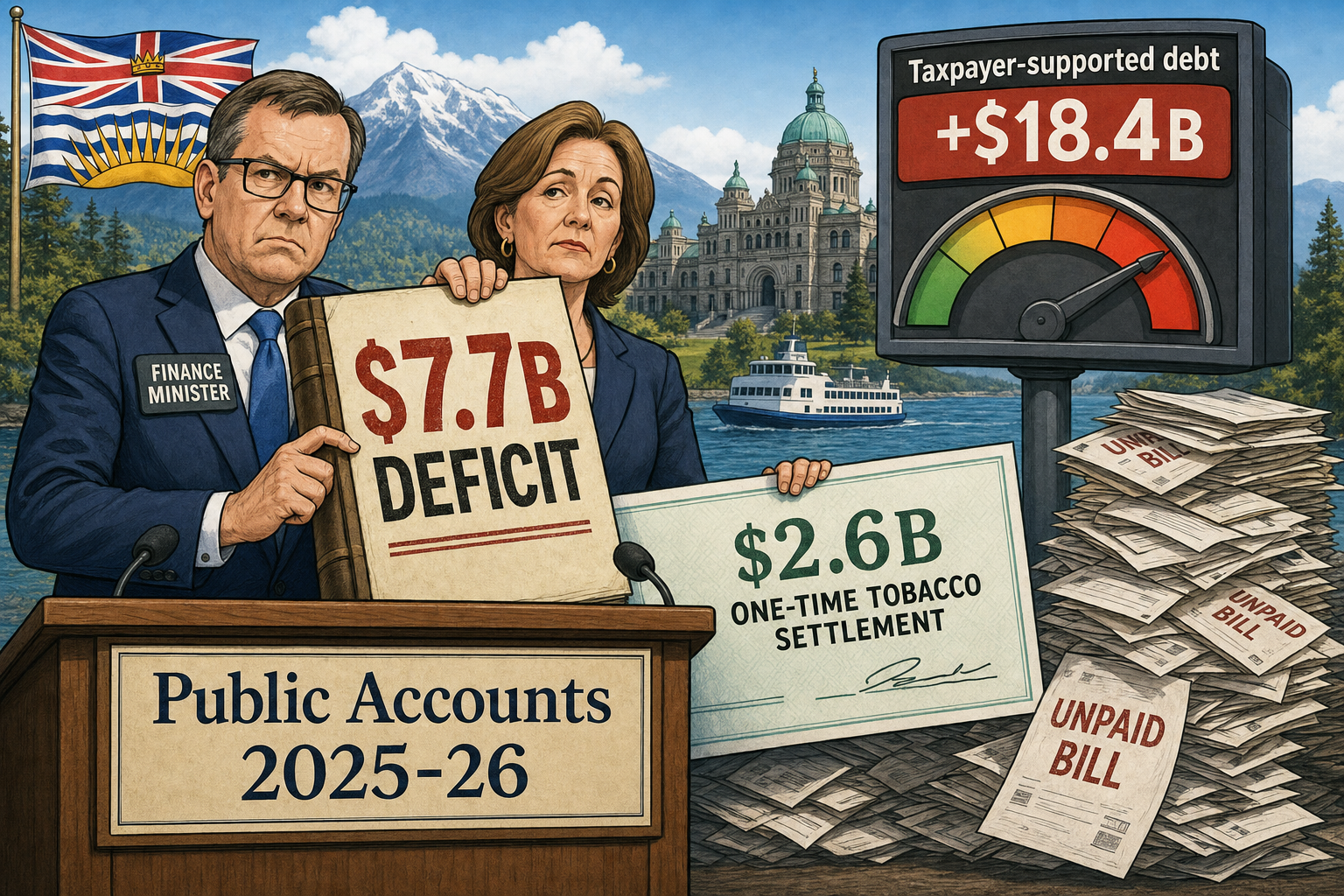
B.C.’s NDP government wants the headline to be that the deficit came in lower than forecast. The Public Accounts released August 10 show the more important fact: the province still ran a $7.7-billion deficit for the fiscal year ended March 31, 2026.
That is not fiscal victory. It is a smaller miss than the $10.9-billion deficit estimated in Budget 2025. The reason matters. Finance Minister Brenda Bailey’s own release says revenues were $2.9 billion higher than budget, “largely due” to a $2.6-billion tobacco settlement and higher net income at ICBC. In plain English, the largest improvement came from revenue surprise, including a one-time legal settlement, not from a structural repair of the operating budget.
The spending line is much less flattering to the government’s spin. Overall spending was only $344 million lower than projected, and the backgrounder says that was largely due to unspent contingencies. The government also says it exceeded a $300-million expenditure-management goal with $467 million in savings from reduced discretionary spending, staffing adjustments, voluntary retirements and hiring restrictions. Those savings are real, but they are small beside a $7.7-billion deficit and a $2.6-billion settlement windfall.
The debt number is the harder warning. The Province’s backgrounder says taxpayer-supported debt increased by $18.4 billion, while the debt-to-GDP ratio reached 26.3%. The release stresses that B.C.’s ratio remains among the lowest in Canada. That may be true, but “second-lowest” does not erase the speed of the climb or the size of the new obligation being handed to future taxpayers.
Public Accounts are supposed to compare actual results with the budget plan. They are not campaign copy. If the NDP wants credit for a smaller-than-budgeted deficit, it also has to own the audited result: the government spent nearly what it planned, avoided an even larger deficit with help from extraordinary revenue, and still added billions in taxpayer-supported debt.
British Columbians can support hospitals, schools, roads and core services while still demanding honest math. A government that relies on windfalls to soften a deficit should not call that discipline. It should explain what happens next year when the same tobacco-settlement cheque is not there.
The accountability test is simple. Show the structural deficit without one-time revenue. Show the debt-service path as taxpayer-supported debt rises. Show which spending controls are permanent, not just unspent contingency lines. And stop pretending that “less bad than budgeted” means the books are under control.