B.C.’s Casino Shift Needs a Public Ledger, Not Quiet Policy Drift
Economic reconciliation can be legitimate economic development. But when one-third of B.C.’s casino and gambling-centre landscape changes hands, public revenue and oversight questions should not be left in the shadows.
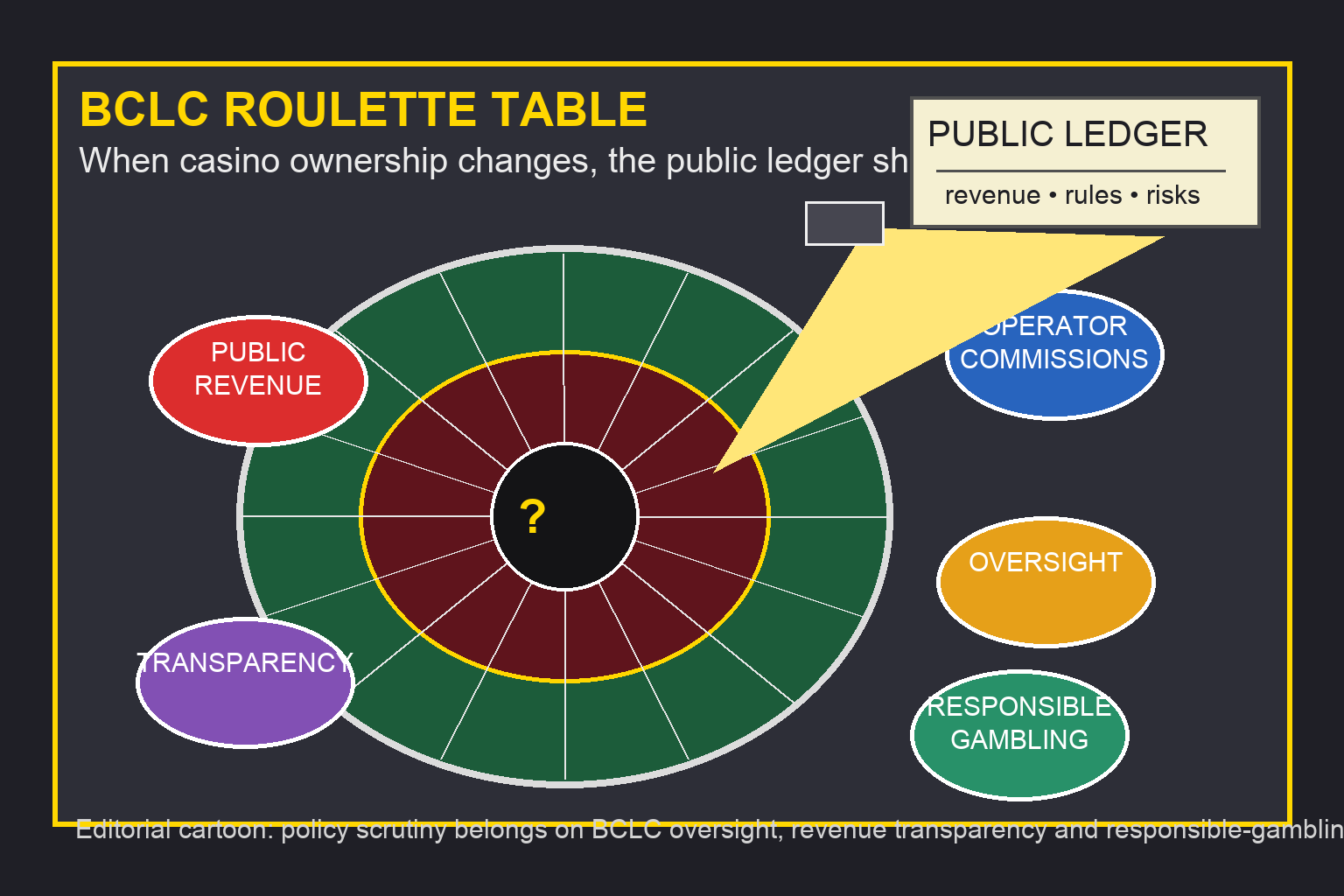
A major shift in B.C.’s gambling sector is no longer theoretical. Vancouver Sun reports First Nations now own 12 casinos in the province, about one-third of B.C.’s casinos and gambling centres, including properties in Vancouver, Richmond, Surrey, Coquitlam, Chilliwack, Victoria and Nanaimo.
That fact should not be treated as a scandal. First Nations economic development is legitimate, and communities are entitled to pursue revenue-generating assets. The public-interest question is different: has Premier David Eby’s government explained how BCLC oversight, public revenue protection and responsible-gambling obligations work when ownership of major gambling assets changes this quickly?
The numbers are too large for vague assurances. The Sun reports the 12 casinos had $713 million in total revenue, with $248 million going back to operators, citing the latest BCLC 2024-25 figures. BCLC’s own commission report lists River Rock Casino Resort at just under $252 million in total gambling revenue for 2024-25. The Sun reports Musqueam partnered with Snuneymuxw First Nation on the River Rock purchase, and says Snuneymuxw has bought five casinos since January 2025 from Great Canadian Entertainment.
None of those facts proves wrongdoing. They do prove that British Columbians deserve a clearer public ledger. BCLC runs a Crown gambling model in which casino revenue helps support provincial finances, host-local-government payments and public programs. Operators earn commissions and must cover operating and capital costs. When the operator landscape changes, the province should show whether the same rules, same public returns, same anti-money-laundering controls and same responsible-gambling standards apply without exception.
The government also needs to separate two conversations it often blends together. The Province’s First Nations Equity Financing Program, opened in June, offers loan guarantees to help First Nations secure commercial financing for revenue-generating projects in their territories. The government says the guarantee is not a loan or grant, but a financial backstop, and that applicants must meet due-diligence and sustainability requirements. If casino acquisitions are outside that program, say so clearly. If any gambling-related investment can qualify in the future, explain the safeguards before public risk is attached.
The accountability test is straightforward. BCLC should publish an ownership-change dashboard for gambling facilities: current operator, effective date, commission formula, revenue to BCLC, revenue to operators, host-government share, compliance status and responsible-gambling obligations. The province should also disclose whether any public guarantee, tax preference or special policy approval was involved in each acquisition.
Economic reconciliation should not mean less transparency. It should mean more, because public confidence is what protects both reconciliation and the gambling system. If the NDP government believes this ownership shift is good policy, it should be willing to put the ledger in front of everyone.