Summerland’s Seniors-Care Evacuation Shows the Health System Needs a Fire Plan, Not Luck
A reported 45-minute care-home move became a four- or five-hour wildfire detour. That should trigger a hard review of seniors-care emergency readiness.
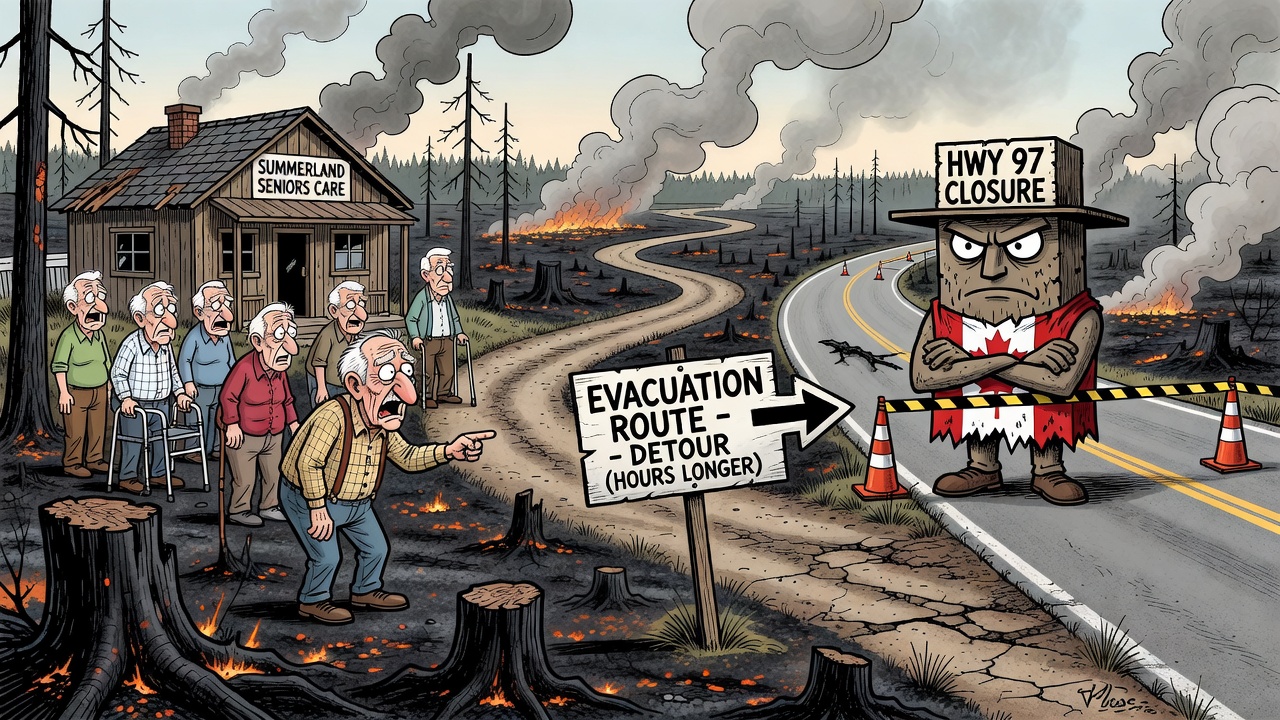
When wildfire evacuation becomes a seniors-care evacuation, the margin for error collapses. Global News reported Saturday that the Bald Range fire near Summerland forced thousands from their homes and included a large population of senior citizens living in residential care.
The numbers matter. Interior Health said it was relocating 48 residents from Dr. Andrew Pavilion in Summerland and working with contracted partner Retirement Concepts to relocate 190 residents from Summerland Seniors Village. That is 238 vulnerable residents moved while roads, smoke, staffing, beds and family anxiety were all changing at once.
Global’s reporting included a detail that should land on the health minister’s desk. David Hickey, identified as a High Acuity Response Team driver, said Highway 97’s closure forced evacuees to be rerouted through Princeton, Osoyoos and Highway 33 toward Kelowna. What would normally be less than a 45-minute move from Summerland to Kelowna, he said, became a four- or five-hour transport.
That does not mean the people on the ground failed. The available reporting says several health teams co-ordinated efforts, a wing was prepared and staffed at Kaigo Senior Living Facility in Kelowna, and Hickey said the evacuees seemed mostly in good spirits after settling in. The frontline response sounds determined, compassionate and fast.
But good people improvising under pressure is not the same as a system being ready. Long-term-care residents are not ordinary evacuees. Many need medications, mobility support, clinical records, oxygen planning, specialized transport, familiar caregivers, accessible washrooms, meal timing and a calm handoff at the receiving site. A four- or five-hour detour is not just an inconvenience for frail seniors; it is a stress test for the entire health emergency chain.
Premier David Eby’s own August 8 statement said the Bald Range fire grew rapidly, significant homes and property were lost, some people became trapped as conditions changed quickly, and a state of provincial emergency was declared because officials needed specific tools available at a moment’s notice. EmergencyInfoBC is also telling evacuees to register with Emergency Support Services and stay with family or friends if possible to preserve emergency accommodation.
That public advice is sensible for many households. It is not a complete answer for seniors in institutional care. The province should now give British Columbians a clear account: how many medically vulnerable residents required relocation, how many specialized vehicles were available, which alternate routes were pre-planned, whether receiving facilities had surge staffing, and what changed once Highway 97 closed.
No one should pretend wildfire evacuations are easy. But after a care-home trip reportedly stretched from under an hour to most of a workday, B.C. needs more than gratitude and luck. It needs a seniors-care evacuation plan the public can see before the next fire cuts the direct road.
Sources and records
- Global News: Summerland wildfire forces large numbers of seniors in residential care to relocate, August 8, 2026
- Vancouver Sun: evacuation orders and provincial emergency reporting, August 8, 2026
- B.C. government: Premier’s statement on state of provincial emergency, August 8, 2026
- EmergencyInfoBC: State of Provincial Emergency guidance