The Salmon River Reversal Shows Rural B.C. Got Crisis Planning After the Crisis
A fish-protection order lasted days before wildfire reality forced a reversal. That is not a plan rural communities can rely on.
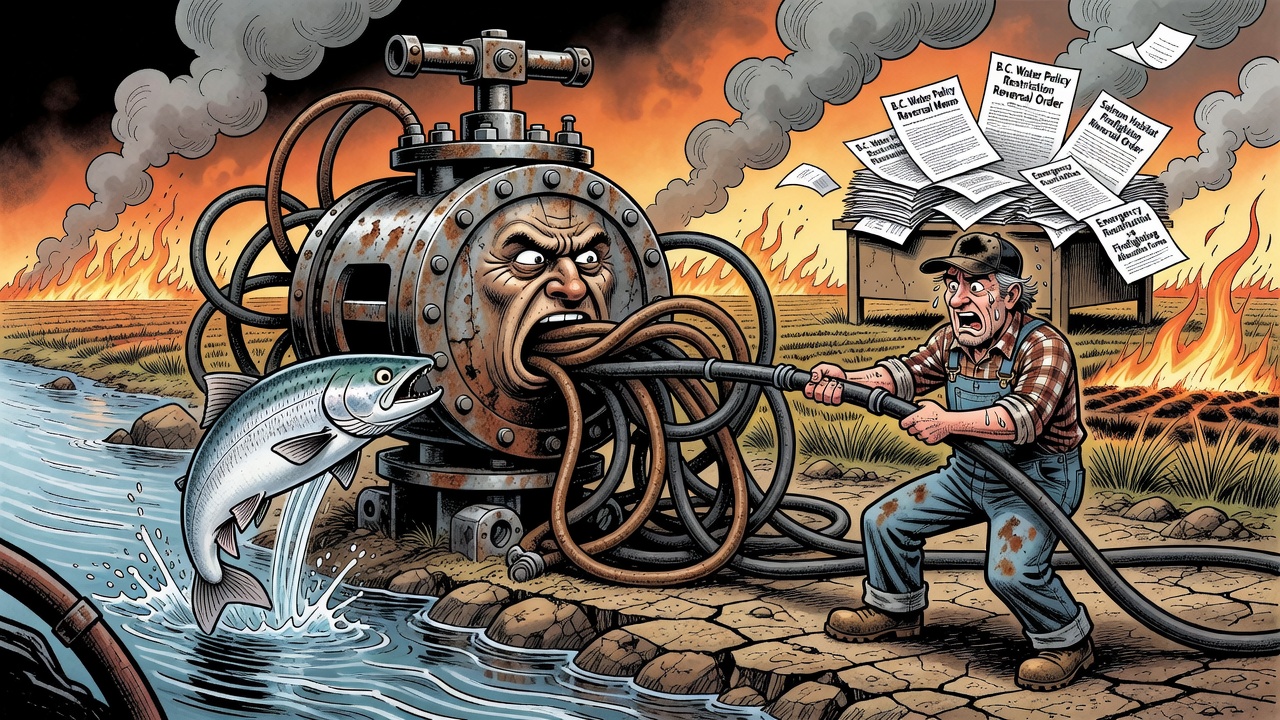
The B.C. government rescinded its temporary fish-protection order for the Salmon River watershed on Saturday, August 8, saying farmers and ranchers were dealing with elevated wildfire risk in the region. That reversal came after the province had issued the order on July 28 under the Water Sustainability Act to protect Chinook salmon during severe drought and critically low streamflows.
This is not a simple “fish versus farmers” story. The province said streamflows remain low. It also said protecting fish populations continues to be a priority. Rural British Columbians can understand that salmon need water, drought is real, and conservation matters.
But they can also read the government’s own explanation. Water, Land and Resource Stewardship Minister Randene Neill said she had heard clearly from farmers and ranchers about the significant effects of the restrictions while they were also dealing with wildfire risk, and rescinded the order effective immediately. In plain English: the order could not survive the full reality on the ground.
That should worry everyone who depends on Victoria’s crisis planning. A province facing drought and wildfire at the same time cannot treat agriculture, streamflows, emergency response and rural water security as separate files that only meet after people push back. If a restriction is necessary, the government should be able to explain the firefighting implications, the farm impacts, the exemption rules, the trigger for review, and the backup support before the order lands.
The July 28 release said the order affected 456 surface-water and groundwater licences and transitioning groundwater users, with restrictions on water use for forage crops and identified industrial purposes. The same release said the Salmon River had persistent low streamflow despite voluntary conservation efforts and that flows had been well below the minimum threshold needed to support fish survival.
Those facts make the reversal more serious, not less. If conditions were severe enough to justify mandatory restrictions, then British Columbians deserve to know what changed between July 28 and August 8. Was it new fire behaviour? Local emergency advice? Water demand for firefighting? Agricultural-loss evidence? A clearer risk assessment that should have been built in from the start?
The province points to $120 million invested since 2023 in the Agriculture Water Infrastructure Program, supporting more than 700 projects for water storage and supply systems. That is useful context, but funding announcements are not a substitute for operational readiness when the dry week arrives.
Premier David Eby’s NDP government owes rural B.C. a better standard: decisions that account for salmon, farms and fires before the emergency, not reversals after the pressure becomes impossible to ignore. The Salmon River order may be rescinded, but the accountability question remains open.