Kelowna ER Doctor’s Warning Cuts Through B.C.’s Health-Care Spin
A frontline doctor at one of B.C.’s busiest emergency departments says the system still needs accountability, transparency and governments that listen.
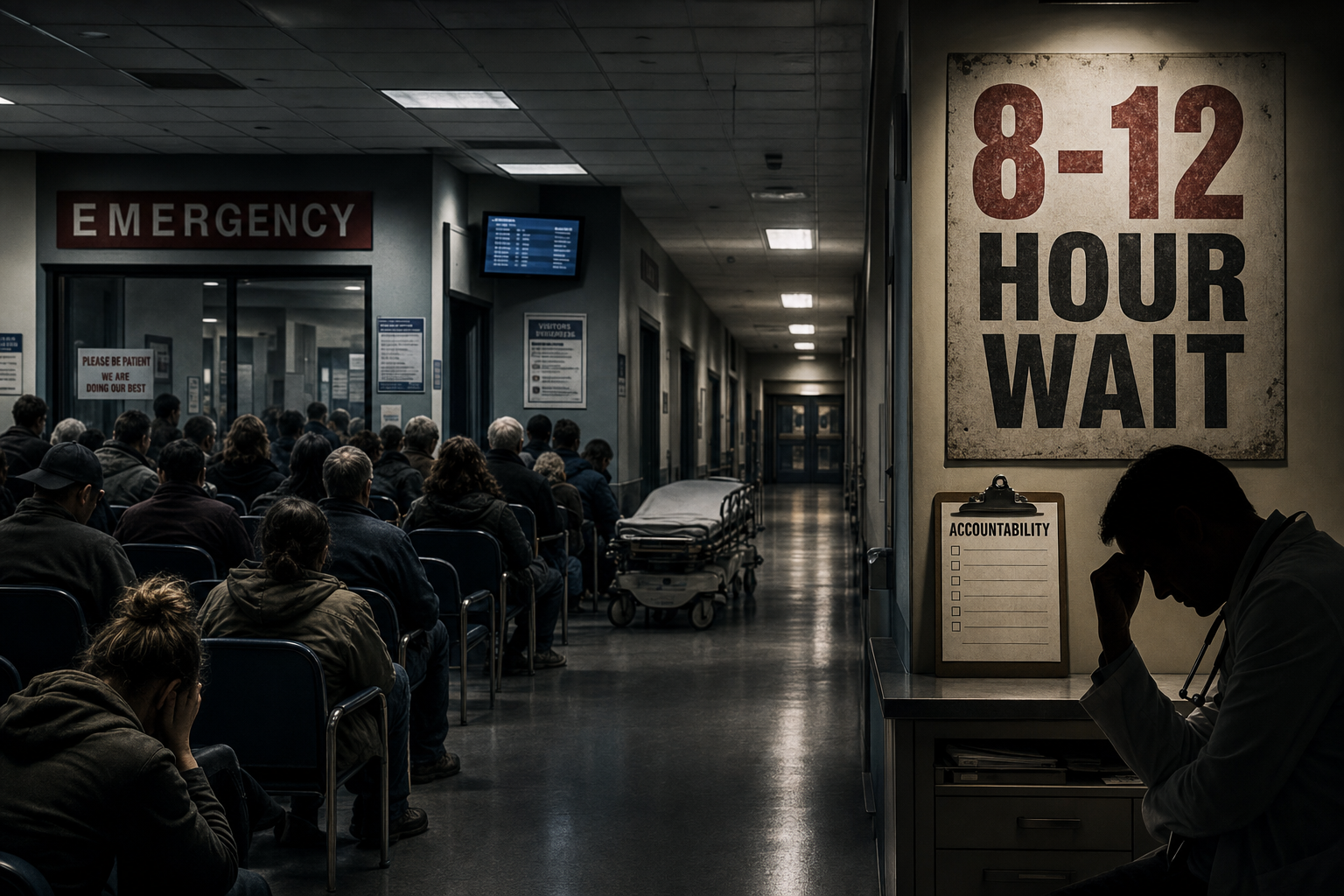
CBC’s August 9 interview with Kelowna General Hospital emergency physician Dr. Jeffrey Eppler is a direct challenge to the B.C. government’s health-care narrative. The story starts from new Canadian emergency-physician survey data showing one in 10 emergency doctors have left the specialty, while many others are cutting hours or taking time off because of burnout. But the B.C. point is sharper: Eppler says the national findings match what he sees in Kelowna.
Kelowna General Hospital is not a remote outlier. Eppler described it to CBC as the second-busiest emergency room in the province and said it is doing better than many other tertiary centres on wait times. Even there, he said, staff face overcrowding and shortages in nursing and other roles every day.
His examples should be read slowly. Eppler described people in septic shock sitting in chairs, patients waiting eight, 10 or 12 hours to be seen, and heart-attack patients being treated in chairs until a bed can be found. That is not an abstract labour-relations complaint. It is a warning about the point where system strain reaches patients.
The doctor also named the larger planning failure. He told CBC that health authorities and governments have not planned as well as they should have for population growth, an aging population and increasingly complex patients. That matters in the Interior, where communities have been absorbing growth while hospitals, primary care and long-term care remain under pressure.
There is no need to blame the people working inside the emergency department. Eppler emphasized that he works with great people and still finds medicine rewarding. The issue is not effort at the bedside. The issue is whether the provincial system has given those workers enough beds, staffing, primary-care capacity and planning support to make emergency care safe and sustainable.
The most politically important line came near the end of the CBC interview. Asked about solutions, Eppler said emergency staff have already done what they can, and that most solutions are higher up. He called for greater accountability and transparency and said provincial and federal governments need to listen more because frontline doctors feel decisions are imposed on them.
That is a fair test for Premier David Eby and Health Minister Josie Osborne. If the government believes its health-care plan is working, it should show the public the ER metrics community by community: wait times, hallway-care levels, admitted patients stuck in emergency, nurse vacancies, physician retention and the number of people using ERs because they cannot get timely primary care. Without those numbers, “fixing health care” is just a slogan sitting beside a patient in a chair.