Eby’s Housing Targets Don’t Build Homes When the Non-Profit Pipeline Is Cut
Victoria ordered municipalities to hit housing targets. Budget 2026 then slowed the non-profit and Indigenous housing pipeline those communities need.
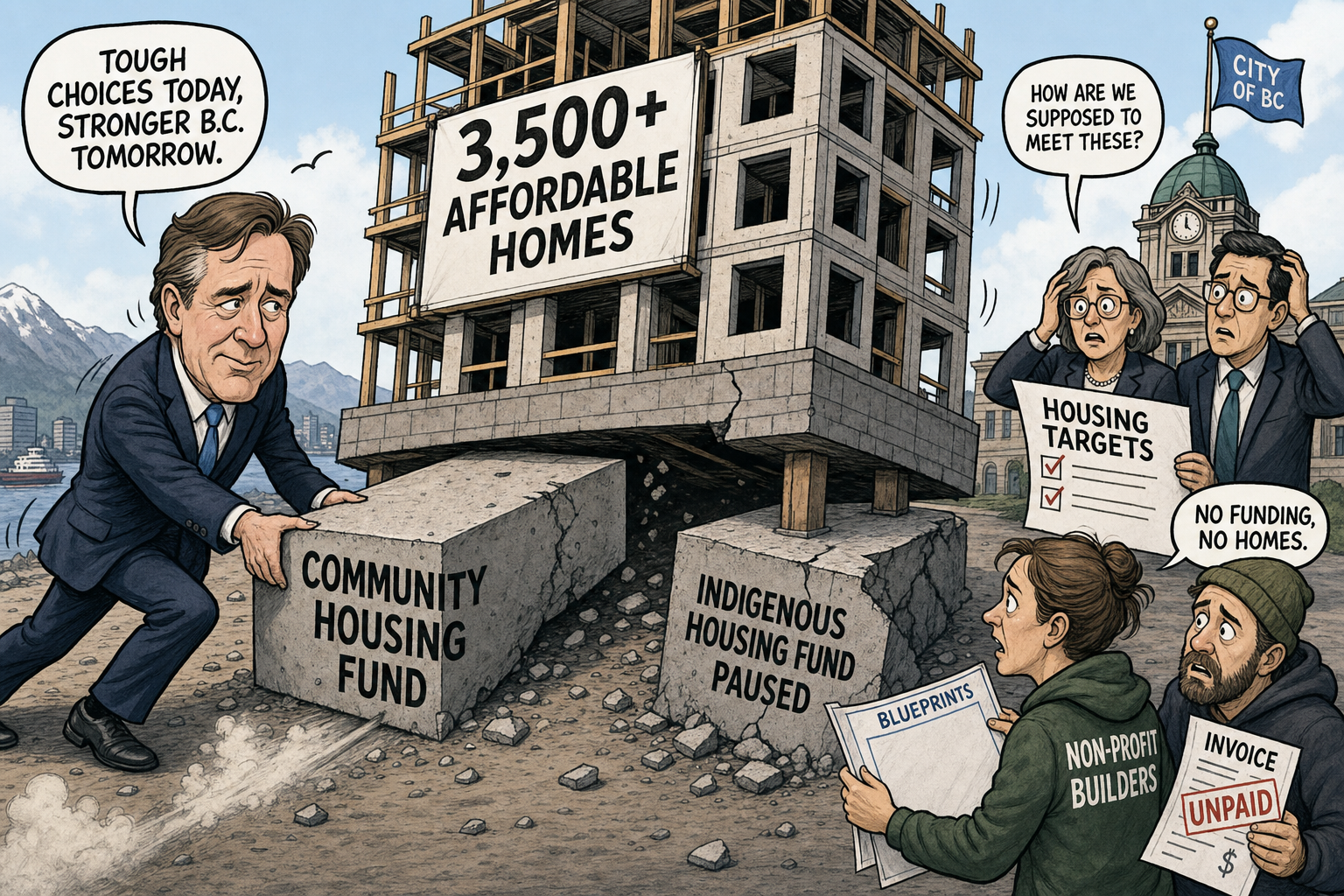
Premier David Eby’s government has made housing targets a central test for local governments. Under the Housing Supply Act, Victoria can set five-year targets for specified municipalities and require progress reports. In 2025, the province said another group of communities would be measured against targets representing 75% of estimated housing need.
That is the order side of the ledger. The delivery side now tells a different story.
Budget 2026 says the province is “adjusting the pace” of some housing investments and reallocating nearly $1.4 billion across the fiscal plan. The government’s own budget highlights put that line under capital sequencing and fiscal restraint, not under a new affordable-housing push.
The impact is no abstraction. The Tyee reported on a Metro Vancouver staff report warning that Budget 2026 changes affected at least 25 projects representing more than 3,500 planned affordable homes in the region. The reported breakdown was five projects cancelled, 12 paused indefinitely and eight left in limbo. By homes, that means 486 cancelled, 1,484 paused and 1,533 uncertain.
Metro Vancouver’s July 8 Housing Committee agenda also points to the practical repair work now being demanded of the sector: create a pathway for the July 2025 Community Housing Fund intake, restart stalled Indigenous Housing Fund projects, support organizations carrying pre-development costs, and restore stability to non-market housing programs.
That is a serious indictment of provincial execution. Non-profit housing is not built by slogan. It requires land, designs, rezonings, financing, operating commitments, municipal partnerships and years of staff work. When the province changes the funding track after projects have lined up for it, local governments and non-profits are left holding costs and uncertainty.
BC Non-Profit Housing Association’s Budget 2026 analysis says there were no new dollars for the Community Housing Fund or Indigenous Housing Fund, and that community-housing completion targets were reduced by about 3,000 homes over three fiscal years. The association also warned that sunk costs from cancelled or stalled proposals would continue to burden non-profit providers.
The government’s defence is that housing investment continues, just over a different timeline. But that answer does not solve the immediate contradiction. Municipalities still face provincial pressure to approve and deliver housing. Families still need homes they can afford. Indigenous and non-profit builders still need predictable programs to turn plans into keys.
Targets can expose delay at city hall. They cannot replace the affordable-housing pipeline Victoria has chosen to slow. If Eby wants to keep grading municipalities, his government should first account for the thousands of planned non-market homes now cancelled, paused or left waiting for another funding door to open.
Sources and records
- The Tyee: B.C. set to lose 3,500 affordable homes because of budget cuts report, July 7, 2026
- Metro Vancouver Housing Committee agenda, July 8, 2026
- B.C. Budget 2026 highlights
- BC Non-Profit Housing Association: Budget 2026 analysis
- B.C. housing targets program
- B.C. government: fourth-group housing targets, August 21, 2025