Eby’s Wildfire Emergency Threshold Finally Appeared After Thousands Were Out
The province-wide emergency arrived after Summerland was ordered out and evacuation pressure was already sweeping B.C. What changed, exactly?
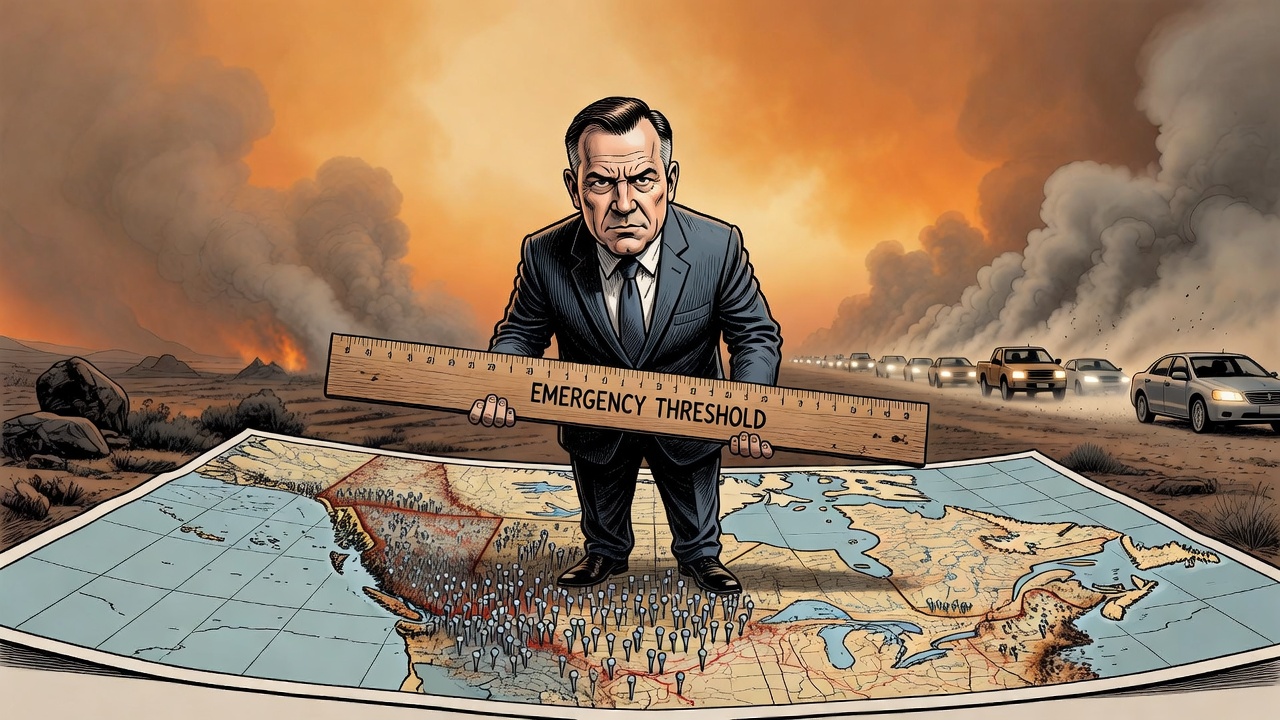
B.C. is now under a province-wide state of emergency because of wildfires. CBC reported Saturday afternoon that Premier David Eby made the declaration with more than 100 fires burning across the province. EmergencyInfoBC’s current-emergency page also listed a province-issued emergency alongside a long roster of regional districts, municipalities and First Nations with active notices.
The timing is the issue. Less than 24 hours earlier, Summerland’s roughly 12,000 residents had been ordered out as the Bald Range wildfire advanced. CBC’s wildfire updates reported the community-wide order late Friday night, and the province’s own emergency information hub pointed residents to official local updates. This was not an abstract seasonal risk. It was an entire Okanagan community leaving under pressure.
CBC also reported provincial figures of about 21,700 people displaced from their homes, with another 9,700 people under evacuation alert. Those numbers do not prove that any one cabinet decision should have happened on any one hour. They do prove that British Columbians are entitled to know what measurable condition made ordinary tools insufficient on Saturday.
Emergency Management Minister Kelly Greene said the emergency powers allow the province to use tools such as commandeering accommodations or imposing travel restrictions in specific areas, according to CBC. Those are serious powers. They can also be exactly the kind of tools evacuees need when reception centres, hotels, road networks and local governments are strained at the same time.
That is why the government should not be allowed to blur the before-and-after line. Earlier this week, Forests Minister Ravi Parmar said B.C. did not need provincial emergency powers at that point. Now the province says it does. The missing piece is not a slogan about unprecedented conditions. It is a dated account of the threshold: evacuation orders, alert numbers, fire behaviour, lodging capacity, road risk, First Nations requests, local-government capacity and the time cabinet concluded emergency powers were required.
There is no need to blame firefighters, evacuees, volunteers or local officials. They are dealing with danger in real time. The accountability belongs in Victoria, where the NDP government controls provincial coordination, emergency authorities and public communication.
Premier Eby should release a plain-language decision record: what changed between the government’s previous position and Saturday’s declaration, who recommended escalation, what powers will be used first, and how the public will know whether those powers are working. If hotels are to be secured, say where and how many. If travel limits are contemplated, name the conditions. If vulnerable evacuees need priority help, set the standard publicly.
The threshold finally appeared. British Columbians deserve to see it before the next town has to flee.