B.C. Rents Fell. So Why Is This Still One of Canada’s Worst Rental Markets?
The NDP will take credit for a cooling rental market. Renters should ask the harder question: after years of promises, why is B.C. still near the top of the national affordability crisis?
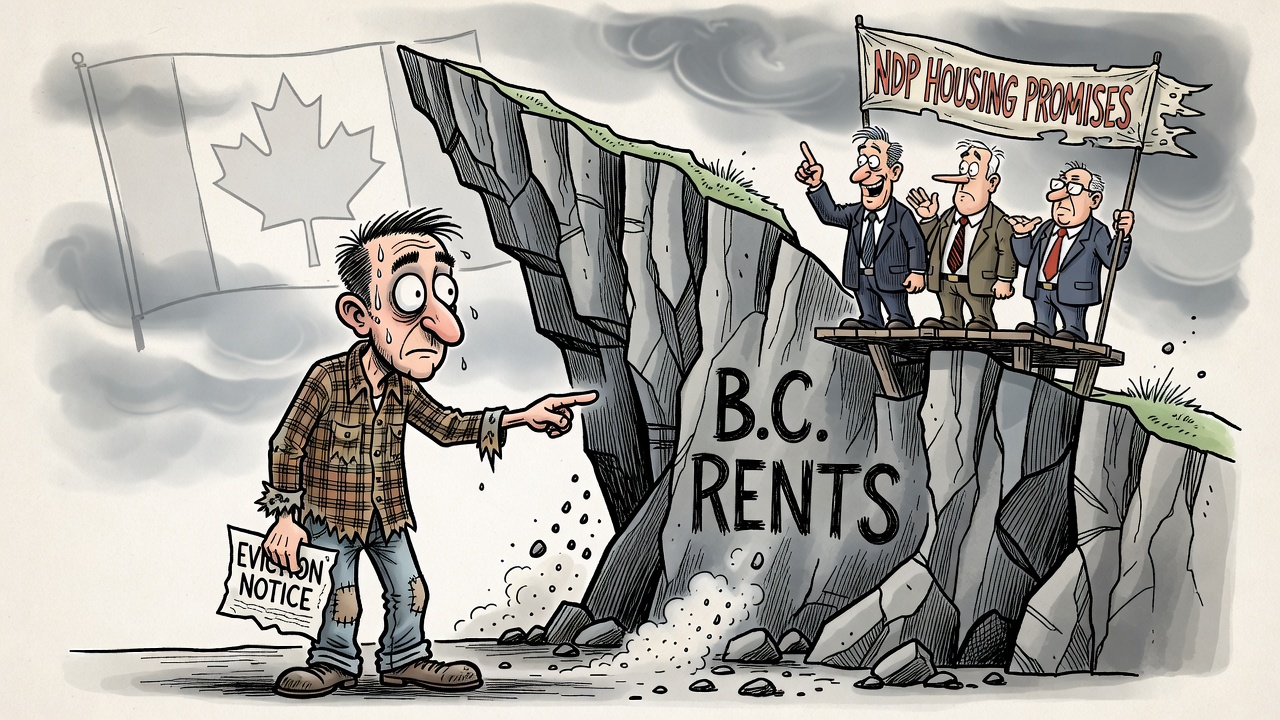
CBC reported August 7 that B.C. asking rents fell 4.5 per cent year over year in July, citing the latest Rentals.ca and Urbanation monthly analysis. The provincial average asking rent across all property types was still $2,384. That is the number David Eby’s government has to answer for: not whether rents softened at the edge, but whether working people can actually live here.
The apartment numbers make the same point. The report put B.C. purpose-built and condo apartment asking rents at $2,357, down 4.1 per cent from a year earlier. A one-bedroom still averaged $2,080. A three-bedroom averaged $3,265. For families, students, seniors and workers trying to stay near jobs, those are not relief numbers. They are proof that the baseline remains punishing.
The NDP’s preferred headline is that the market is cooling. The accountability headline is that B.C. remained Canada’s second-most-expensive provincial rental market in the July report. North Vancouver sat at the top of the national municipal list at $3,019 for purpose-built and condo apartments, while Richmond, Burnaby and Coquitlam also appeared in the national top ten. That is not a small pocket of pressure. It is a regional affordability wall.
Fairness matters: falling rents are better than rising rents. The same report series and outside analysts point to multiple forces, including immigration changes, new rental supply incentives and weakness in the condo market. But that also means the government should be careful about taking full credit for the good line while dodging responsibility for the bad one.
After years of housing announcements, density mandates, BC Builds branding, short-term-rental rules and speeches about middle-class affordability, the public deserves a results ledger. How many completed homes are renting at prices local wages can carry? How many families moved out of overcrowded units? How many seniors found secure rentals near health care and transit? How many new units are genuinely net new, not just replacing older affordable stock? How much of the decline comes from provincial policy, and how much comes from forces Victoria does not control?
B.C. renters do not need another victory lap over a percentage drop from a brutal peak. They need rent that leaves room for groceries, childcare, savings and emergencies. If the NDP wants credit for a 4.5 per cent decline, it should also own the bigger scoreboard: $2,384 average asking rent, $2,080 one-bedrooms, $3,265 three-bedrooms, and a province still near the worst in Canada for rental affordability.