HandyDART Case Shows B.C. Accessibility Can’t Depend on Media Pressure
A long-time passenger was reportedly left without rides for two months. If a minister can order a fix after the cameras arrive, the system needed an escalation path before then.
Watch/read the Global News report: Global reported July 27 that TransLink said it could no longer accommodate Tom Cretain on HandyDART, despite his having used the service for almost 30 years. The report said Cretain, 71, has spinal muscular atrophy, cannot sit up, relies on a specialized wheelchair, and had effectively been told two months earlier that TransLink could not send him a ride.
TransLink told Global that a recent review requested by its contracted taxi provider found Cretain’s current mobility device and transfer requirements could not be safely accommodated by HandyDART vehicles or contracted accessible taxis. TransLink also said this was not a policy change. That explanation may describe the technical reason. It does not excuse a public-service outcome that left a disabled senior with no workable ride for weeks.
Global’s July 28 follow-up reported Cretain said he had not been out for two months except in the neighbourhood. TransLink and Transdev cited lift specifications of 48 inches by 37 inches and an 800-pound combined customer-and-device limit. Transportation Minister Mike Farnworth then said he had directed staff to fix the problem.
That is the accountability point. If ministerial direction can move the file after media coverage, why did the normal chain fail before the story aired? HandyDART is not a luxury add-on. TransLink’s own page describes it as door-to-door shared-ride transit for people unable to use conventional transit without assistance, and says the service has more than 30,000 customers. For many users, losing that ride means losing medical appointments, groceries, social contact and basic independence.
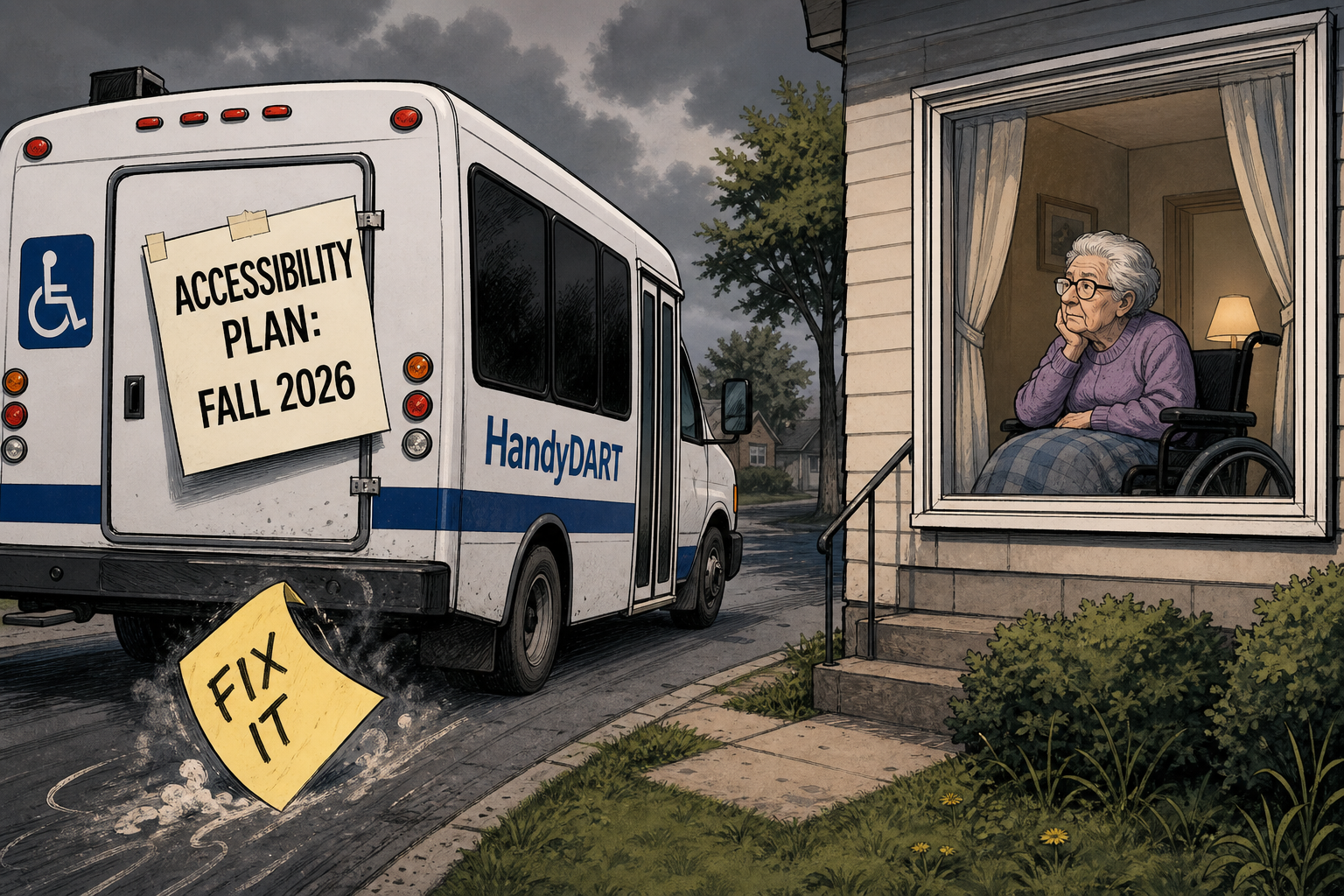
TransLink’s April 2026 accessibility update says the agency is updating its Accessibility Plan, took public feedback from April 8 to May 8, and expects that feedback to inform a fall 2026 update. Planning is necessary. But a plan that arrives in the fall does not help a passenger stranded in the spring and summer. Accessibility has to include rapid problem-solving for edge cases, not just consultation calendars and jurisdictional handoffs.
The province does not operate every HandyDART booking desk. But it funds, regulates and oversees the transit framework in which TransLink, Transdev and contracted taxi providers make decisions. B.C. needs a clear escalation standard: when a long-time accessible-transit user is told no ride can be provided, who owns the file, what deadline applies, what interim service is offered, and when is the minister informed?
British Columbians should not have to become news stories to receive accessible public service. The measure of an accessibility system is not the number of committees, plans or statements it produces. It is whether the person waiting at home can actually get through the door.
Sources and records
- Global News: TransLink says it can no longer accommodate HandyDART user
- Global News: B.C. minister directs staff on HandyDART passenger case
- TransLink: HandyDART service information
- TransLink Buzzer: Accessibility Plan update and feedback period
- B.C. Legislature Hansard: Transportation and transit funding context