Wellness-Check Inquest Hands Eby a Checklist. Will He Act?
The verdict does not require political theatre. It requires a public implementation table with names, deadlines and progress checks.
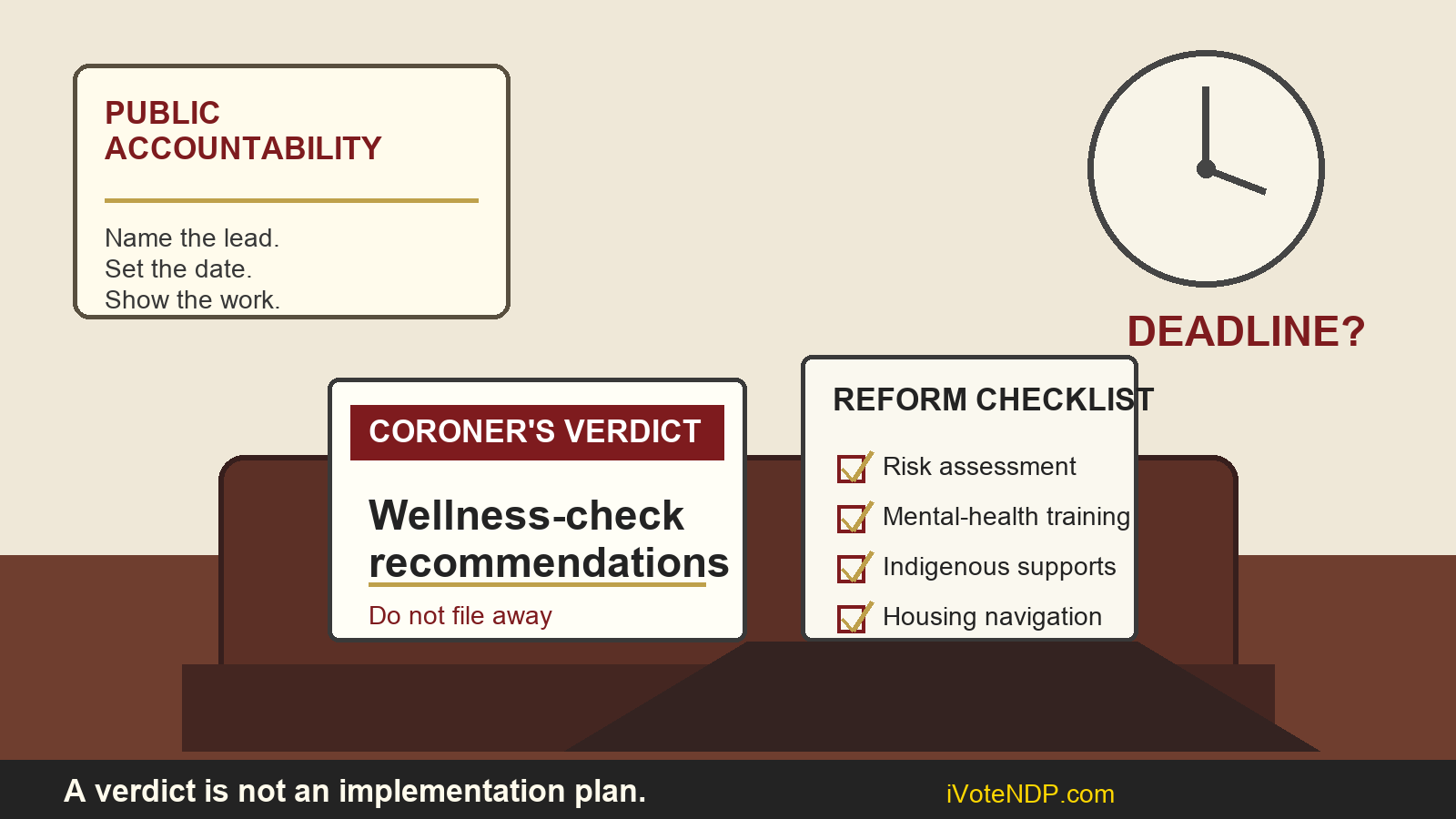
A coroner’s inquest into the death of Haida elder Jimmie Johannesson has given British Columbia’s government a plain accountability test: do the work, name the leads and show the deadlines.
CBC reported that Johannesson, 61, died on April 8, 2022, from multiple gunshot wounds after being shot during a Surrey RCMP response. The B.C. Civil Liberties Association, which supported Johannesson’s sister Ruby Marks through the inquest, said the call was a wellness check during a mental-health crisis and that Johannesson threatened police with a knife.
Coroner’s inquests in British Columbia are non-fault-finding proceedings. Their purpose is to determine the circumstances of a death and make recommendations aimed at preventing similar deaths. That distinction matters. This is not a verdict against one officer in a newspaper headline. It is a warning about systems: police standards, mental-health response, information-gathering, Indigenous supports and housing navigation.
The jury’s recommendations, as reported by CBC and recorded in the B.C. Coroners Service verdict, are specific enough for government action. They include ongoing risk assessments throughout wellness checks, a review of standards around Tasers and second armed officers, consideration of civilians during higher-risk wellness checks, standardized mental-health training for mental-health outreach officers, and follow-up processes when the Independent Investigations Office makes recommendations connected to officers’ actions.
The inquest also reached beyond policing. The jury made a separate recommendation to ministers responsible for housing and social development to identify supports for Indigenous people facing intersectional barriers while navigating housing applications. That is an important point for David Eby’s government: a wellness-check tragedy cannot be treated as only a police file after the fact if the surrounding systems — housing, disability support, outreach and Indigenous services — are part of the path that brought a person to crisis.
The province’s usual response to difficult inquest recommendations is often careful language: reviewing, considering, working across ministries. That is not enough here. The public should get a table listing every recommendation, the ministry or policing body responsible, the deadline for a decision, the implementation status and the reason for any rejection or delay. Families should not have to monitor government follow-through by reading scattered statements months later.
That approach would also protect honest debate. Some recommendations may require operational judgment, training budgets, union consultation or changes to provincial policing standards. Say so publicly. If government believes a recommendation needs modification, explain the evidence. If it accepts a recommendation, give British Columbians a date.
Johannesson’s family and advocates have already carried the burden of getting this record into public view. The remaining burden belongs to Victoria. A government that says it is serious about reconciliation, mental-health care and safer communities should not leave this verdict on a shelf. It should turn the checklist into a public work plan.