Eby’s 48 Medical Seats Won’t Fix Today’s Doctor Shortage
B.C.’s new SFU medical school starts with 48 students in interim space while the premier admits the doctor shortage remains real now.
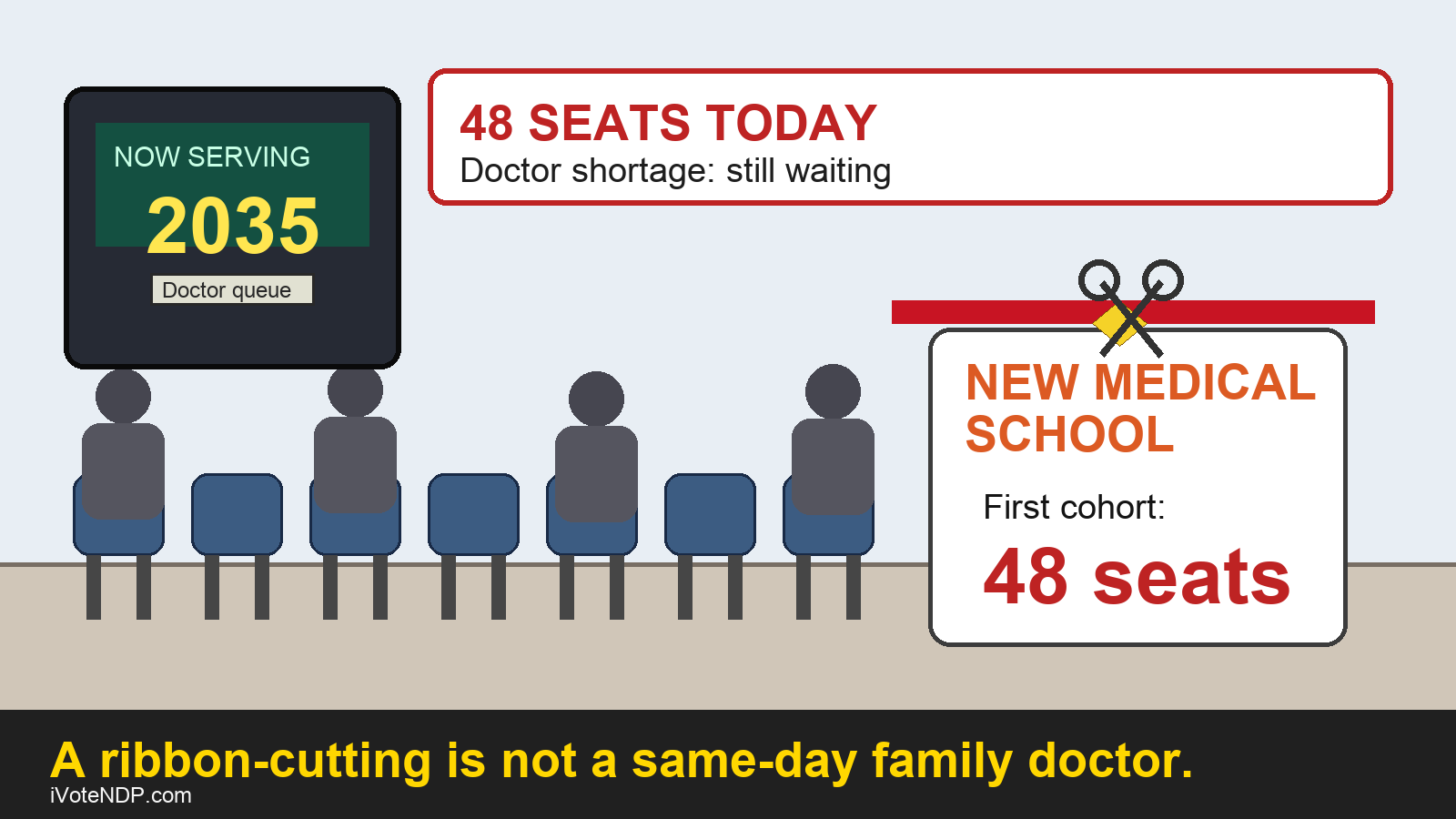
Premier David Eby’s government is celebrating the first class at the SFU Stephens Family School of Medicine. The announcement is real progress for the students starting in Surrey. It is not, by itself, a rescue plan for patients who need a doctor now.
The province’s own release makes the timeline clear. On Wednesday, Aug. 5, 2026, the first cohort began orientation in the school’s interim learning space. The class is 48 medical students. The permanent location is expected to be completed in 2030.
The same release quotes Eby acknowledging the central problem: British Columbia is facing a shortage of doctors. That admission matters because the shortage is not scheduled for 2029, 2030 or 2035. It is the condition patients are living with in 2026.
Government says the SFU program uses a three-year, year-round curriculum, allowing students to graduate one year sooner than many traditional medical programs. Students could begin residencies as early as 2029. That may shorten the training path, but it does not put a new doctor in a family practice this year.
The scale is just as important as the schedule. The inaugural class is 48 students. Cohorts are planned to increase in phases until they reach 120 students a year by 2035. Government says it has committed $41.1 million in ongoing annual operational funding to date.
Those numbers deserve a sober reading. A new medical school can be worthwhile and still be years from delivering the capacity British Columbians need. A ribbon-cutting can be good news for a university and still leave unanswered questions about current access, current staffing and current primary-care pressure.
The province frames the school as part of a broader plan to hire, recruit and train more family doctors and improve community and primary care. It also says students will be trained for team-based, person-centred care serving diverse communities across B.C. Those are policy goals. The public test is whether they translate into measurable access for people still waiting.
That means the government should publish clear benchmarks alongside the celebration: how many B.C. residents remain unattached to a family doctor or nurse practitioner, how many new residency positions will be available for these graduates, where those residencies will be located, and how many graduates are expected to practise in underserved communities.
Without those answers, Wednesday’s announcement risks becoming another long-dated health-care promise sold as present-day reassurance. Forty-eight students beginning orientation is a milestone. It is not proof that the doctor shortage has been solved.
British Columbians can welcome the students and still demand honesty from the government. The NDP should stop confusing future capacity with current care. Patients need the ledger: seats today, residencies in 2029, buildings in 2030, full cohorts in 2035 — and a doctor shortage Eby admits exists right now.