B.C.’s Clean-Power Pitch Just Bought a Gas Plant
BC Hydro is acquiring Campbell River’s 275-MW Island Generation natural-gas facility after government says B.C. needs electricity capacity sooner than previously expected.
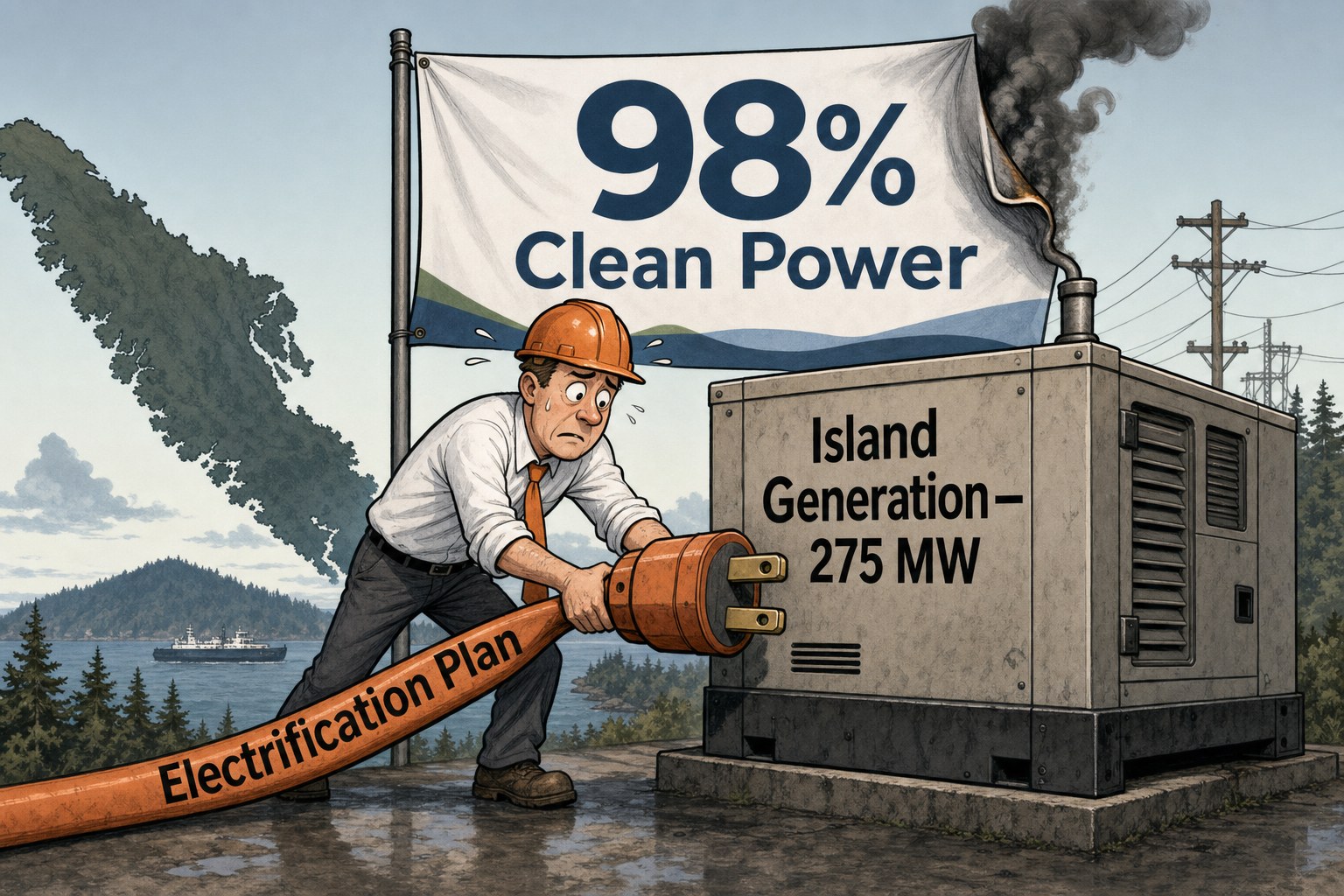
BC Hydro is buying a gas plant. That is the plain fact behind Wednesday’s carefully worded announcement about Island Generation in Campbell River.
The province says BC Hydro will acquire the 275-megawatt Island Generation facility to support Vancouver Island reliability and B.C.’s growing electricity needs. The same government release identifies the facility as natural-gas-fired and says it has operated an average of approximately 15 days a year over the past five years when needed for reliability.
That does not make Island Generation a daily baseload plant. It does make it an inconvenient symbol for an NDP government that sells British Columbians on clean-electric abundance while now moving to secure gas-fired backup capacity for peak demand.
The key sentence in the province’s release is not the branding about “Powering Growth.” It is the admission that recent load forecasts show British Columbia will require additional capacity sooner than previously anticipated, driven by population growth, electrification and expanding industrial development. In other words: the pressure is arriving faster than the plan.
BC Hydro’s own Powering Growth page gives the scale of that pressure. It says B.C. electricity use is expected to grow by about 50% by 2050, while peak demand — the highest-use periods on the coldest days — is expected to rise by 44%. It also says B.C. generates electricity that is 98% renewable, a figure the province repeated in Wednesday’s release.
Those facts can both be true. B.C. can have a largely clean system and still face a capacity squeeze severe enough that the Crown utility wants long-term control of a gas-fired plant. The public question is whether David Eby’s government has been honest enough about the tradeoffs, timelines and costs.
The announcement says Island Generation has supplied electricity to BC Hydro under a long-term purchase agreement since 2002, supports 15 full-time local jobs, and will provide capacity during high-demand periods such as the coldest days of the year. It also says the acquisition complements conservation, hydroelectric upgrades, new renewable generation, battery storage and transmission infrastructure.
What the announcement does not state is just as important: the acquisition price, the expected ratepayer impact, the future operating assumptions, or the emissions implications if the plant is called on more often as demand grows.
That is where accountability belongs. If the plant is cost-effective, publish the numbers. If it is a short-term reliability bridge, define the term and the exit ramp. If demand forecasts changed, explain when government knew, what assumptions shifted, and whether electrification targets were matched by realistic firm-capacity planning.
British Columbians do not need another slogan about a clean-energy future. They need a public ledger showing why a province claiming 98% clean power is buying a 275-MW gas-fired insurance policy — and what it will cost.