Montrose Appeal Shows Eby’s Cowichan Property Problem Is Still Open
B.C.’s own attorney general backed reopening. Now Montrose is appealing the refusal, and property owners still need clear notice and certainty.
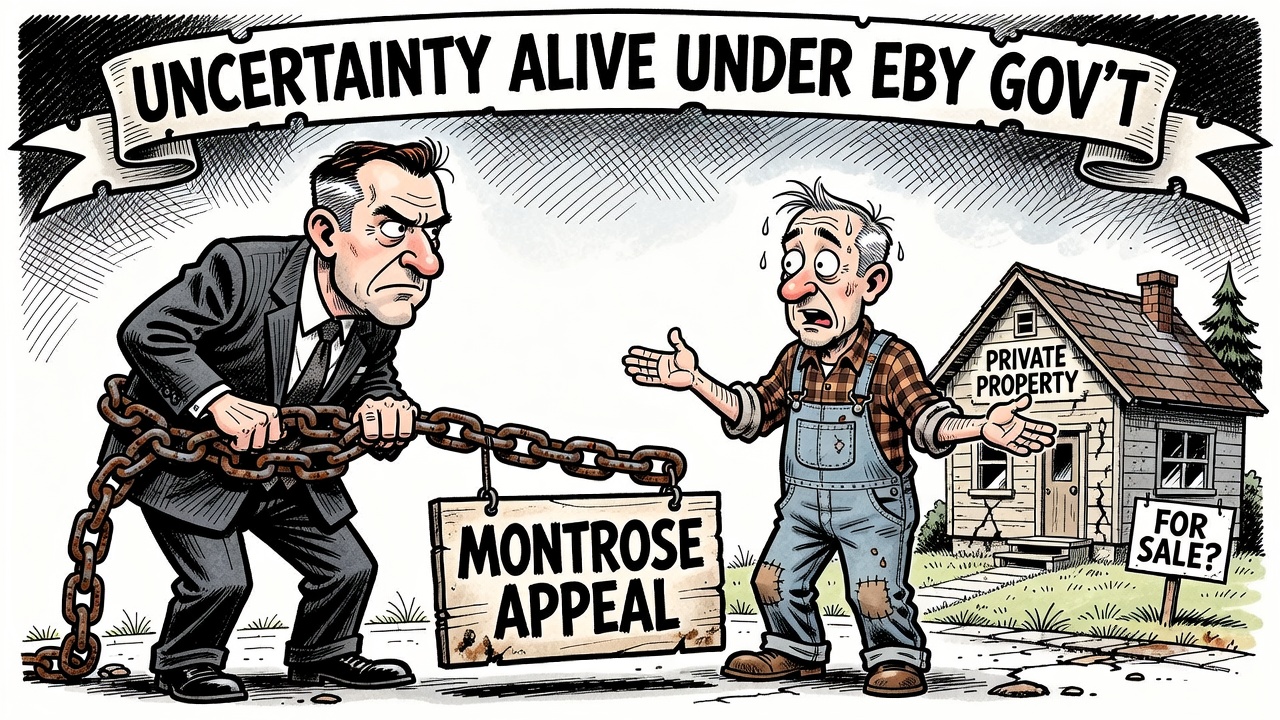
Montrose Properties has taken the next step in the Cowichan title fight: it is appealing the B.C. Supreme Court’s refusal to add the company as a party and reopen the case.
That matters because this is not a fringe political argument. It is the largest private landowner in the affected Richmond area telling the courts its interests were not heard before a landmark Aboriginal-title ruling altered the legal landscape around fee-simple property. Connect CRE reported July 23 that Montrose filed an appeal after Justice Barbara Young’s June decision kept the developer outside the case. The company says the original 513-day trial proceeded without private landowners participating.
The legal facts must be stated carefully. The Cowichan ruling is under appeal. The court did not say Montrose’s title was invalid. Connect CRE reported that the decision held Montrose’s fee-simple interests “may not be exercised in their fullest form” because Aboriginal title is a prior and senior interest. Earlier coverage also reported the court recognized Aboriginal title over Crown, municipal and private lands, while Cowichan representatives have said they are not seeking to invalidate existing private ownership or claim those lands.
But “not final” is not the same as “no problem.” CityNews, carrying Canadian Press, reported in May that Attorney General Niki Sharma supported Montrose’s effort to reopen the case, while acknowledging reopening a case of this scale is rare. Sharma said Montrose should be able to bring forward evidence about how it was affected. That is an extraordinary admission from the government that sold British Columbians on reconciliation, DRIPA and legal certainty all at once.
The June refusal sharpened the dispute. Connect CRE reported Justice Young called the reopening attempt “an abuse of process for relitigation,” said several issues had already been argued, and warned that adding Montrose could open the floodgates to other landowners and commercial interests. Cowichan leaders welcomed that refusal as confirmation of a lengthy judicial process. Montrose’s answer is now the appeal route.
So David Eby’s government has a choice. It can keep asking property owners to trust a system they learned about after the fact. Or it can produce a plain public map, a claim-notice standard, and a legal-certainty plan for every property owner and municipality potentially affected by title litigation or negotiation.
Richmond’s own public notice says the August 2025 decision “could affect” land ownership in areas covered by the ruling, points residents to a draft affected-area map, and notes precise boundaries have yet to be confirmed. That is exactly the uncertainty government exists to clarify.
No one should pretend this file is simple. Aboriginal title is constitutionally protected, and Cowichan’s claims arise from a long historical record. But private citizens and businesses also deserve formal notice, transparent process and predictable rules before the value or use of their property is thrown into doubt. The Montrose appeal keeps that question squarely on Eby’s desk.
Sources and records
- Connect CRE: Montrose seeks to overturn court’s refusal to reopen Cowichan case
- Connect CRE: Court denies Montrose attempt to reopen Cowichan case
- CityNews / Canadian Press: Attorney General Sharma says B.C. supports company’s request to reopen Cowichan case
- City of Richmond: B.C. Supreme Court decision — impact on property titles