Nurses Say Violence Is Still Not Part of the Job. Why Hasn’t Victoria Acted?
BCNU says nurses are still facing violence, abuse and short staffing while government and health employers have yet to meaningfully act on safety measures put forward months ago.
Update — July 29, 2026
Current status: BCNU’s July 25 bargaining update ended province-wide job action, but this safety/violence post remains current as a workplace-safety accountability item separate from compensation arbitration. BCNU
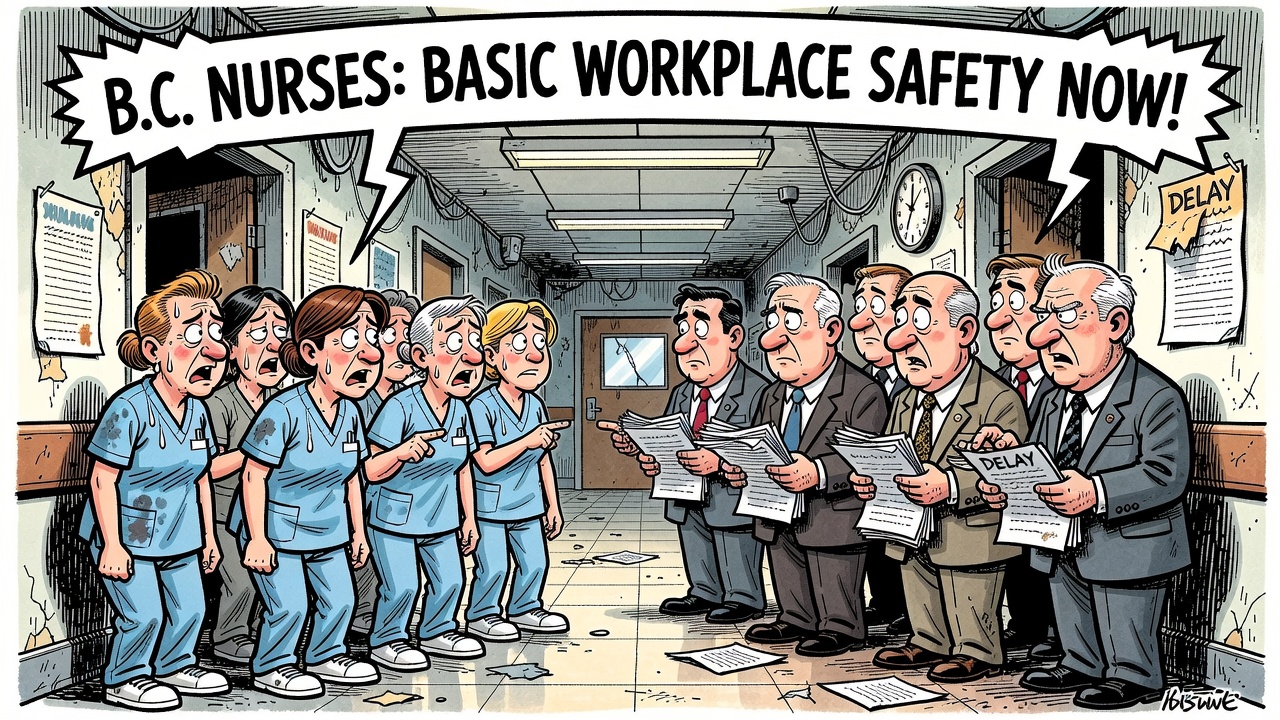
The B.C. NDP keeps telling voters it is strengthening health care. Nurses are describing a system where showing up for a shift can mean being verbally abused, physically assaulted, short-staffed and then asked to keep absorbing the damage.
In its July 2026 “Violence. Still Not Part of the Job” campaign material, the BC Nurses’ Union says the danger is not theoretical. Citing its 2024 member survey, BCNU says 81% of nurses experience verbal or emotional abuse at least monthly, 50% experience physical violence at least monthly, and 93% report working short-staffed at least once a month.
Those are union claims, and they should be treated as claims from the frontline organization representing nurses. But they are also specific, measurable claims about the conditions inside B.C.’s health-care system. If the government disputes them, it should put its own workplace-violence data on the table and explain the gap.
BCNU says it presented violence-prevention measures to MLAs and every B.C. health authority last October. The union says government and health employers have yet to meaningfully act on any of those measures. That allegation goes to the heart of NDP accountability: this is not just about bargaining rhetoric, it is about whether the people staffing hospitals are safe enough to do their jobs.
The union’s job-action timeline adds context. BCNU said more than 50,000 nurses participated in a strike vote, with 98.2% voting in favour of job action. It also said nurses rejected a tentative agreement by 67%. Global News reported in July that nurses were escalating job action, including picket activity, after the union accused employers of failing to address core concerns.
Patients should not have to choose between supporting nurses and getting timely care. Those interests are linked. A ward that cannot retain nurses, protect nurses or staff shifts safely is a ward where patients wait longer, families worry more, and the government’s ribbon-cutting language becomes irrelevant.
The basic test is not complicated. Are there enough trained staff on the floor? Are violence risks identified before they explode? Are nurses able to report incidents without being ignored? Are health authorities publicly accountable for fixes, timelines and results?
Premier David Eby’s government owns the health authorities. It owns the staffing promises. It owns the repeated assurance that it is fixing health care. So it also owns the question nurses are forcing into public view: if violence is still not part of the job, why are so many nurses still being asked to work as if it is?