Yellowhead Copper Now Needs Two Green Lights: B.C.’s “Certainty” Comes With Another Consent Gate
The province calls it regulatory clarity. The public should read the fine print: this major copper proposal now depends on two separate approvals before it can move ahead.
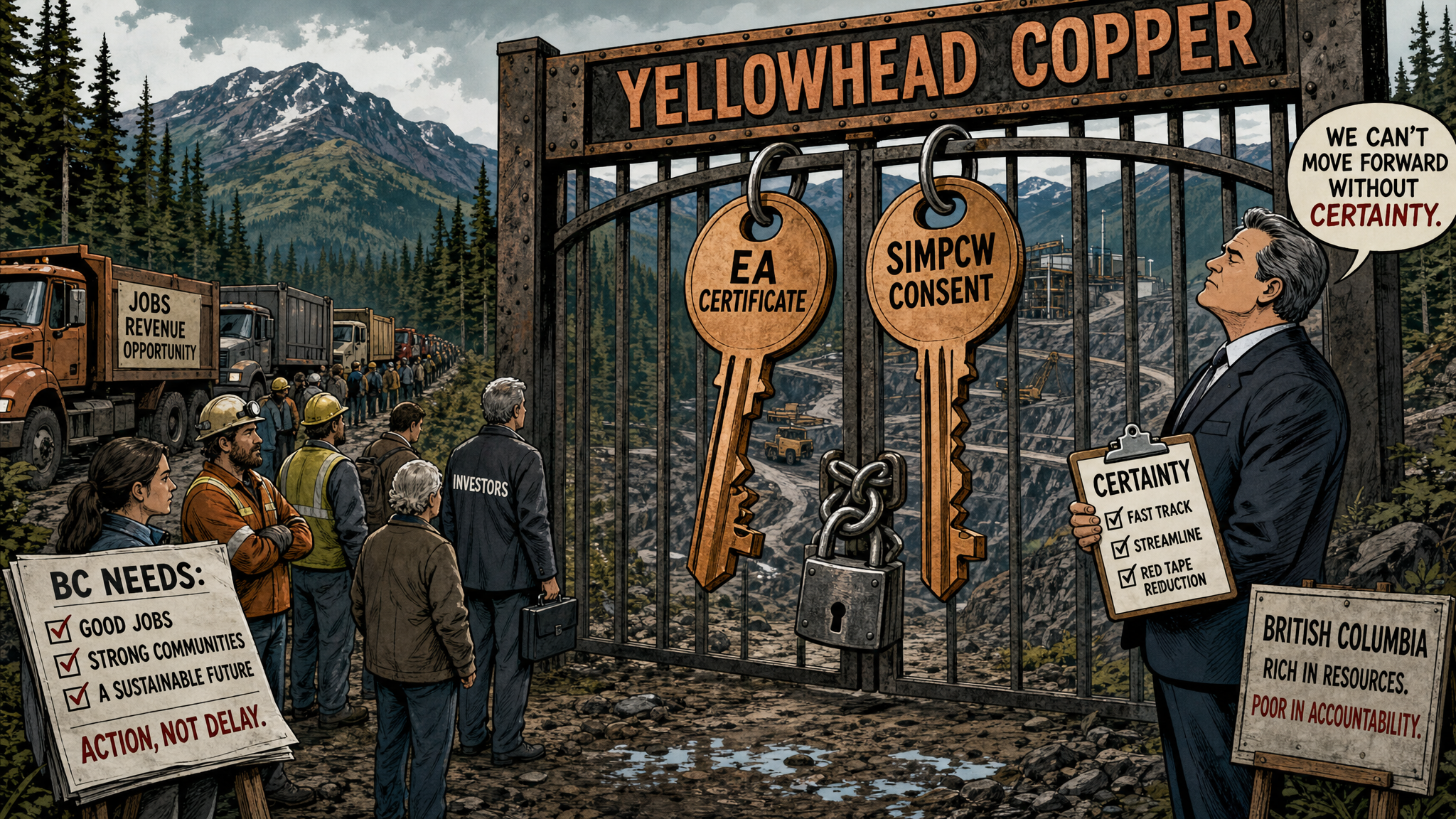
The Eby government has signed another consent-based decision-making agreement under B.C.’s Declaration on the Rights of Indigenous Peoples Act. This time the file is Yellowhead Copper, a proposed Trekor Metals Limited project in Simpcw territory northeast of Kamloops.
The province’s July 16 announcement says the Environmental Assessment Office and Simpcw First Nation will take a collaborative approach to their assessments. It also says the central accountability fact plainly: Simpcw consent and a provincial environmental assessment certificate are both required for the proposed project to proceed.
That is not just process language. It means a major critical-minerals project now has two formal green lights built into the path forward. B.C. ministers describe that as “regulatory clarity” and “investment certainty.” Voters, workers and investors are entitled to ask what kind of certainty depends on a parallel consent decision outside the ordinary provincial cabinet-and-agency approval track.
The government’s own release says Simpcw and the EAO will carry out separate assessment processes to inform separate decisions: the province’s decision on an environmental assessment certificate, and Simpcw’s decision on whether to provide consent. Simpcw Chief George Lampreau is quoted saying this is the first time Simpcw has applied its consent process to a major project, and that the agreement is about establishing how decisions on new mining projects will be made in Simpcw territory going forward.
That last point matters. The release says the agreement may be amended for potential future mining projects in Simpcw territory where Simpcw is the Indigenous governing body most directly affected and a provincial environmental assessment is required. In other words, Yellowhead is not being treated as a one-off symbolic exercise. It is part of a broader governing model.
The legal authority is DRIPA section 7. The statute allows cabinet to authorize agreements involving the joint exercise of a statutory decision power, or the consent of an Indigenous governing body before a statutory power of decision is exercised. The province’s own Declaration Act progress page says B.C. is advancing agreements that share statutory decision-making with Indigenous governing bodies, and lists Simpcw among section 7 activity in 2025-26.
None of this requires speculation. The NDP government has put the words on the record. A mine in a critical-minerals economy can be described as creating certainty, while also being subject to a new consent gate that future mining files may follow. British Columbians deserve honest language about that tradeoff. If this is the new normal for resource approvals, the government should say so directly — and explain how jobs, timelines, appeal rights, local governments and public accountability will work when “yes” now has to come from more than one decision table.
Sources and records
- B.C. government: B.C., Simpcw sign consent agreement for proposed Yellowhead copper mine
- Declaration Act Action 1.03: government-to-government agreements and shared decision-making
- BC Laws: Declaration on the Rights of Indigenous Peoples Act, section 7
- Social lead: Reddit discussion of the consent-based decision agreement