Eby Says He Can’t Stop the Pipeline. Delta Gets the Risk Invoice.
David Eby says B.C. lacks the constitutional authority to stop Ottawa’s proposed West Coast pipeline. That makes the unanswered local-risk questions around Delta and Roberts Bank more urgent, not less.
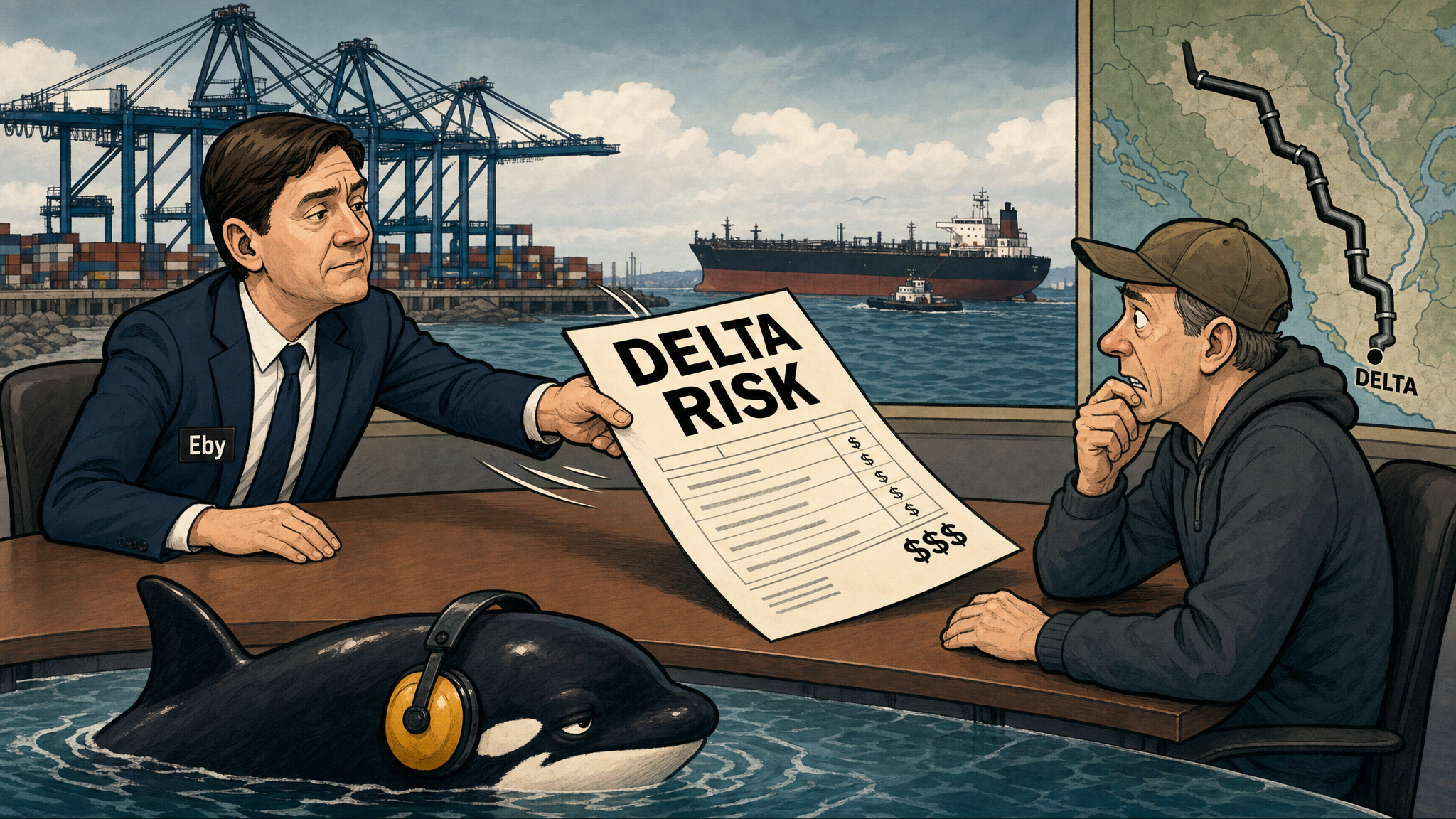
Eby’s defence is that B.C. cannot stop the pipeline. Delta’s problem is that the risks still land somewhere.
The new pipeline record has moved from abstract federal-provincial politics to a specific local burden. CityNews Vancouver reports that Delta’s shipping port is now at the centre of the Canada-B.C. prosperity agreement, with Ottawa committing $10 billion to upgrade Roberts Bank Terminal infrastructure. The same report says the port is also proposed as the end point of Alberta’s new pipeline route while governments preserve the North Coast tanker ban.
That bargain may protect northern waters. It does not make the southern route cost-free. CityNews quotes Premier David Eby saying the agreement does not require B.C. to support Alberta’s pipeline proposal, but that B.C. recognizes its constitutional position and does not have authority to stop a new pipeline. His argument is that the deal matters because it keeps the tanker ban in place and seeks fair compensation for environmental risks if a pipeline proceeds.
Compensation is not prevention. The public still needs to know what Delta is being asked to host, what Roberts Bank must absorb, and who pays when local infrastructure, emergency response or environmental risk increases. The federal Canada-Alberta release says the pipeline would transport one million barrels per day toward global markets, largely follow the existing Trans Mountain corridor, and be led by Trans Mountain Corporation with Canada, Alberta, Pembina and Indigenous equity participation.
The Canada-B.C. agreement’s backgrounder is more explicit about B.C.’s position. It says Canada has authority over pipelines across provincial boundaries, and that B.C. communities, coastlines and ecosystems bear the real and lasting consequences of any spill or incident. It also says B.C. commits to good-faith routing and permitting discussions if reciprocal commitments are met, including a legally binding revenue framework and an environmental liability and emergency-response fund accessible by B.C. and First Nations.
Those are serious promises. They are also incomplete public answers. How large is the fund? Who contributes? Which local governments and First Nations were consulted on the Delta/Roberts Bank implications? What conditions will apply before B.C. cooperates on permitting? Which capital costs could fall on B.C. Crown corporations or local taxpayers?
The environmental questions are not theoretical. CityNews reports advocates warn Roberts Bank Terminal 2 and added traffic could increase underwater noise, reduce food availability and make it harder for endangered southern resident killer whales to communicate, hunt and rest. The report also says the Vancouver Fraser Port Authority was not involved in discussions about the pipeline route and that the new terminal is still waiting on a Species at Risk Act permit, with construction slated to begin in 2028.
That is the accountability gap. Eby is telling British Columbians he cannot stop the pipeline, while selling a bargain that shifts the practical fight to compensation, permitting, routing and local impact. If Delta is the destination, the details should not arrive after the political deal. Publish the route analysis, consultation record, liability structure, Roberts Bank assumptions and whale-protection conditions now.
Sources and records
- CityNews Vancouver, July 4/5, 2026: Local impacts of pipeline to B.C. coast and Delta port expansion
- Prime Minister of Canada, July 2, 2026: Canada and British Columbia strike new cooperative prosperity partnership
- Prime Minister of Canada, July 2, 2026: Canada-British Columbia Cooperative Prosperity Agreement backgrounder
- Prime Minister of Canada, July 2, 2026: Canada and Alberta advance West Coast pipeline project proposal