67% of B.C. Nurses Rejected the Deal. The Crisis Is Still at the Bedside.
The Eby government can call the tentative agreement a step forward. The nurses who voted just sent a much harder message.
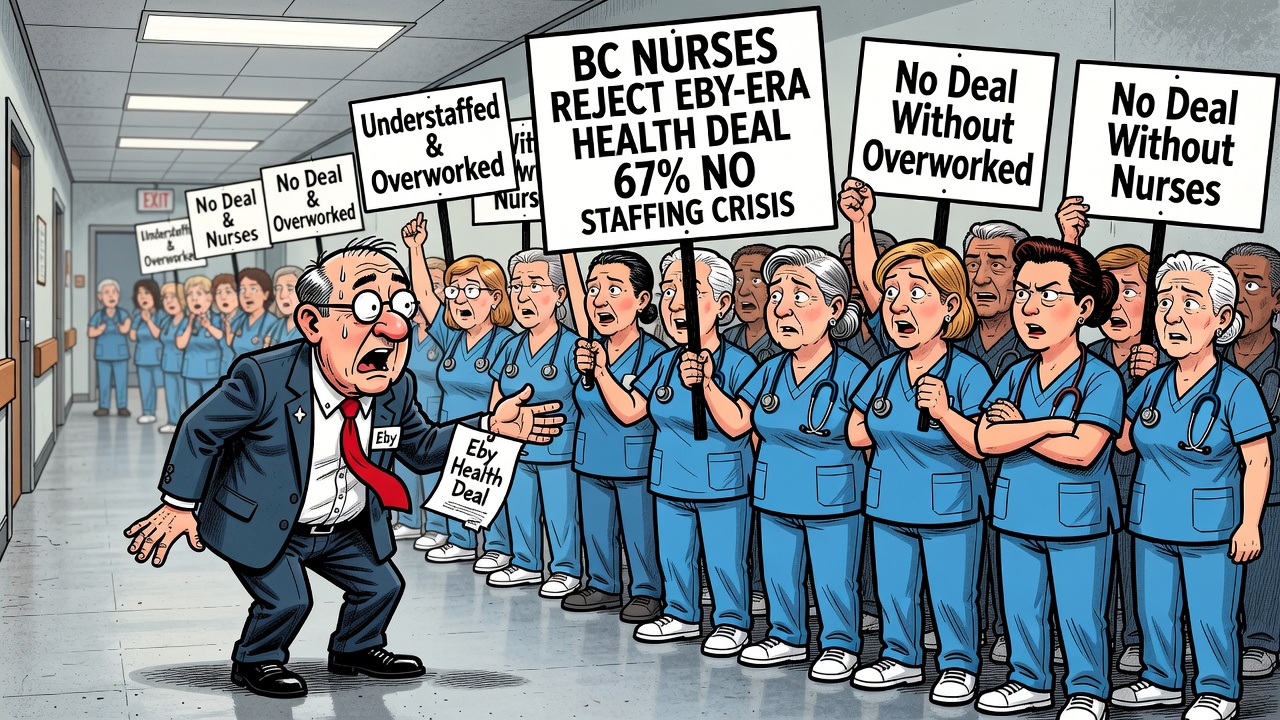
A government that wants credit for a tentative deal has to own the warning when frontline nurses vote it down.
B.C.’s nurses have rejected the deal. On June 19, Health Sciences Association reported that Nurses’ Bargaining Association members voted 67 per cent against ratifying a proposed four-year collective agreement with the Health Employers Association of BC. That is not a minor procedural delay. It is a democratic verdict from the workers the health-care system relies on every hour.
The result matters because the tentative agreement was supposed to show the Eby-era health file stabilizing. Instead, it has gone back into uncertain territory. Global News reported the rejection amid frustration over working conditions in B.C.’s health-care system, including concerns raised by nurses about staffing shortages, heavy workloads, crowded emergency departments and growing demands.
The union side is making a specific claim, and it should be labelled as such: BCNU president Adriane Gear said the vote was about more than contract language, describing it as nurses demanding agency, a voice and change. The union also said the rejected agreement included important gains, but many nurses believed government and employers had not gone far enough to recognize the pressures facing the profession.
That warning did not appear from nowhere. BCNU’s May 22 release said the tentative agreement followed a record strike mandate from more than 50,000 nurses, with 98.2 per cent voting in favour of job action. The Nurses’ Bargaining Association represents more than 60,000 nurses across hospitals, long-term care, community health, public health, mental health and other settings. When that many workers move from strike mandate to tentative deal to rejection, the premier should not pretend the issue is messaging.
Patients should not blame nurses for saying no. Nurses are not the people who left emergency departments overcrowded, wards understaffed or frontline staff exposed to worsening workplace pressure. They are the people trying to keep care moving while the political system announces fixes that do not match bedside reality.
The accountability test now sits with David Eby’s government and the health employers. If the NDP claims it is rebuilding health care, it must explain what comes next: how staffing will improve, how workload will be reduced, how violence and safety concerns will be addressed, and how patients will see actual capacity instead of another round of talking points.
A rejected agreement is not a strike announcement, and no one should claim otherwise. But it is a serious public warning. The nurses have said the proposed answer was not enough. In a province still facing long waits, crowded hospitals and exhausted staff, Eby’s government should treat that as a crisis signal — not a communications problem.
Sources and records
- Health Sciences Association, June 19, 2026: nurses vote 67% to reject proposed collective agreement
- Global News / Canadian Press, June 19, 2026: B.C. nurses reject tentative agreement with health employers
- BCNU, May 22, 2026: tentative agreement followed record strike mandate
- BCNU, June 2026: B.C. nurses reject tentative agreement