B.C. Patients Wait While $200.6M in Non-Resident Health Bills Goes Unpaid
FOI-backed figures reported by SecondStreet and local media raise a basic accountability question: why is so much billed care still unrecovered while the health system strains?
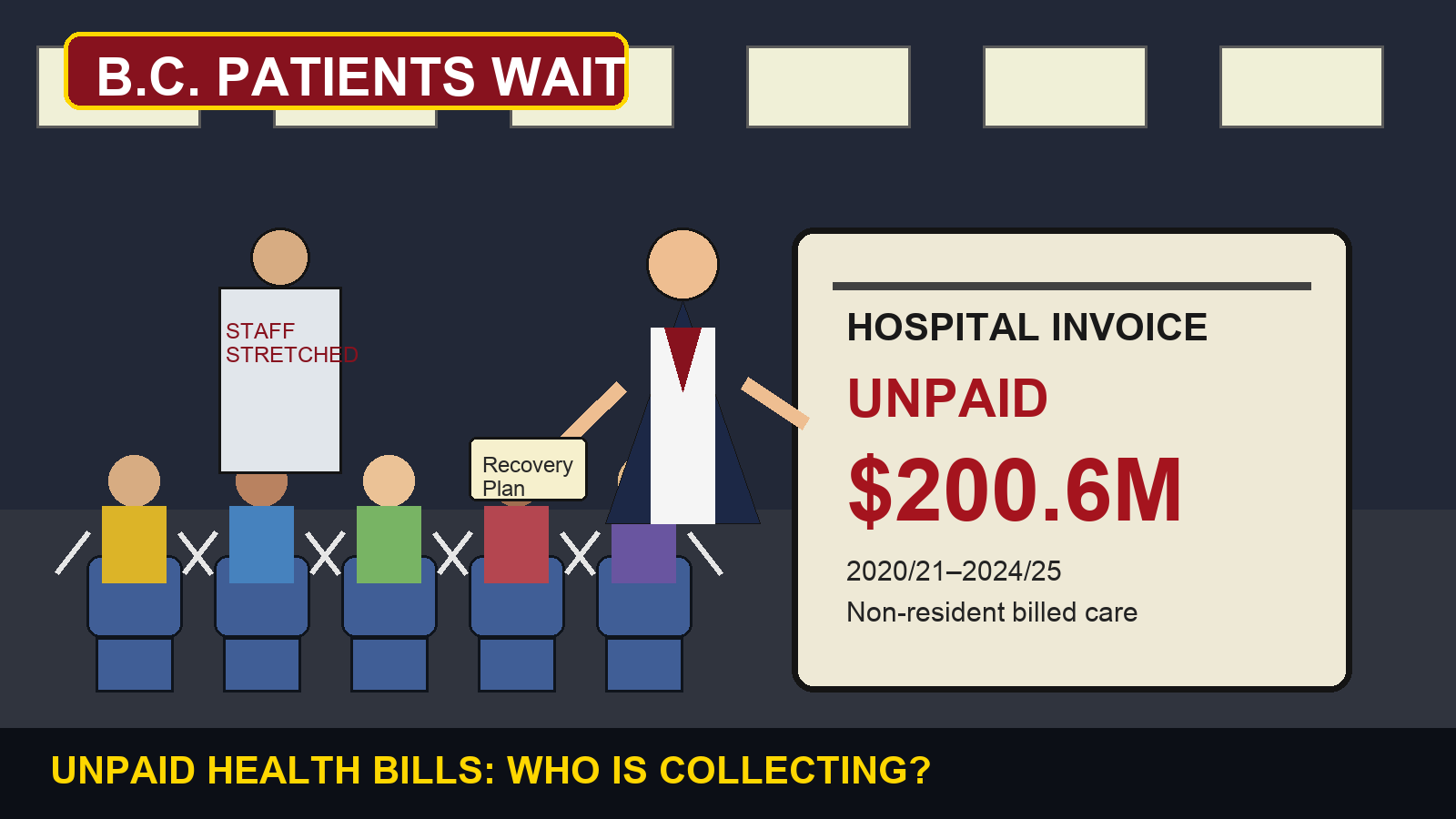
B.C.’s health system is short on capacity. That makes every unrecovered dollar a public accountability issue.
British Columbians are told to be patient with waitlists, emergency-room pressure and delayed care. New FOI-backed reporting raises a blunt question for David Eby’s NDP government: who is making sure the health system collects what it is owed?
SecondStreet.org released B.C. health-region figures on June 8 showing unpaid bills from people outside Canada receiving health services in B.C. totalled $200.606 million from 2020/21 through 2024/25. Its regional breakdown lists Fraser Health at $94.595 million, Interior Health at $54.129 million, Vancouver Coastal at $30.982 million and Island Health at $20.900 million. Northern Health, SecondStreet said, provided no response.
That is not a rounding error. SecondStreet said the total could have paid for more than 21,000 hip replacements in B.C., using Canadian Institute for Health Information cost data. The comparison is not the same as saying those exact surgeries were cancelled because of these bills. It is a measure of scale — and the scale is serious.
Local coverage made the political accountability clear. CityNews Vancouver reported that the B.C. Conservatives cited the FOI data and said residents wait months or years for care while taxpayers carry the unpaid-bills problem. Global News also reported the same total and regional figures, and included Health Minister Josie Osborne’s response that health authorities are required to pursue recovery.
The Ministry of Health’s explanation matters and should be stated fairly. CityNews reported the ministry said emergency and urgent care is prioritized; non-residents in non-emergency situations are asked for payment up front whenever possible; the unpaid costs are tied to emergency and urgent care, not elective surgeries or routine services that would otherwise be available to B.C. residents; and health authorities continue collection efforts.
That response explains why care was delivered. It does not answer why the unpaid total reached $200.6 million over five fiscal years, why Northern Health’s figure is absent from the public tally, or what specific targets the NDP has set to improve recovery. A government can defend emergency care and still be expected to manage receivables competently.
B.C. patients do not need a scapegoat. They need capacity, transparency and discipline from the people running the system. If Victoria can track the unpaid bills, it can report collection performance, identify gaps and tell taxpayers what is being fixed.
The NDP’s health-care problem is not only wait times. It is trust. And a $200.6 million unpaid-bills file is exactly the kind of problem a serious government should not leave buried in FOI releases.