When Seconds Count, Eby’s B.C. Has 911 Workers at the Breaking Point.
B.C.’s emergency call-takers have issued 72-hour strike notice. The public should not have to learn about 911 staffing stress at the edge of a labour deadline.
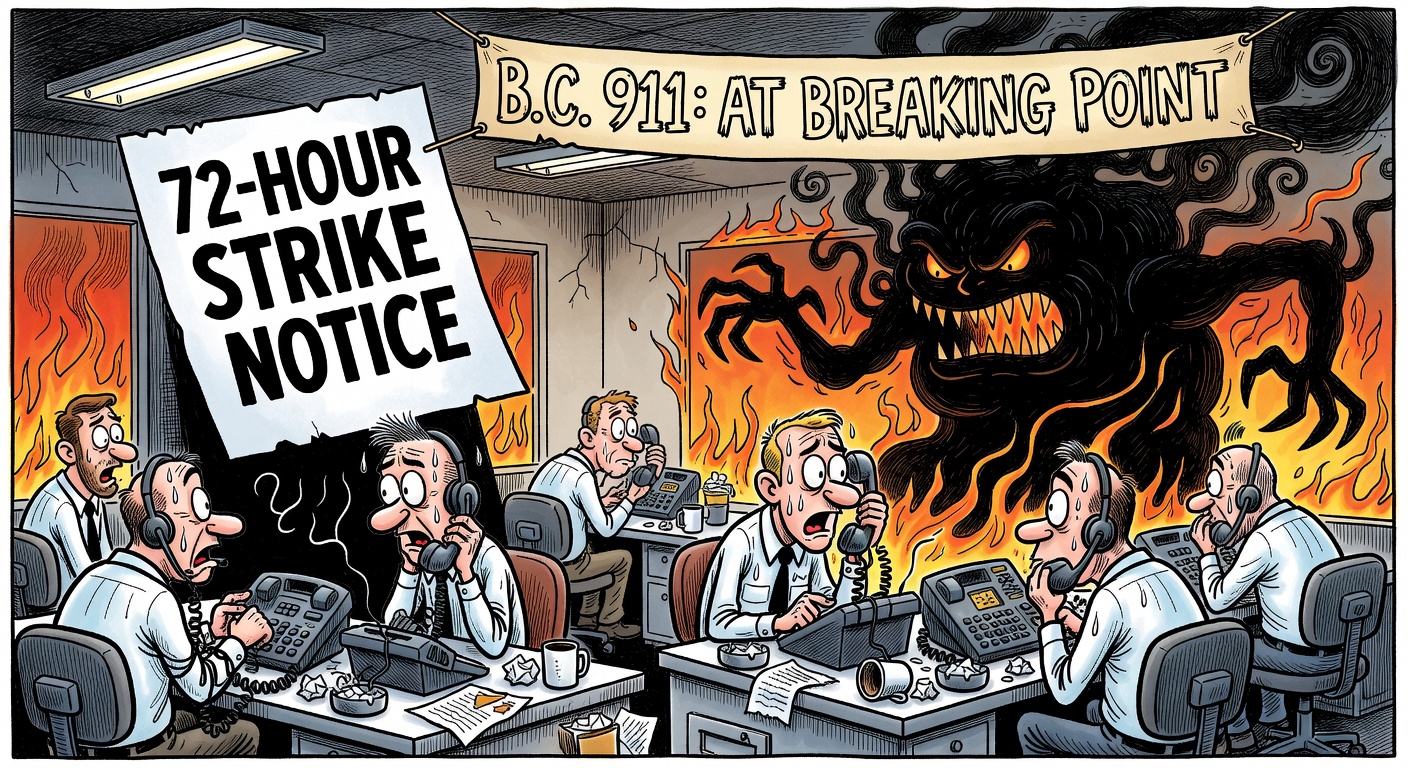
iVoteNDP editorial cartoon, June 6, 2026.
B.C. cannot run public safety on burnout, delayed bargaining and last-minute crisis management.
When British Columbians dial 911, the first voice they hear is not a cabinet minister at a podium. It is an emergency communications worker trying to keep panic, information and response moving in real time. Those workers are now warning that the system is at a breaking point.
CityNews reported on June 5 that CUPE 8911, representing more than 700 emergency communications professionals, has issued 72-hour strike notice after months of bargaining with E-Comm 9-1-1 failed to produce an agreement. The union says bargaining began in November and the parties have spent more than 20 days in meetings.
The issues named in the report are not decorative contract demands. They are fair wages, safe staffing levels, and improved health and wellness supports. Those are basic operating conditions for the people who answer emergency calls, dispatch help and absorb some of the worst moments in other people’s lives.
CUPE 8911 members had already delivered a 95 per cent strike mandate. The union says it will be in a legal strike position at 3:29 p.m. on June 8. CityNews also reported that an Essential Service Order is in place, meaning there are required service levels during any legal job action. That point matters: nobody should exaggerate this into a claim that 911 service simply vanishes.
But the existence of an essential-services order does not make the problem acceptable. It means the system is so critical that government cannot afford to let it fail. That is exactly why the NDP should be under pressure for allowing emergency communications bargaining to reach this stage.
The union is asking Labour Minister Jennifer Whiteside to appoint a special mediator. That is a union request, not an independent finding. Still, the public deserves to know why outside help is being sought only after negotiations reached impasse, and why staffing and wellness warnings in a 911 system were not treated as a government-level emergency sooner.
The timing is also impossible to ignore. The union pointed to wildfire season, potential extreme weather and increased summer demand as B.C. enters one of the busiest periods for emergency communications. After years of NDP promises about public safety, resilience and frontline workers, this is the kind of basic service-delivery file that should never drift into brinkmanship.
Premier David Eby’s government will likely say bargaining belongs at the table. Fine. But accountability belongs with government. If the province can find urgency for press conferences, announcements and political messaging, it can find urgency for the people who answer when seconds count.
British Columbians do not need spin about how much the NDP values frontline workers. They need a stable 911 system, safe staffing, honest timelines and a government that stops waiting for essential services to hit the wall before acting.