Leger Poll Puts Conservatives Ahead While Eby Reaches for the MAGA Label
A new Leger B.C. Pulse Check shows voters focused on housing, health care and the economy — not the Premier’s preferred attack line.
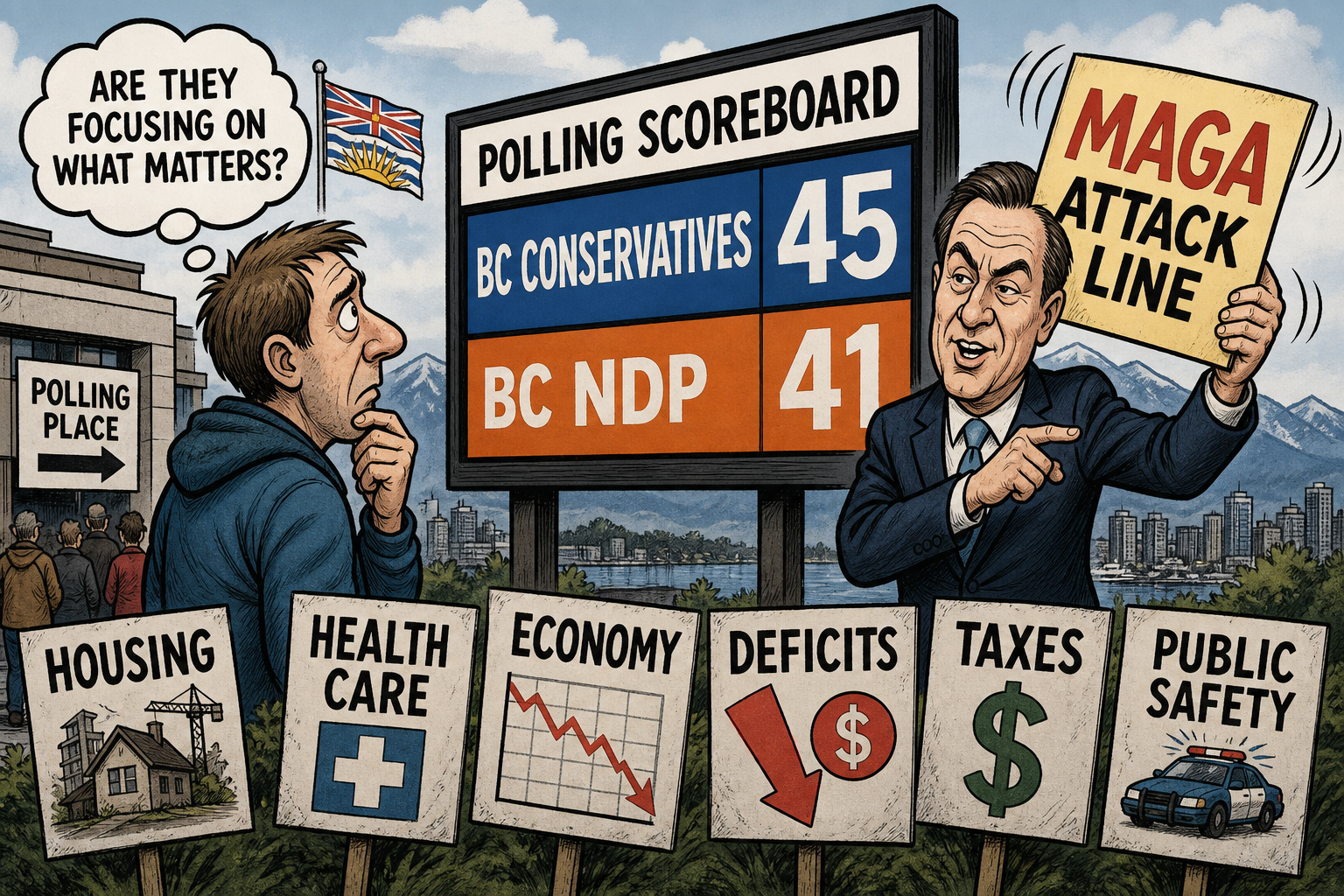
iVoteNDP editorial cartoon, June 5, 2026.
The number Eby cannot spin away is simple: Conservatives 45, NDP 41 among decided voters.
Leger’s June 2026 B.C. Pulse Check is not a verdict on the next election. It is a snapshot, with all the normal limits of polling. But it is still a clear warning to Premier David Eby: after years of NDP government, British Columbians are naming the basics — housing, health care and the economy — while the governing party is losing ground.
The poll, conducted online from June 1 to 2 among 1,002 B.C. adults and weighted by age, gender, region and education, puts the BC Conservatives at 45% among decided voters. The BC NDP sits at 41%, the Greens at 8%, and other parties or independents at 6%. Leger says that is the first time since the last provincial election that the Conservatives have held a narrow lead over the NDP.
That matters because Eby’s public response to Kerry-Lynne Findlay’s arrival as Conservative leader has leaned heavily on labelling. Global News reported Eby saying the job Findlay is seeking looks more like “MAGA regional manager” than premier of British Columbia. Findlay told Global she thought the branding was ridiculous and accused the NDP of ideology over prosperity.
Voters, meanwhile, are telling pollsters something much more concrete. Leger’s top issues are housing prices and affordability at 31%, health care at 29%, and the economy at 24%. Conservative voters are more likely to cite the economy, taxes, deficits and crime or public safety. NDP voters are more likely to cite housing costs and health care. Either way, the pressure points are real-life services and household costs, not a clever press-conference insult.
The preferred-premier numbers are also tighter than the NDP should find comfortable. Leger has Eby at 30%, Findlay at 27%, Green Leader Emily Lowan at 6%, with 13% choosing none and 19% unsure. That is a narrow Eby edge, not a commanding advantage, especially when Findlay is still new to many voters.
Leger reports that 72% of residents had heard the BC Conservatives selected a new leader, but only 26% were very or somewhat familiar with Findlay. In plain terms, the opposition leader is not yet fully defined — and the NDP is already trailing on decided vote intention in this survey.
No single poll should be treated as destiny. But this one is politically blunt. The NDP can call its opponents names. It can insist the province is moving in the right direction. It can point to programs, announcements and talking points. What it cannot do is pretend voters are not measuring the government against rent, doctor access, public safety, taxes, deficits and the cost of daily life.
If Eby wants to recover, the answer is not more Americanized scare language. The answer is results British Columbians can actually feel.
Sources and records
- Leger, June 5, 2026: B.C. Conservatives take narrow lead as housing, health care and the economy shape voter priorities
- Leger report PDF: British Columbia Pulse Check, June 2026
- Global News, June 5, 2026: poll report and video segment
- CityNews Vancouver, June 2, 2026: Eby’s comments on Findlay after the Conservative leadership result