St. Paul’s Video Shows the NDP Drug-Policy Reality They Cannot Spin Away
A OneBC video of Dallas Brodie outside St. Paul’s Hospital puts the NDP’s drug-policy record back in the spotlight: public disorder, hospital safety, and the fallout from a three-year decriminalization experiment.
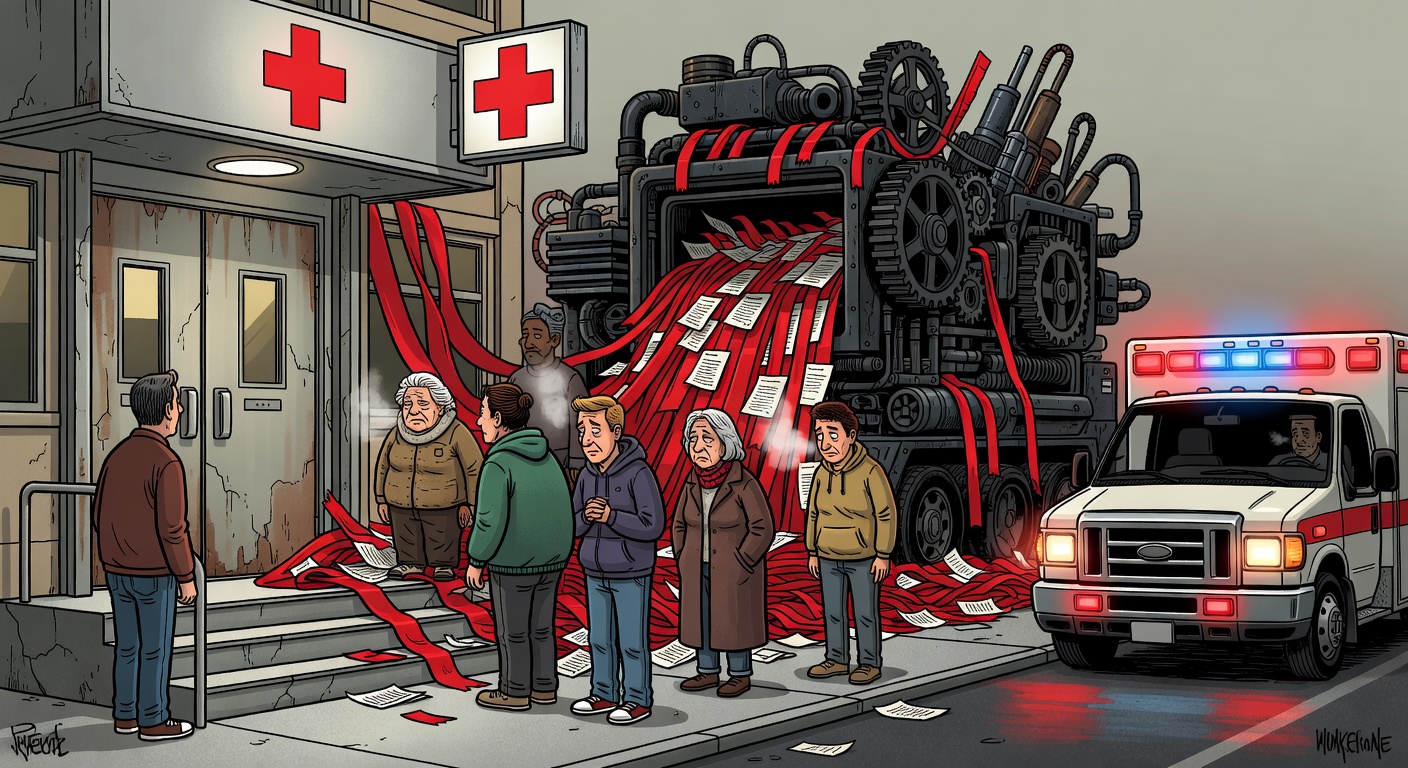
Editorial graphic generated for iVoteNDP.com, May 15, 2026.
OneBC’s latest Facebook reel shows Dallas Brodie near St. Paul’s Hospital in Vancouver, with emergency signage visible and vulnerable people nearby. OneBC says Brodie was exposing the consequences of B.C. NDP drug policies when two social workers tried to stop her from filming.
The video does not need exaggeration. In reviewed frames, no drugs or paraphernalia are clearly visible. What is visible is enough: a major hospital emergency area, people in distress or on the sidewalk, and the public-space reality the NDP spent years trying to manage through slogans.
The policy record
B.C.’s decriminalization pilot began on January 31, 2023 and ended on January 31, 2026. The province initially argued that removing criminal penalties for small amounts of certain drugs would reduce stigma and make it easier for people to seek help.
But by April 2024, the government was asking Ottawa to change the rules to stop public drug use and possession in public spaces, including hospitals, transit and parks. In 2026, the exemption expired and was not renewed.
That timeline matters. The NDP cannot pretend the public backlash appeared from nowhere. Local governments, police, businesses, hospital workers and ordinary residents repeatedly raised concerns about public drug use and disorder.
Confirmed timeline
- January 31, 2023: B.C.’s three-year decriminalization pilot began.
- April-May 2024: B.C. sought and received federal changes restricting public drug use/possession in public spaces, including hospitals and transit.
- January 31, 2026: the exemption expired and was not renewed.
- B.C. government and public-health sources continue to describe the toxic drug crisis as a public-health emergency requiring treatment, harm reduction and recovery supports.
Compassion cannot mean abandonment
The NDP often frames criticism of its drug policy as a lack of compassion. That is not good enough. Compassion for people struggling with addiction must include treatment, recovery, mental-health care, detox capacity and a real pathway off the street.
It must also include compassion for patients walking into emergency care, nurses and doctors doing their jobs, seniors navigating sidewalks, families passing hospital entrances, and businesses forced to absorb the consequences of public disorder.
A government that only protects one side of that equation is not compassionate. It is failing both sides.
Why the video matters
Dallas Brodie’s camera is politically uncomfortable because it collapses the distance between the legislature and the sidewalk. Ministers can talk about frameworks, pilots and health-first approaches. Voters can look at the street outside a hospital and ask whether any of it is working.
The NDP’s answer cannot be to object to being filmed. The answer has to be results: treatment access, safer public spaces, clear hospital protocols, fewer deaths, fewer people abandoned outdoors, and fewer communities left to manage the fallout.
The bottom line: the St. Paul’s video is not the whole story. But it is a sharp reminder of the story the NDP still has not solved.
Sources
OneBC Facebook reel, May 15, 2026; B.C. government, Decriminalizing people who use drugs in B.C.; BCCDC, Decriminalization in B.C.; B.C. government, public-space restriction announcement; UBCM, chronology of the decriminalization pilot. Video frame review performed May 15, 2026.