A Killing in Supportive Housing, a Law Reform, and the Questions Still Unanswered
Canadian Press reports the relatives of a B.C. man killed in supportive housing are still asking why the case remains unsolved, even after the killing helped spur housing law reform. That is the gap between NDP announcements and lived reality.
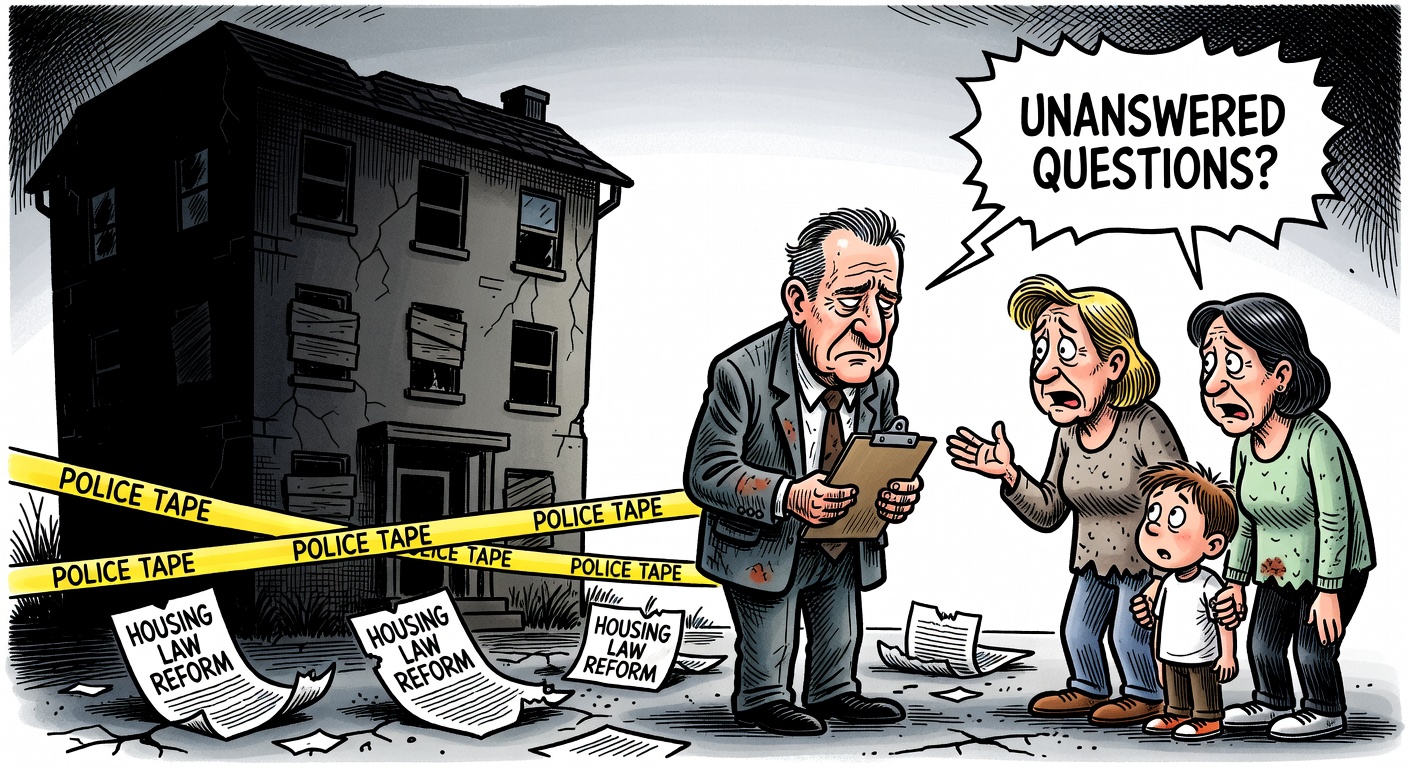
The NDP government has built its housing brand around compassion, supportive housing and rapid policy announcements. But the test of any housing system is not the press conference. It is whether vulnerable people are safe inside the buildings the public is told to trust.
On May 6, 2026, The Canadian Press reported on a B.C. man whose killing in supportive housing helped spur housing law reform. Years later, his relatives are still asking why the case remains unsolved. That fact alone should stop the government from treating supportive-housing safety concerns as political noise.
There is no need to exaggerate the story. The facts are hard enough. A person was killed. The killing was serious enough to become part of the push for legislative reform. And now, years later, the family is still left with questions about accountability and justice.
Reform after tragedy is not enough
The NDP response to failures is often to point at a new policy, a new framework or a new amendment and declare progress. But reform after tragedy does not erase the tragedy. It also does not answer the operational question: what was known, what was missed, who was responsible, and what changed inside the system beyond the headline?
What Canadian Press reported
- A B.C. man was killed in supportive housing in 2021.
- The killing helped spur housing law reform.
- Relatives are still asking why the case remains unsolved.
- The story was published May 6, 2026 by The Canadian Press and carried by multiple Canadian news outlets.
Supportive housing is sold to communities as a managed, supervised model for people who need stability. That makes safety and accountability non-negotiable. Residents deserve safety. Neighbours deserve honest information. Families deserve answers when the system fails catastrophically.
The NDP cannot have it both ways. It cannot insist that supportive housing is essential, demand public trust, override local objections when convenient, and then treat hard questions about safety as hostile politics. If the government wants confidence in supportive housing, it must welcome scrutiny, publish clear performance standards, and show that failures produce real consequences.
The accountability gap
This is the larger pattern in B.C. housing policy under David Eby: announce fast, build bureaucracy, then resist clear accounting when results fall short. Billions are spent. Emergency powers expand. Municipalities are ordered to comply. Yet families affected by the worst outcomes can still be left asking basic questions years later.
That gap matters because supportive housing is not an abstract ideology. It is a real-world system with real residents, real staff, real neighbours, and real risks. When a killing inside that system remains unresolved years after it helped trigger reform, the public is entitled to ask whether the reform fixed the problem or merely managed the politics around it.
The bottom line: the NDP can point to law reform. The family can point to an unsolved killing. Both facts are true. Only one of them reveals whether the system has actually delivered accountability.
Sources
The Canadian Press, “B.C. man's killing spurred housing law reform. Relatives wonder why it's unsolved,” May 6, 2026, carried by CityNews Vancouver and other outlets — citynews.ca.