Eby’s DRIPA Gamble Is Going to the Supreme Court
The Supreme Court of Canada will now hear B.C.’s appeal in the Gitxaała/Ehattesaht mineral-claims case — the legal-uncertainty bill for the NDP’s DRIPA experiment is coming due.
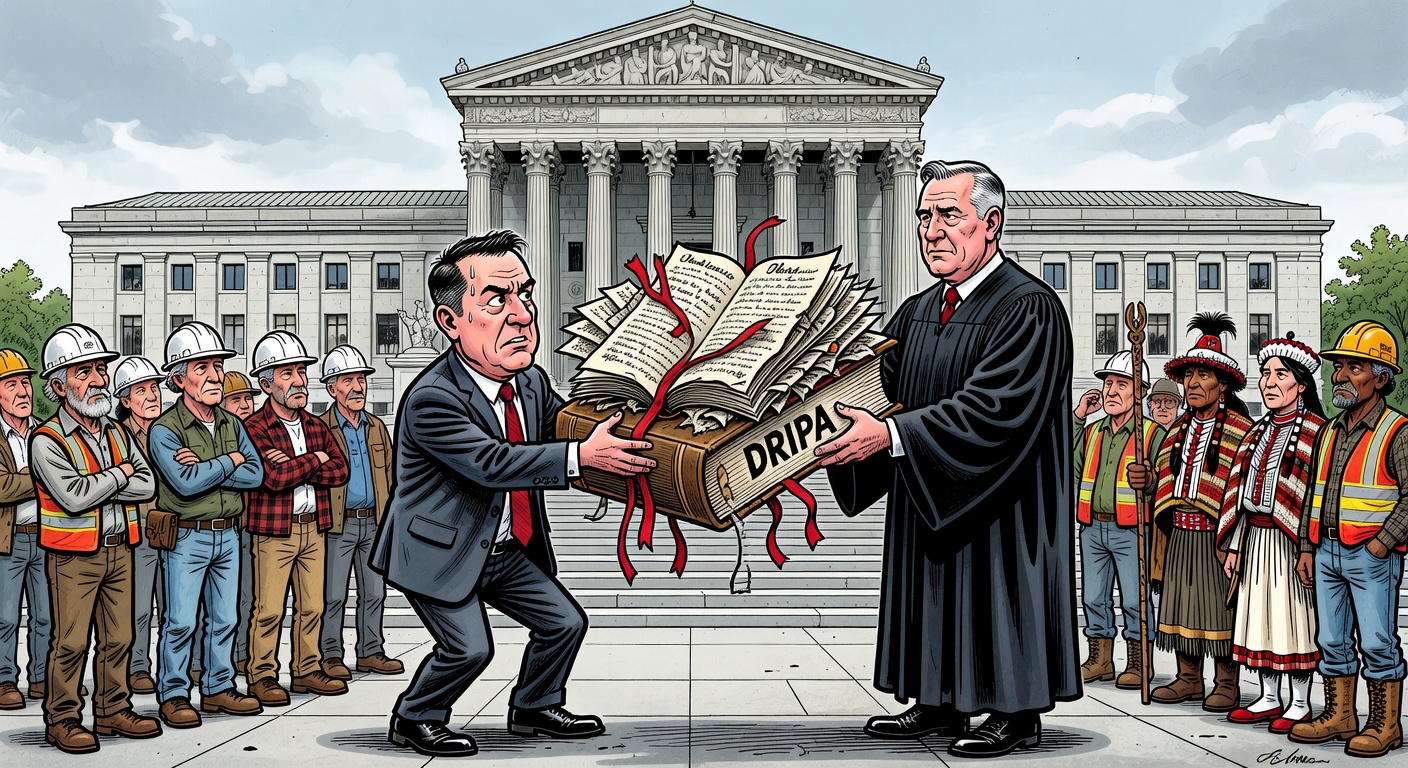
The Supreme Court of Canada has agreed to hear B.C.’s appeal in the Gitxaała/Ehattesaht mineral-claims case. That is not a routine court update. It is the country’s top court being asked to sort out what David Eby’s government still has not explained clearly: how far B.C.’s Declaration on the Rights of Indigenous Peoples Act reaches in real law.
The official Supreme Court docket, file 42200, says leave to appeal was granted on May 21, 2026. The case involves B.C.’s system for registering mineral claims on Crown land without prior consultation with affected First Nations. The Court’s summary says the B.C. Court of Appeal held that DRIPA incorporated the United Nations declaration into B.C. law, and that a majority found the mineral-claims system inconsistent with the declaration and in breach of the Crown’s duty to consult.
What is actually at issue
- This case is about mineral claims on Crown land, not private home title.
- Gitxaała and Ehattesaht challenged the mineral tenure registration system.
- B.C. is appealing a December 2025 Court of Appeal ruling.
- The Supreme Court has not decided the merits; it has agreed to hear the appeal.
Premier David Eby told reporters it was “very good news” that the high court will hear the appeal, and said his government wants clarity for British Columbians, First Nations partners and the province. That is the admission buried inside the spin: after years of NDP assurances that DRIPA was manageable, B.C. now needs the Supreme Court to tell everyone what the law means.
First Nations counsel describe the issue differently. Jessica Clogg, connected to Gitxaała’s legal team, said the nation would have preferred the province respect the Court of Appeal decision. She also said the case will test whether B.C.’s DRIPA commitments are legally enforceable or merely political promises. Those are claims from a party’s legal side, not findings from the Supreme Court.
Uncertainty is the NDP’s bill coming due
The hard-hitting point is not anti-Indigenous. It is pro-clarity. British Columbia cannot run a resource economy, a permitting system, reconciliation policy and public confidence on slogans. If a law changes who must be consulted, when consent matters, and whether provincial statutes must conform to UNDRIP, citizens deserve plain-language answers before projects, jobs and communities are pushed into years of litigation.
Eby sold DRIPA as certainty. His government is now asking the Supreme Court to define the certainty.
The NDP will argue that court guidance is responsible governance. But responsible governance would have meant drafting the law, regulations and mineral-tenure reforms clearly enough that First Nations, workers, investors and taxpayers were not left guessing. Instead, the province is now celebrating the chance to appeal a mess of its own making.
Bottom line: B.C. needs reconciliation that is lawful, transparent and workable. If the Supreme Court must rescue the meaning of the NDP’s flagship DRIPA framework, voters should ask why the government passed a law so sweeping that even the government says it needs clarity.
- Supreme Court of Canada docket 42200: Chief Gold Commissioner of British Columbia et al. v. Gitxaala Nation et al.
- The Canadian Press via TimminsToday, May 21, 2026: ‘Very good news,’ that High Court will hear B.C. mineral claims case, Eby says
- APTN News, May 22, 2026: Supreme Court to hear appeal in B.C. mineral claims case
- Global News, May 22, 2026: Supreme Court to weigh in on B.C. DRIPA legislation for the first time
This article critiques government policy and litigation strategy. It does not attack Indigenous people, deny Aboriginal rights, or claim private residential title is directly at issue in this mineral-claims appeal.